


























There was a time when electrolytes in Bangladesh meant something very different.
For most people, they were associated with recovery. You reached for ORS or saline when you were dehydrated, sick, weak or recovering from diarrhoea. At the other end of the spectrum were imported electrolyte and sports drinks, which were more familiar to athletes and gym-goers than to the average consumer. Before SMC Plus entered the market, foreign brands primarily targeting these segments were among the few ready-to-drink electrolyte options available in Bangladesh.
Electrolytes were already here. They simply were not part of mainstream beverage culture.
And that left an interesting space in between.
Bangladesh is hot, humid and physically demanding. People lose fluids through heat, sweating, commuting, work and exercise every day. Yet there was no established local ready-to-drink option that combined electrolyte replenishment, refreshing taste and the convenience of simply opening a pack and drinking it.
In 2021, SMC stepped into that space with SMC Plus.
The Change Wasn’t Electrolytes. It Was the Experience.
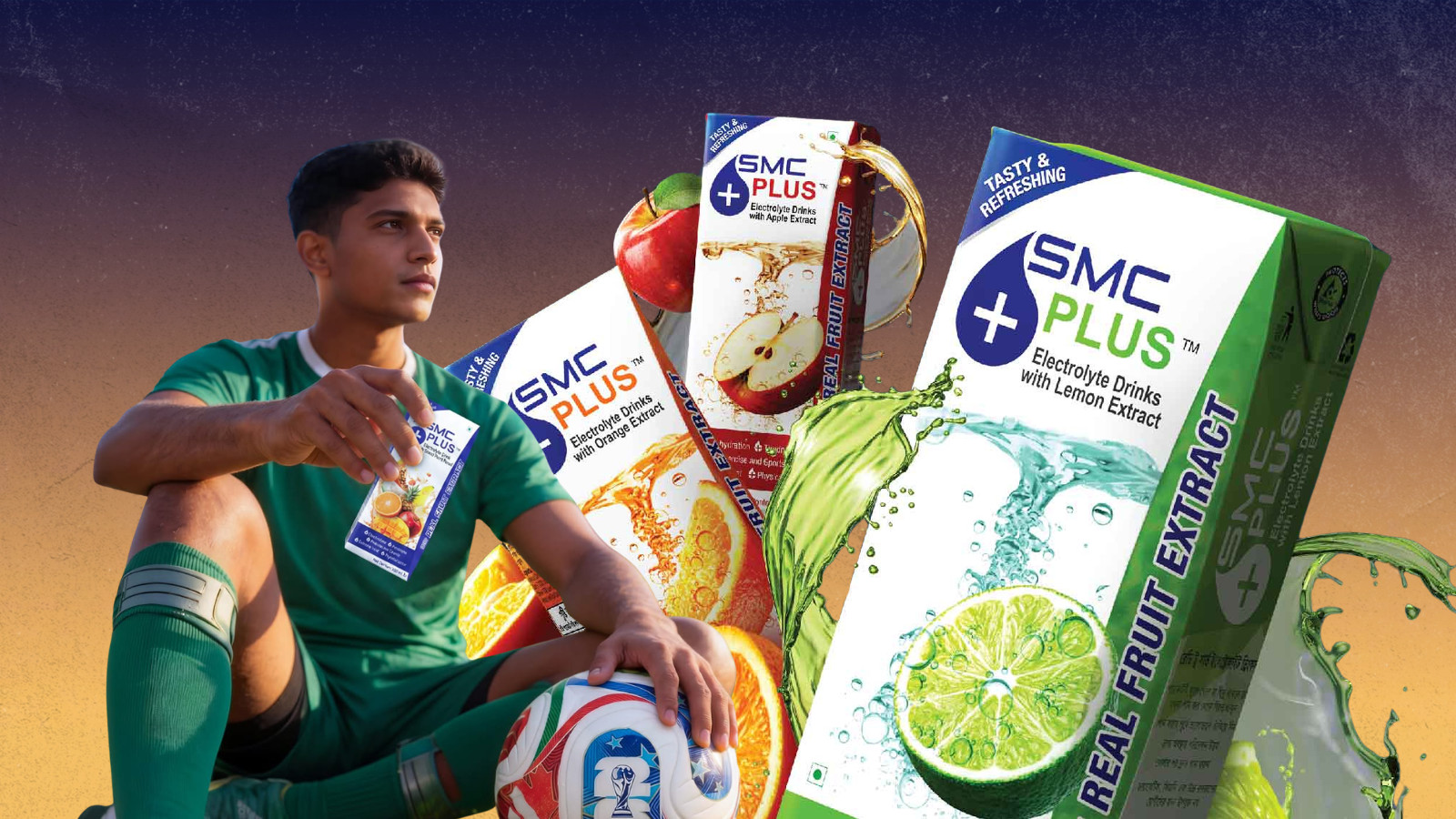
SMC Plus was launched on March 25, 2021 in 250ml packs with Orange and Lemon flavours. Instead of asking consumers to mix a sachet with water, SMC put electrolyte hydration into a ready-to-drink format.
It sounds like a small change. From a consumer perspective, however, it changed the experience considerably.
There was no preparation. There were refreshing flavours. The pack could sit alongside juices and soft drinks. At launch, the 250ml product was priced at Tk 25, giving consumers a locally available alternative to more niche imported sports drinks.
In other words, SMC did not have to teach Bangladesh what electrolytes were. It had to give consumers a new way to consume them.
That distinction became central to the brand’s proposition.
SMC Didn’t Have to Build Trust From Zero
Launching a functional beverage is one thing. Convincing consumers to believe its functional promise is another.
This was where SMC had an unusual advantage.
Long before SMC Plus, the SMC name was already closely associated with rehydration and healthcare through products such as ORSaline-N. The company also had an extensive sales and distribution infrastructure spanning both pharmacies and non-pharmacy outlets.
According to SMC’s FY2021-22 Annual Report, its direct sales operation reached 185,907 outlets, 85% of which were pharmacies, while its distributor network reached more than half a million non-pharmacy outlets. SMC Plus was among the products handled through this broader distribution system.
That gave the brand an interesting route to market.
SMC Plus could benefit from a name consumers already associated with health and hydration while simultaneously moving into the places where people bought everyday beverages.
Healthcare credibility helped establish trust. Wider retail distribution helped translate that trust into accessibility.
The early response suggested that the proposition had found an audience. In its subsequent annual reporting, SMC described an extraordinary surge in demand from both consumers and traders following the product’s introduction.
From Hydration to an Active Lifestyle
Getting the product onto shelves was only part of the strategy. SMC also needed to broaden what an electrolyte drink could represent.
Former Bangladesh national cricket team captain Tamim Iqbal was brought on as the brand ambassador, connecting the product with sports, physical activity and a familiar national figure.
SMC then promoted the product through television, cricket advertising, billboards, buses, airport branding, magazines and digital campaigns. Its annual report described the approach as a comprehensive 360-degree campaign.
The campaign also earned industry recognition. “SMC Plus Launch” received a Bronze at Commward 2022.
These activities positioned SMC Plus in a different context from traditional recovery products. Cricket, youth, energy and physical activity increasingly became part of the brand’s identity.
The shift was subtle but important. Electrolytes were no longer being presented only as something people needed when they were unwell. They were increasingly being positioned around movement, heat, exercise, and everyday hydration.
Then the Category Started Growing
As electrolyte drinks became more visible, other local brands entered the space.
By 2024, the market included products such as PRAN’s Active, Akij’s Turbo, Bruvana Sports+, and Recharge from Deshbandhu and Agami, creating a visibly more competitive local electrolyte beverage category. The Business Standard documented the expanding field of electrolyte brands.
Consumer perceptions were changing as well.
People interviewed by The Business Standard described electrolyte drinks as refreshing alternatives to saline, water or carbonated beverages. At the same time, health experts cautioned against treating electrolyte beverages as substitutes for ordinary water during normal daily consumption.
For marketers, however, the important shift was in the consumption occasion.
Electrolytes were increasingly being considered beyond their traditional association with illness and recovery.
What had once largely belonged to the medicine cabinet was finding a place on beverage shelves.
Rapid Growth Also Brought Regulatory Questions
The category’s rapid expansion was not without complications.
In May 2024, the Bangladesh Food Safety Authority filed a case against the producers of several electrolyte drinks, including SMC Plus, PRAN Active, Bruvana, Recharge and Turbo, alleging that the products were being sold without government approval.
A Dhaka court subsequently ordered SMC Plus and Recharge to be withdrawn from the market and imposed fines on their producers.
But the controversy also highlighted a regulatory grey area surrounding what was still a relatively new beverage category in Bangladesh.
Manufacturers said they had approached the Bangladesh Standards and Testing Institution for approval, but BSTI officials acknowledged at the time that a specific category for electrolyte drinks had yet to be developed.
The regulatory position later evolved. According to SMC, SMC Plus received BSTI certification in October 2024.
The episode reflected another consequence of a rapidly emerging category: consumer adoption had moved faster than the regulatory framework surrounding it.
Where SMC Plus Stands Today
The proposition eventually became a significant business for SMC.
By FY2023-24, SMC Plus had become the company’s fifth brand to cross Tk 100 crore in annual revenue, according to SMC’s annual reporting.
SMC currently reports that SMC Plus holds more than 85% of Bangladesh’s electrolyte drink category. The figure, however, is company-reported rather than an independently audited market-share estimate.
The portfolio has also expanded beyond its original Orange and Lemon launch. SMC currently lists Orange, Lemon and Apple variants, with 200ml packs available in all three flavours and 250ml packs available in Orange and Lemon.
The company has also invested in local manufacturing capacity. SMC commissioned an FMCG facility at Bhabanipur, Gazipur, equipped with automated Tetra Pak production technology for ready-to-drink products including SMC Plus.
The investment indicates how far the proposition has travelled since 2021. What started as a new ready-to-drink format has developed into a sizeable product category with local manufacturing, multiple competitors and increasingly mainstream consumption occasions.
Ultimately, SMC Plus did not introduce Bangladesh to electrolytes. It introduced a different way of experiencing them.
By combining SMC’s healthcare credibility with flavour, ready-to-drink convenience, mass distribution and lifestyle-oriented marketing, the brand helped move electrolytes from a predominantly recovery-focused space into Bangladesh’s mainstream beverage conversation.
Sometimes a category does not change because someone invents a new need. It changes because someone finds a better way to serve a need that was already there.
For more updates, be with Markedium.















Leave a comment