































Singer Bangladesh, one of the leading electronics manufacturer and retailer in the country, has published its H1 2026 report. The company posted a net loss of BDT 422.7 million in H1 2026, compared with a net loss of BDT 659.5 million in H1 2025. This is the second straight half-year in the red, following three consecutive years of profit through H1 2024. The loss was reduced mainly due to rise in finance income and a lower tax charge.
Singer | Single-Digit Revenue Growth
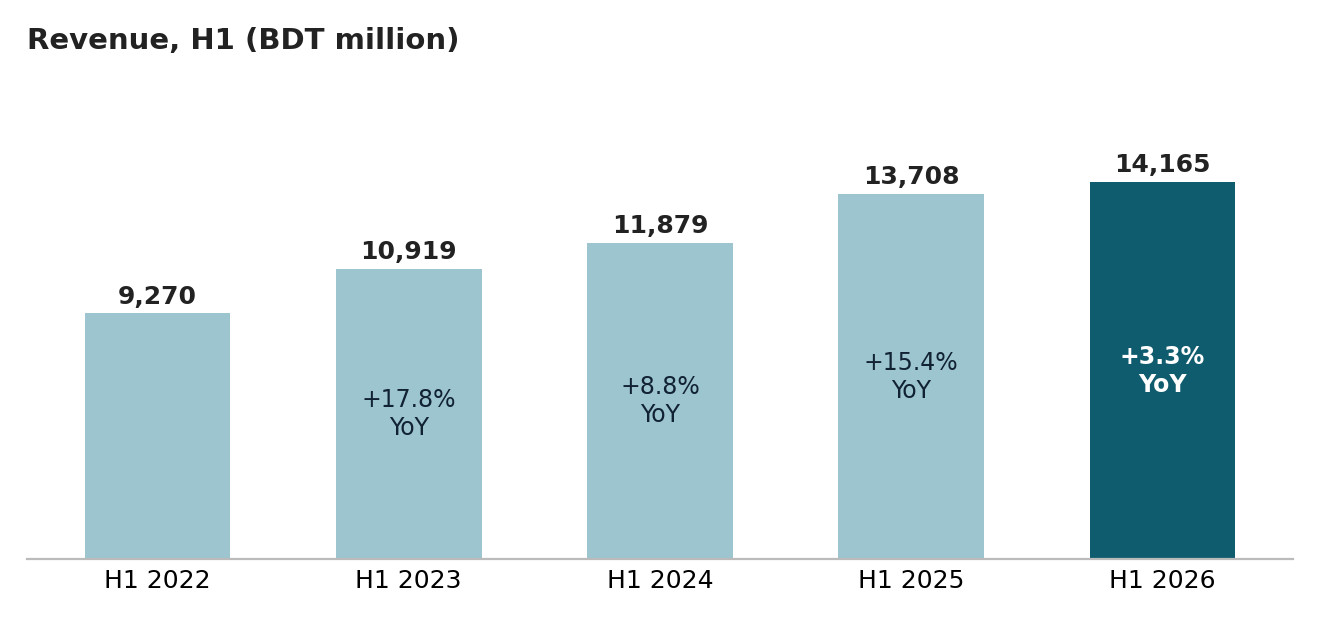
Revenue grew just 3.3% to BDT 14,165.4 million in H1 2026, the slowest pace in the five halves compared and a marked slowdown from 15.4% growth in H1 2025. The company has pointed to weak economic activity and the political transition, for the the slim revenue growth. The company had to resort to high credit sales in the dealer channel (77.1% increase) to attain the sales growth in H1 2026.
Revenue by type | H1 2026 | H1 2025 | Growth |
|---|---|---|---|
Domestic | 13,880.2 | 13,687.0 | 1.4% |
Export | 266.6 | 0.0 | – |
Gross Sales | 14,146.9 | 13,687.0 | 3.4% |
Domestic sales, which make up nearly all of the business, grew only 1.4% to BDT 13,880.2 million. Singer started export for the first time this year. The company posted export sales of BDT 266.6 million in the first half of 2026.
Gross Margin Improves Only Marginally
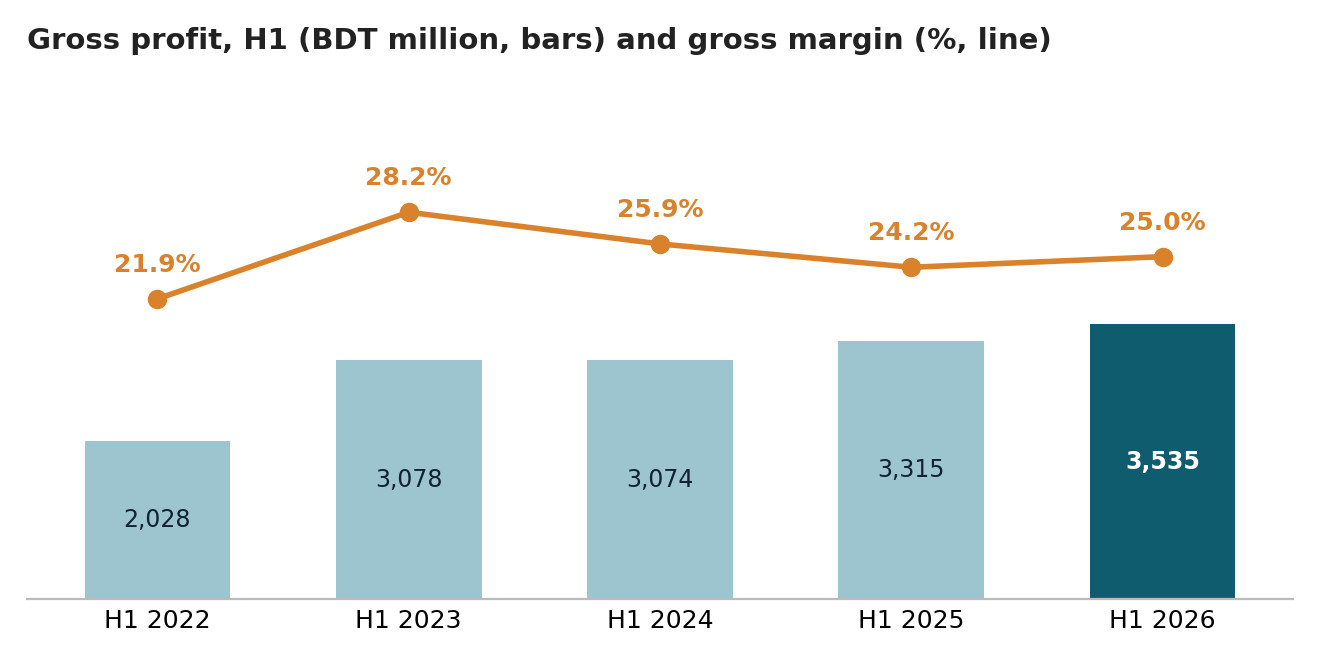
Gross profit reached BDT 3,534.5 million in H1 2026, up from BDT 3,314.5 million in H1 2025, as cost of sales grew more slowly than revenue, up only 2.3%. The gross margin improved to 24.95% from 24.18%, a gain of only 77 basis points. According to the company’s financial report, selling prices could not be raised enough to fully absorb the increase in the average cost of products, which were also affected by various discounts and promotions offered to stay competitive — which explains why the margin gain was only marginal.
Finance Income and Lower Tax Narrow the Loss
Operating profit was BDT 920.5 million in H1 2026, against BDT 860.9 million in H1 2025, while the margin was little changed at 6.50% versus 6.28%. Operating expenses grew 7.85% to BDT 2,783.8 million, faster than revenue, which the company attributes mainly to higher depreciation and amortization, salaries and allowances, warranty expenses, repairs and maintenance, and demurrage costs. This pressure was largely offset by other income, which grew 33.1% to BDT 169.7 million.
Below operating profit, finance income surged more than fivefold to BDT 289.8 million from BDT 56.2 million, while finance costs grew a more modest 5.6% to BDT 1,581.5 million. As a result, net finance expense narrowed to BDT 1,291.7 million from BDT 1,441.6 million, a reduction of 10.4%. The company has linked recent easing in finance costs to a more stable exchange rate, which reduces foreign-currency related finance charges. Even so, finance costs remain nearly five times operating profit, which is why the company posted a pre-WPPF loss of BDT 371.2 million, narrower than the BDT 580.7 million loss in H1 2025.
Tax expense fell 34.6% to BDT 51.5 million from BDT 78.8 million. The company attributes this to the availability of certain statutory allowances, even though its new factory operates under a multi-year tax incentive scheme as a registered BEZA (Bangladesh Economic Zones Authority) entity. The effective tax rate — tax expense as a share of the pre-tax loss — was little changed at 13.9% versus 13.6% a year earlier. Despite reporting a pre-tax loss, the company still recorded a tax expense, which is consistent with minimum-tax provisions that can apply in Bangladesh regardless of accounting profit.
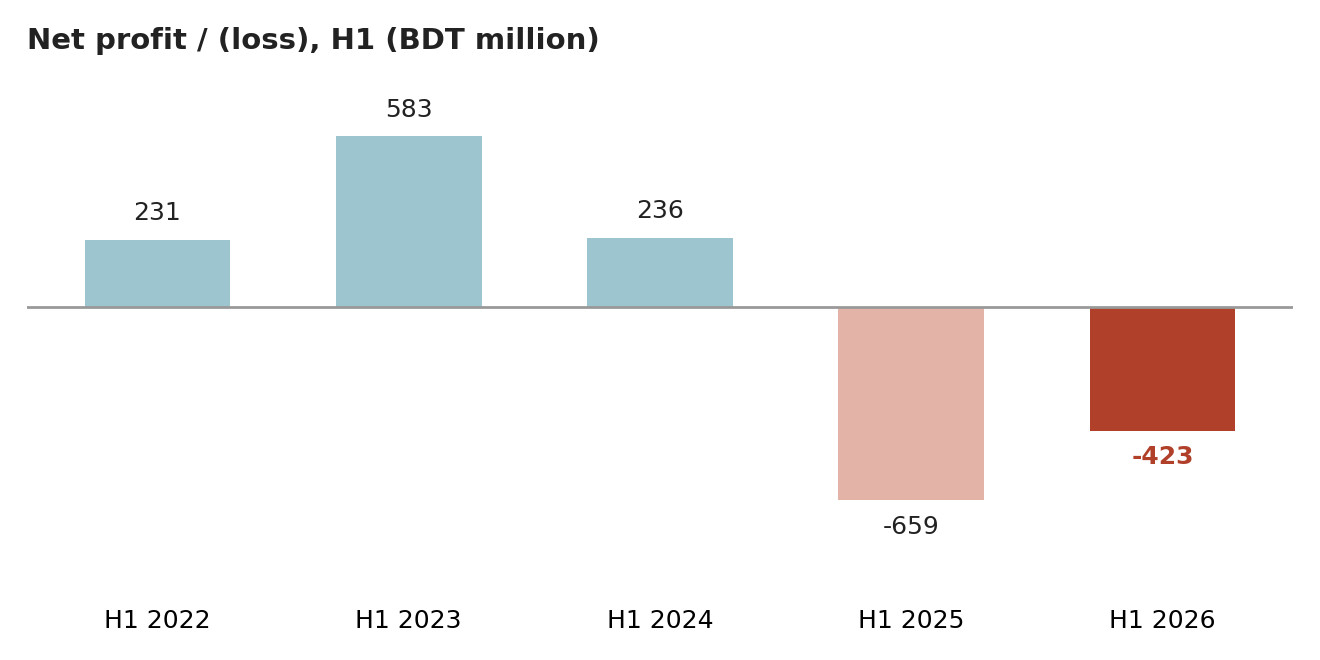
The net loss was BDT 422.7 million in H1 2026, against BDT 659.5 million in H1 2025. This follows three years of H1 profit through H1 2024 and a swing to loss in H1 2025. Loss per share was Tk (4.24) in H1 2026, against Tk (6.61) in H1 2025.
For more updates, be with Markedium.

















Leave a comment