































How a cigarette brand once associated with femininity reinvented itself through the American cowboy, creating one of advertising’s most recognisable characters while diverting attention from the dangers of smoking.
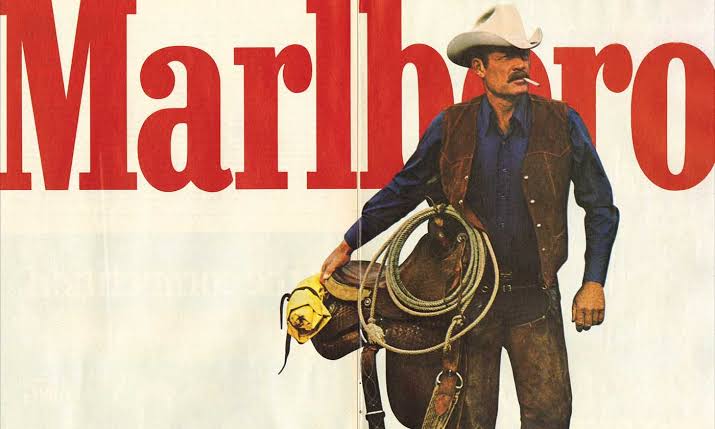
A cowboy rides across an empty American landscape. His face is weathered, his expression unreadable. Behind him, mountains stretch into the distance. There is no elaborate sales pitch, no technical explanation, and certainly no discussion of what smoking might do to his health. There is simply a man who appears to answer to nobody.

He is the Marlboro Man.
For decades, advertisers have understood that consumers do not always buy products for what they do. They also buy what those products appear to say about them. A watch can represent achievement. A car can suggest freedom. A particular brand of clothing can communicate belonging. The product becomes a symbol, and the symbol becomes part of the consumer’s identity.
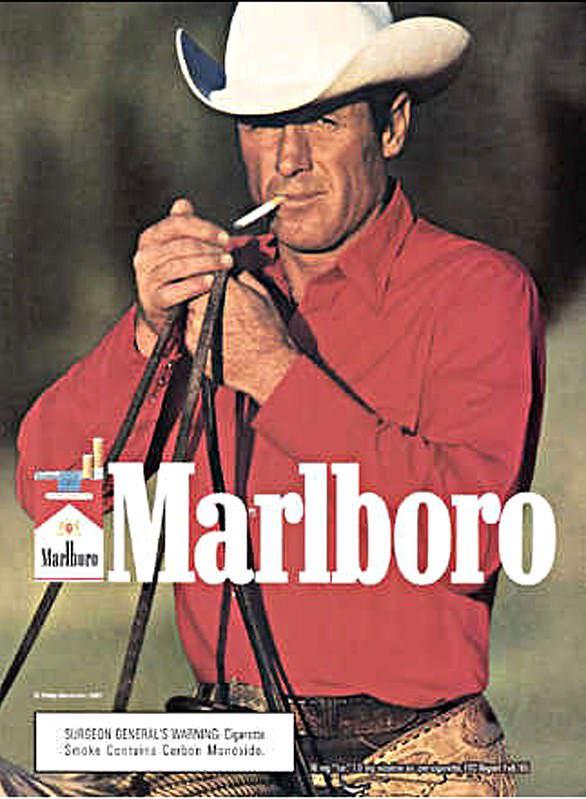
But few campaigns demonstrated this principle as dramatically as the Marlboro Man. Through a carefully constructed image of rugged independence, a cigarette brand once marketed towards women became associated with an entirely different cultural identity. The transformation was not merely a change in advertising aesthetics. It was a lesson in how emotional positioning could redirect public attention, even as scientific evidence raised increasingly serious questions about the product itself.
And it began with a problem the tobacco industry could no longer ignore.

When the Cigarette Industry Faced Its First Major Reckoning
In post-war America, smoking was deeply embedded in everyday life. Cigarettes appeared in films, television programmes, offices and social gatherings. Tobacco advertisements frequently featured glamorous personalities, athletes and even physicians. Smoking was presented as an ordinary part of modern American culture.
Yet beneath this carefully maintained image, scientific evidence was beginning to challenge the industry’s assumptions.
In 1950, important epidemiological studies established a strong association between cigarette smoking and lung cancer. Further research strengthened the evidence. Then, in December 1952, Reader’s Digest published an article titled Cancer by the Carton, bringing the emerging health concerns to a mass audience.
The article was not the beginning of scientific scrutiny, but it helped turn a medical discussion into a public concern. Cigarette consumption experienced a temporary decline, and tobacco manufacturers faced a growing commercial challenge.
The industry’s response was not to abandon cigarettes. Instead, manufacturers increasingly promoted filtered alternatives.
Filters had existed for years, but they acquired new commercial significance as smokers looked for products they perceived as less harmful. Advertising often encouraged this perception, even though filters did not eliminate the serious health risks associated with smoking.
For manufacturers, the filter offered an opportunity to retain customers who had become concerned about their habits.
For Marlboro, however, it created a different problem.
A Cigarette Brand That Had the Wrong Identity
Long before the cowboy became synonymous with Marlboro, the brand occupied a very different position in the American cigarette market.
Introduced in the United States in 1924, Marlboro had been marketed primarily towards women. Its advertising emphasised mildness and refinement, including the slogan Mild as May. The cigarettes featured distinctive tips, including designs intended to conceal lipstick marks.
This positioning gave Marlboro a recognisable identity, but it also restricted its appeal within the gender conventions of the period.
By the early 1950s, filtered cigarettes were becoming increasingly attractive to health-conscious consumers. Yet they also carried cultural associations with mildness and femininity. For male smokers accustomed to brands marketed around strength and traditional masculinity, switching to a filtered cigarette could be perceived as inconsistent with the identity they wanted to project.
Philip Morris, Marlboro’s manufacturer, recognised an opportunity to reposition the brand for a much broader market.
The challenge was not simply to introduce a different product feature. It was to change what consumers believed the brand represented.
In 1954, Philip Morris worked with the Chicago-based advertising agency Leo Burnett on a major repositioning effort. The objective was to make Marlboro appealing to male smokers without relying primarily on claims about filtration or health.
The solution would eventually become one of the most recognisable characters in advertising history.

The Birth of the Marlboro Man
When Marlboro’s new campaign debuted in 1955, it did not immediately revolve around a single cowboy.
Leo Burnett’s team developed advertisements featuring several masculine archetypes: sailors, construction workers, divers, cowboys and other men presented as confident, experienced and independent.
The campaign associated Marlboro with a particular idea of masculinity rather than with the technical characteristics of a cigarette.
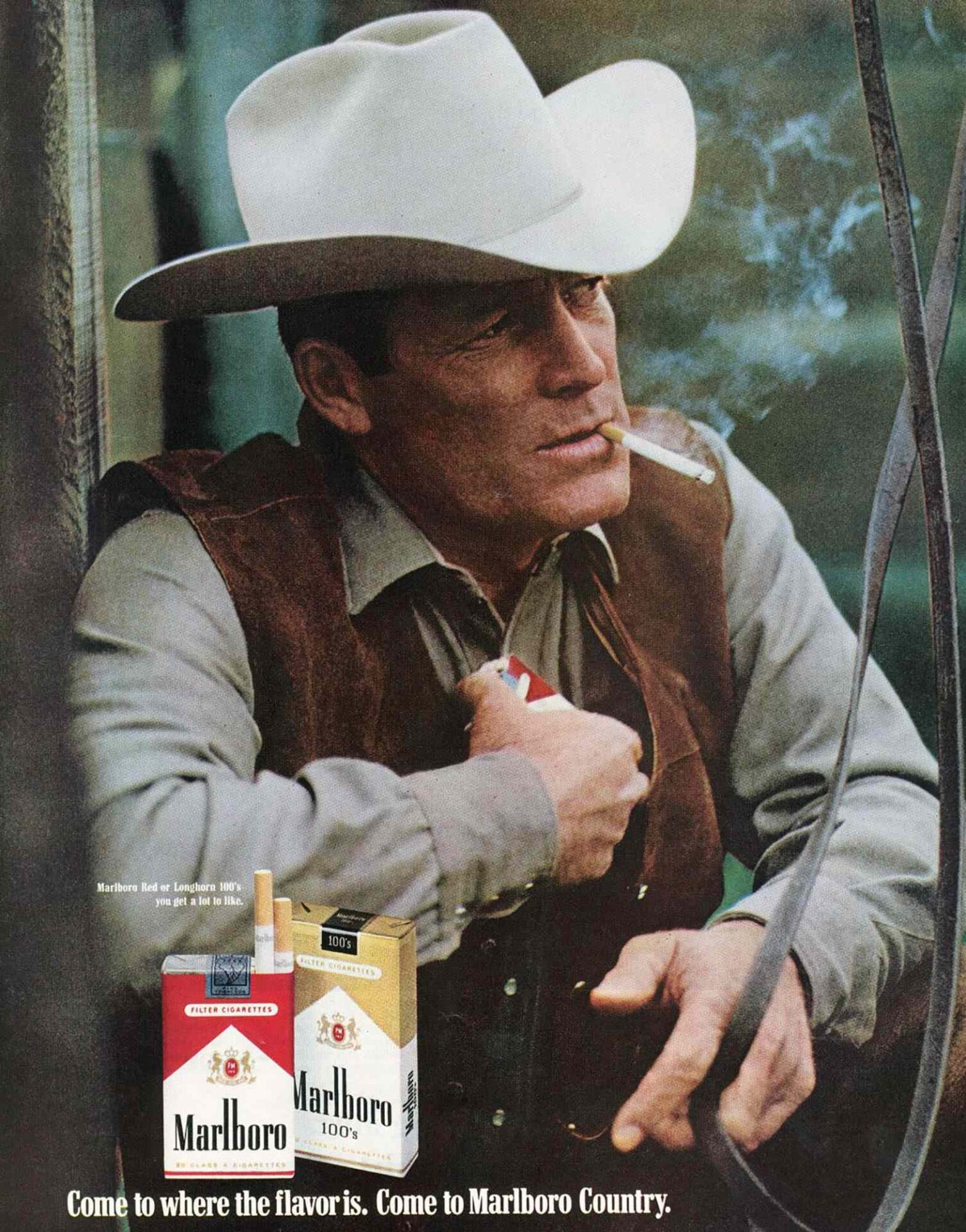
These characters were not portrayed as men seeking reassurance about smoking. They appeared comfortable with themselves, seemingly unconcerned with social approval.
The advertising offered consumers a new interpretation of the brand.
Marlboro was no longer presented primarily as a mild cigarette. It was becoming a product associated with masculine identity.
Among the campaign’s different characters, the cowboy possessed an especially powerful cultural appeal.
In the American imagination, the cowboy represented independence, endurance and freedom from conventional authority. He belonged to a romanticised frontier where a man’s character was supposedly determined by his actions rather than his social standing.
That symbolism made the cowboy particularly useful for a brand attempting to overcome an established image.
The advertising did not need to explain why a filtered cigarette should appeal to men. Instead, it placed the product alongside a character who already embodied the qualities the brand wanted to acquire.
The cigarette borrowed meaning from the cowboy.
And gradually, the cowboy became inseparable from Marlboro.

From a Product to a Place Called Marlboro Country
The cowboy’s eventual dominance was the result of a campaign that evolved over several years.
Although he appeared in the original 1955 advertisements, Marlboro continued experimenting with different masculine characters and settings.
By the early 1960s, the agency increasingly concentrated on the cowboy. In 1963, the Marlboro Country campaign developed the idea further, placing him within sweeping Western landscapes.
The result was a distinct advertising world.
Horses, open plains, mountains, ranches and wide horizons became recurring visual elements. The environment communicated independence and adventure without requiring lengthy advertising copy.
Marlboro Country was not a physical destination. It was an imagined lifestyle, constructed through imagery and repetition.
This was the campaign’s defining marketing achievement.
Instead of presenting a cigarette as an isolated consumer product, Marlboro connected it to an aspirational identity. The cowboy represented an idealised version of the American individual: self-reliant, resilient and unrestricted.
Through repeated exposure, those associations became part of the brand’s meaning.
The campaign demonstrated how advertising could create a symbolic universe around a product, allowing consumers to associate consumption with values that had little connection to the product’s actual function.
The cigarette itself had not become a symbol of independence through any functional innovation. Advertising had assigned that meaning to it.

The Commercial Transformation
The repositioning coincided with extraordinary commercial growth.
Marlboro’s sales rose sharply following the 1955 relaunch. Historical industry accounts record sales of approximately 6.4–6.6 billion cigarettes in 1955, rising to 14.3 billion in 1956 and around 19.5 billion in 1957.
By 1957, Marlboro had become Philip Morris’s best-selling cigarette brand.
The campaign’s success cannot be attributed to advertising alone. The rapid expansion of the filtered-cigarette category, product changes, distribution and broader market conditions also contributed to the brand’s growth.
Nevertheless, Marlboro’s transformation demonstrated the commercial value of distinctive positioning within a crowded market.
Many tobacco companies competed by promoting filtration, mildness or product characteristics. Marlboro increasingly differentiated itself through an emotional proposition.
It offered consumers an identity rather than a technical argument.
This distinction is fundamental to understanding the campaign’s place in marketing history.
Functional differentiation depends on what a product does. Symbolic differentiation depends on what consumers believe owning or using that product communicates.
Marlboro’s advertising made the second form of differentiation central to its competitive strategy.
The cowboy gave the brand a recognisable personality, while the repeated visual language of Marlboro Country reinforced that personality across advertising campaigns.
Over time, the association became powerful enough for the character and setting to communicate the brand without requiring extensive explanation.
By the mid-1980s, Marlboro had become the world’s best-selling cigarette brand, and its cowboy was among the most recognisable figures in American advertising.
The Psychology Behind the Campaign
What made the Marlboro Man commercially significant was not simply the use of a memorable character. It was the way that character changed the conversation surrounding the product.
As scientific evidence increasingly associated smoking with serious health consequences, the tobacco industry faced a fundamental problem of consumer perception.
Marlboro’s advertising did not resolve that problem.
Instead, it shifted the focus.
Where consumers might have questioned the health implications of smoking, the campaign invited them to associate the brand with independence, confidence and masculine identity.
This was a powerful example of emotional brand positioning.
The cowboy served as a symbolic reference point. His perceived characteristics were transferred to the brand through repeated association, a process closely related to the marketing concept of meaning transfer.
The campaign also illustrates symbolic consumption, in which products acquire value through the identities, aspirations and social meanings attached to them.
Consumers were not being offered a genuine connection to frontier independence. They were being presented with imagery that encouraged such an association.
This distinction matters because the emotional promise had no meaningful relationship with the health consequences of smoking.
The advertising created an appealing identity around a harmful product while leaving its underlying risks unchanged.
The campaign’s effectiveness therefore raises a question that extends beyond the tobacco industry: how much influence can advertising exercise over consumer judgement when emotional associations become more prominent than factual considerations?
The Human Cost Behind the Cowboy
The Marlboro Man’s cultural legacy became increasingly complicated as the health consequences of smoking grew more widely recognised.
Several individuals who appeared in Marlboro advertising later died from smoking-related diseases.
Among them was Wayne McLaren, a former rodeo rider, actor and stuntman who appeared in Marlboro advertisements during the 1970s.
After developing lung cancer, McLaren became a vocal critic of smoking and tobacco advertising. He publicly challenged Philip Morris and warned others about the dangers of the habit he had once helped promote.
He died in 1992 at the age of 51.
David McLean, another actor associated with Marlboro advertising, also died of lung cancer in 1995.
Their stories gave the campaign’s imagery a tragic historical contrast.
The cowboy had been constructed as a symbol of vitality, resilience and personal freedom. Yet the product he represented carried risks that no amount of advertising could remove.
The consequences were not confined to the individuals who appeared in the campaign. Cigarette smoking has caused extensive preventable disease and premature death across generations.
The Marlboro Man remains an example of advertising’s ability to create enduring cultural meaning, but that influence cannot be separated from the public-health consequences of the product being promoted.
When the Brand Becomes Bigger Than the Product
The Marlboro Man changed the way marketers understood the relationship between products and identity.
He demonstrated that a brand could move beyond functional attributes and build recognition through a consistent character, emotional associations and a distinctive visual world.
The campaign helped establish principles that remain relevant to modern branding: consumers respond to narratives, cultural symbols can shape perceptions, and consistency can turn an advertising idea into a lasting brand asset.
Yet Marlboro’s history also demonstrates the ethical limits of those principles.
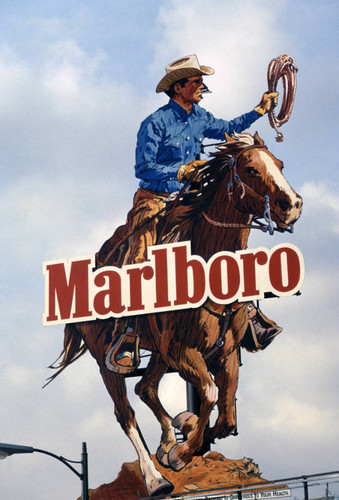
A persuasive brand identity does not make a product beneficial. Emotional associations can strengthen consumer preference while obscuring information that is essential to informed decision-making.
For marketers, the case is therefore more than a study of successful repositioning. It is also a reminder that commercial effectiveness and consumer welfare are not necessarily aligned.
The cowboy’s greatest advertising achievement was making a cigarette represent something far removed from the act of smoking.
He stood for independence. For confidence. For freedom.
But behind that carefully constructed image remained a product whose health consequences could not be rewritten.
The Marlboro Man proved that advertising could change what people believed a product represented. What it could not change was what the product did to them.
















Leave a comment