



























Background
For millions of people, finding water is only half the problem. The water they can access may still contain bacteria, heavy metals and other contaminants that make it unsafe to drink. In Colombia, this challenge is particularly serious in remote and arid regions, where access to reliable drinking water remains limited. Ogilvy Colombia identified nearly four million people living in desert areas without adequate hydration resources and began exploring a solution that could reach communities where conventional water-treatment systems were difficult to install.
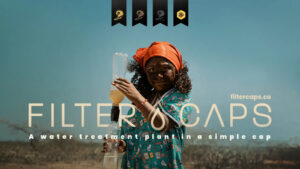
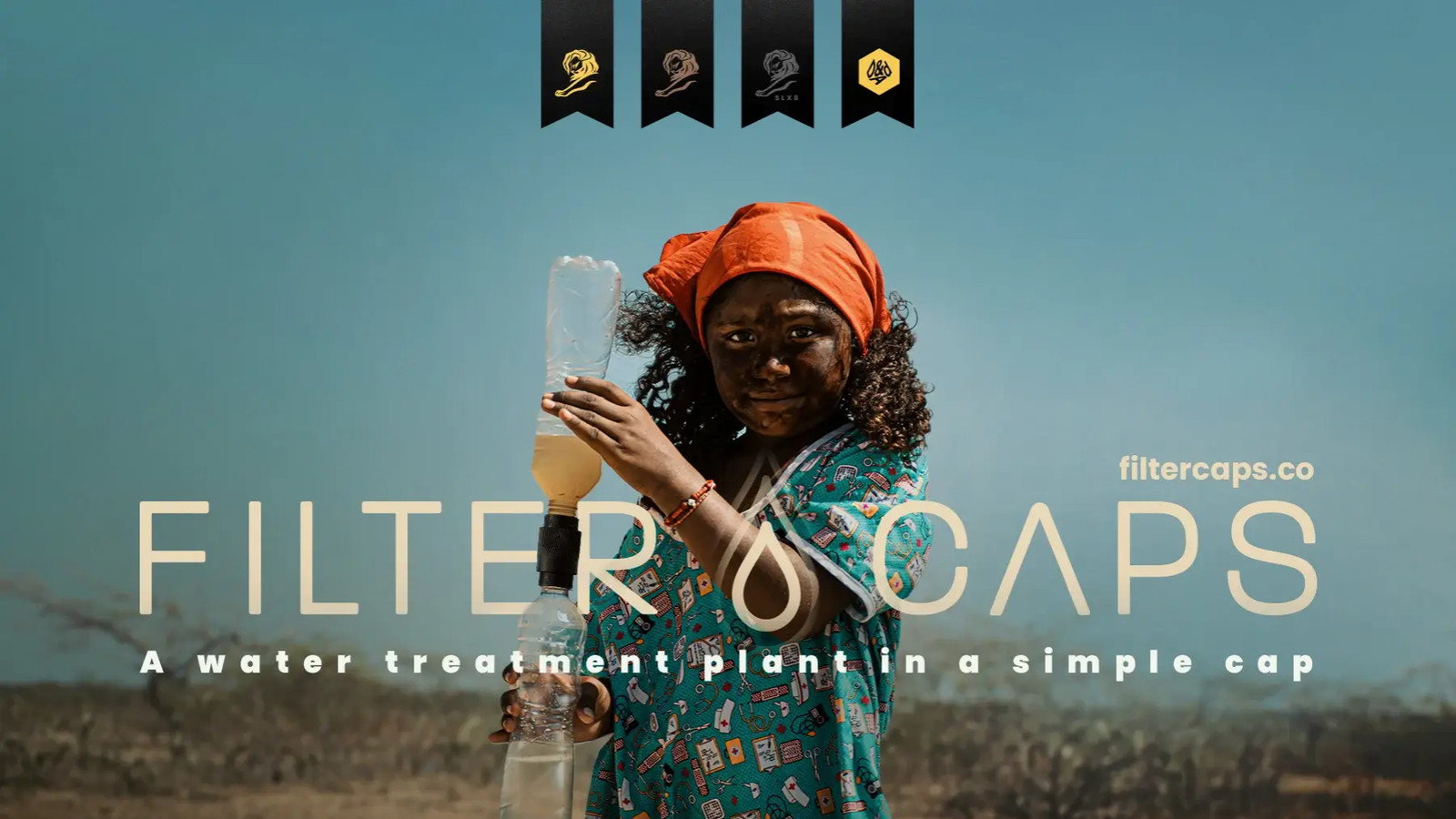
Working with Colombian water-treatment company Filsa and Baylor International, the agency developed Filter Caps, a small device designed to turn an ordinary plastic bottle into a portable water-filtration system. The project was supported by the Colombian Red Cross, which helped distribute the filters to communities in need. Instead of requiring electricity, plumbing or expensive equipment, the solution was designed around something people could already find and use: a bottle.
Insight
Traditional water-purification systems can be difficult to bring into remote communities because they often require infrastructure, installation and regular maintenance. Transporting large filtration equipment to isolated areas also adds to the cost and makes distribution more complicated. People living in these places need a solution that is affordable, lightweight and simple enough to use without technical assistance.
The team approached the challenge from a different direction. Rather than asking communities to adopt an entirely new water system, it looked at how an everyday plastic bottle could become part of the solution. A small attachment that fits onto a bottle could be easier to manufacture, transport and distribute than a conventional filtration unit.
Idea
Filter Caps was designed as a compact, biodegradable filter that fits onto standard plastic bottles. Measuring just 6 cm by 4 cm and weighing approximately 24 grams, the device uses a universal PCO 28 mm thread, allowing it to fit a wide range of commonly used bottles.
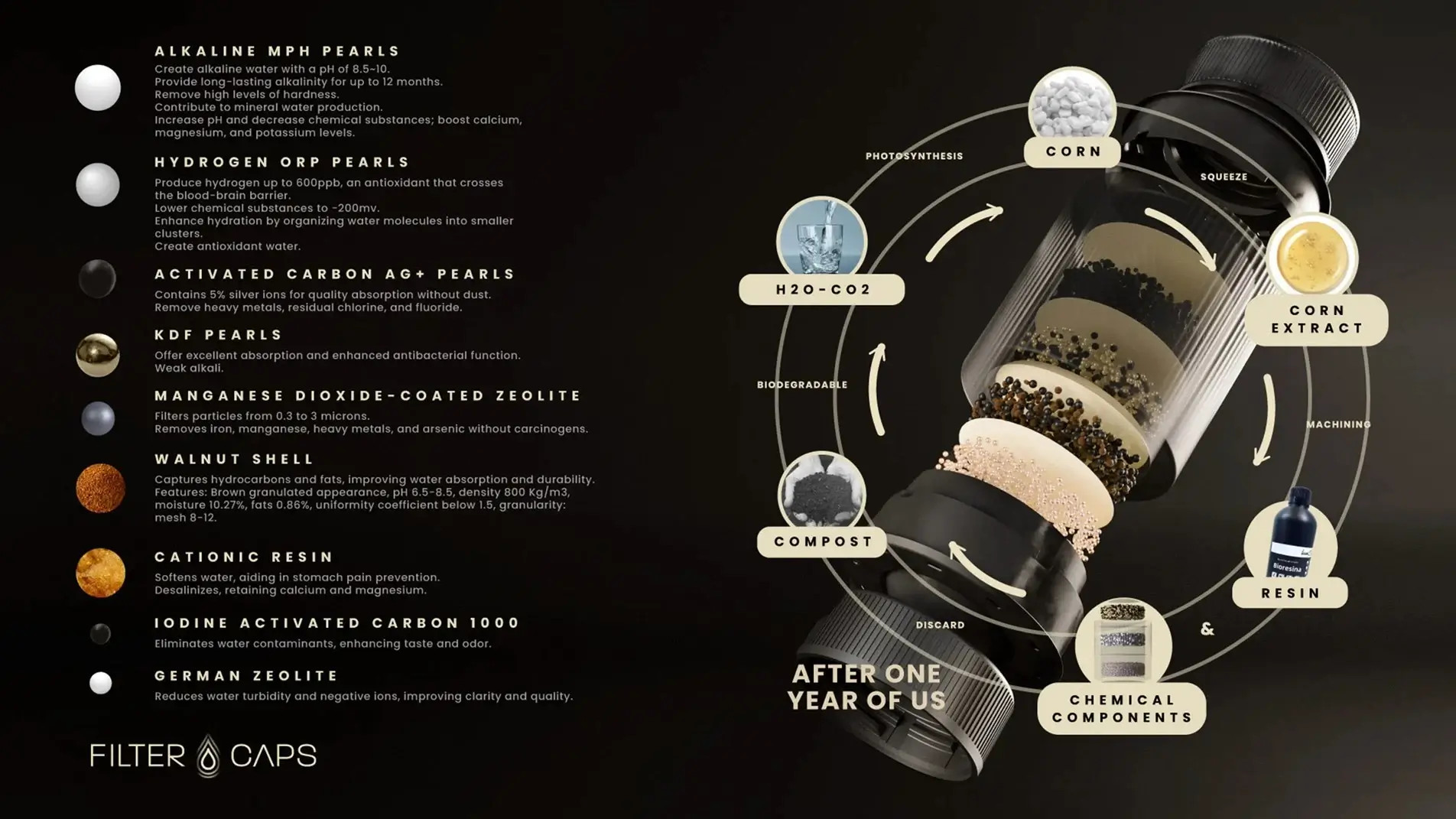
The casing is made through 3D printing with a resin derived from sweet corn starch. Inside, several layers of filtering materials, including activated carbon, minerals, metals and natural substrates, work together to retain impurities and treat the water. The final layer also adds minerals to the filtered water.
Execution
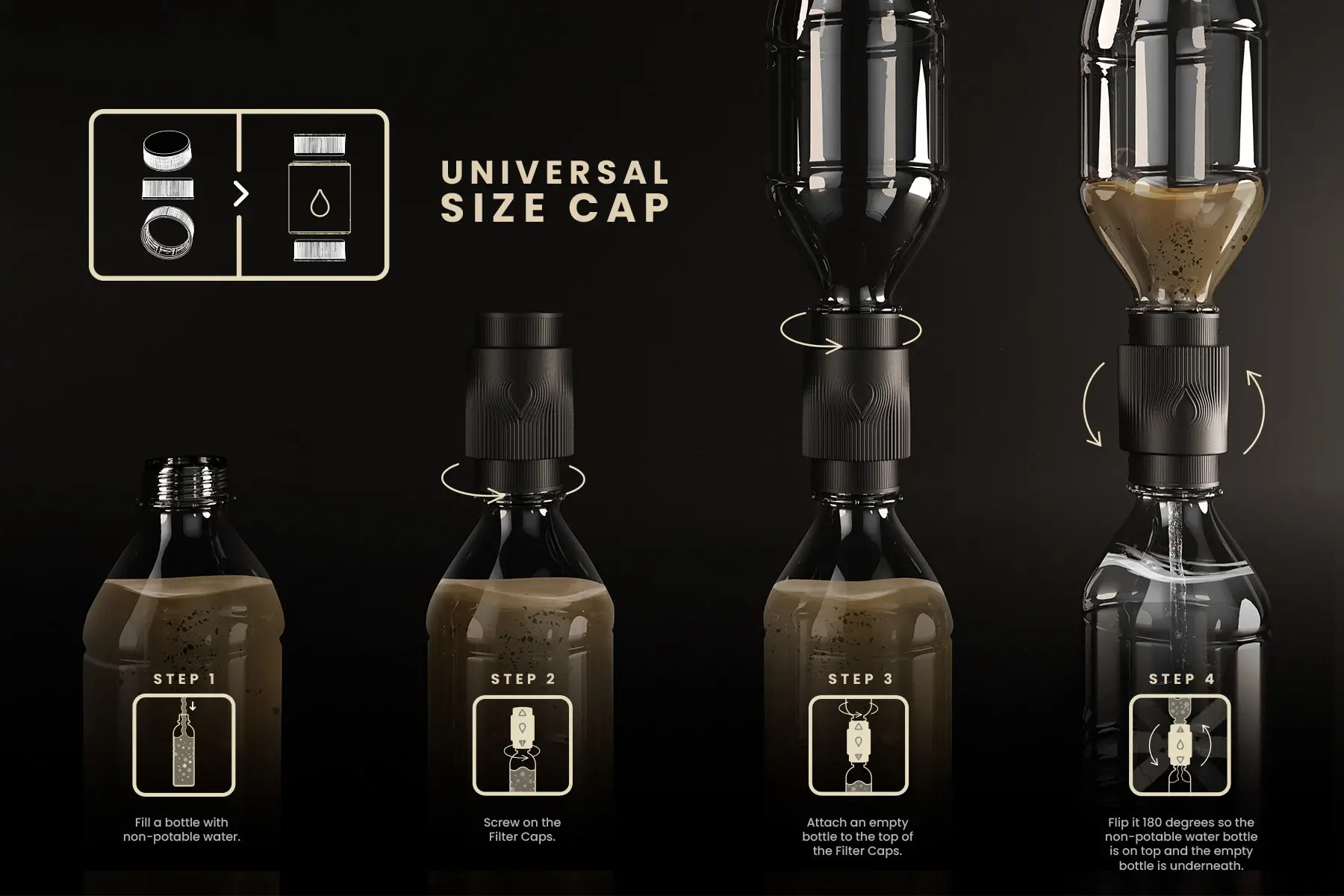
Using Filter Caps requires two ordinary plastic bottles. A person fills one bottle with water from an available source, such as a well, pond or river, and attaches the filter to its opening. An empty bottle is then connected to the other side of the cap. Once the bottles are turned upside down, gravity moves the water through the different filtration layers and into the empty bottle. The filtered water can then be collected for use.
The device’s small size made it possible to distribute without the logistical demands of larger purification systems. According to the campaign’s technical specifications, the filter removes up to 90% of heavy metals and reduces water cloudiness by 70%. It also helps adjust the water’s pH and adds minerals. These figures are reported by the project and should be understood as product-performance claims rather than a substitute for independent testing of water from every source.
The first production phase involved 1,000 Filter Caps, with the aim of reaching around 10,000 people in vulnerable Colombian communities. The Colombian Red Cross contributed 480 filters and organised distribution across communities in Cundinamarca, Huila and Cauca. Ogilvy also visited Flor de Olivo in La Guajira, where 200 units were delivered. The project was expected to provide more than 720,000 litres of treated water annually through the initial batch.
Each unit was estimated to cost less than US$6, keeping the solution relatively affordable for humanitarian distribution. Its corn-starch-based casing also offered an alternative to conventional plastic components, although the environmental benefit depends on the material’s disposal conditions.
Results
Filter Caps moved beyond an advertising concept into a physical product distributed through humanitarian partners. The initial 1,000 units were designed to reach approximately 10,000 people, while the Colombian Red Cross’s involvement helped bring the device to communities that needed access to safer drinking water. The team also expressed an ambition to produce one million units and expand distribution internationally.
The design received recognition beyond the campaign itself. In October 2024, TIME included Filter Caps in its Best Inventions list, highlighting its portability and potential to address water-access challenges. It later won a Gold Lion in the Sustainable Development Goals category at Cannes Lions, alongside recognition at D&AD and The One Show.
Filter Caps shows how a relatively small design can address a problem that usually calls for large infrastructure. By combining an ordinary bottle, a lightweight filter and a simple two-bottle mechanism, Ogilvy Colombia and its partners developed a product that could travel to places where conventional systems are difficult to reach. The idea’s strength lies in making water treatment easier to transport, distribute and use, bringing a practical tool closer to the communities that need it.
Watch the full campaign here.
Want to stay updated on the latest campaigns and creative ideas? Follow Markedium Campaigns for more.
Have a campaign you think deserves a closer look? Submit it to us here.














Leave a comment