
























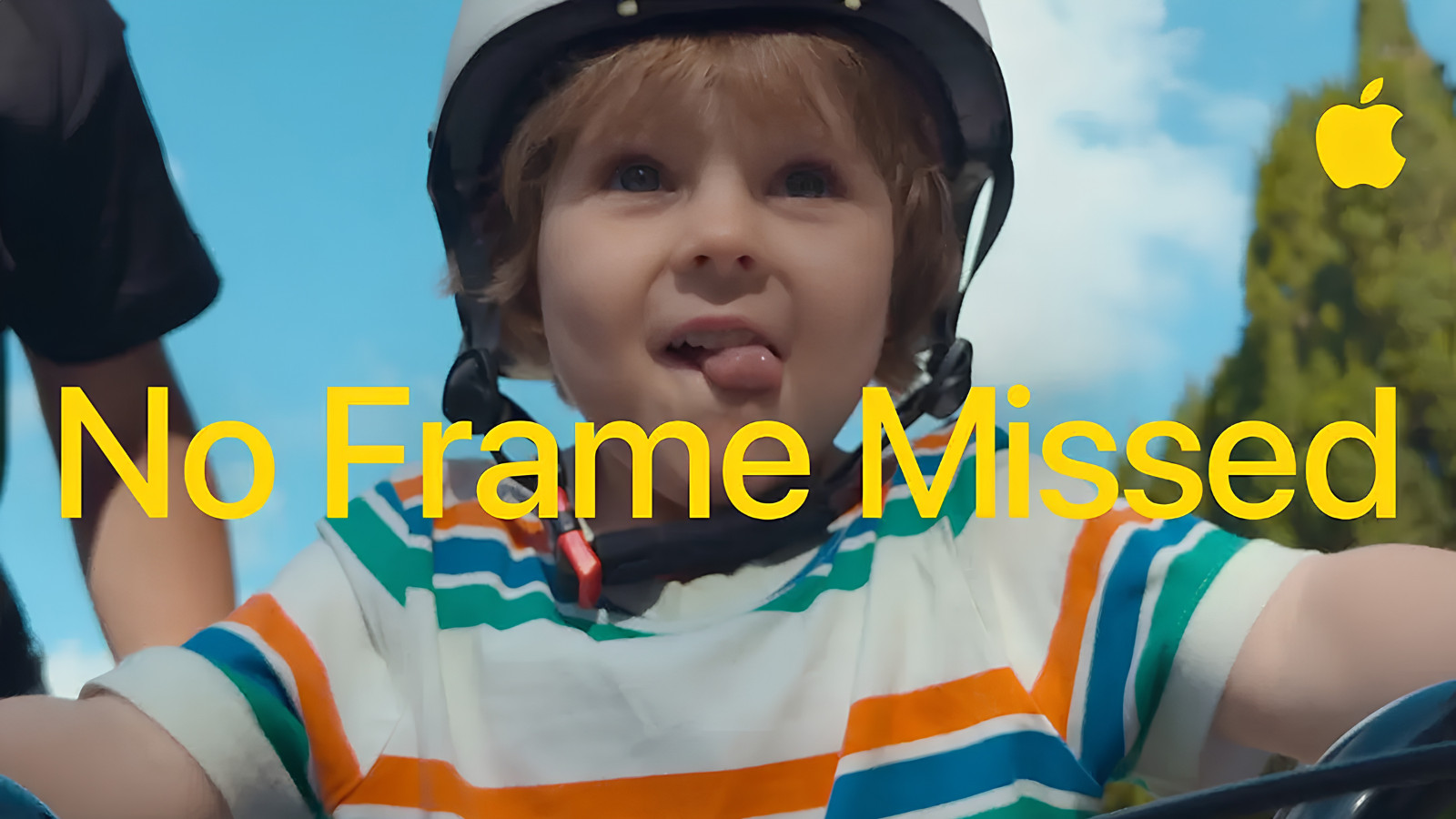
A child’s first bike ride can last only a few seconds, but for a parent, it becomes a memory worth keeping. For Brett Harvey, a filmmaker living with Parkinson’s disease, recording that moment had become difficult. Hand tremors had gradually taken him away from something he had loved doing for 30 years: working with cameras. Then he picked up an iPhone and filmed his son Dexter riding a bicycle for the first time. The footage was steady, and it was the first stable video Brett had recorded since his diagnosis.
This moment sits at the centre of Apple’s 2025 campaign, ‘No Frame Missed’, created by TBWA\Media Arts Lab LATAM and directed by Renato Amoroso. The documentary-style ad follows four people living with Parkinson’s disease and shows how the iPhone 16 Pro’s Action Mode can help them record important moments despite involuntary hand movements. Rather than presenting the feature through fast-paced sports footage or dramatic camera movements, Apple puts it into situations that are familiar to almost everyone: a child’s milestone, a family birthday and a marriage proposal.
Action Mode was introduced with the iPhone 14 in 2022. It is designed to improve video stabilisation when the camera experiences significant movement, making it useful when recording while running, walking or moving around. Apple has generally demonstrated this capability through action-heavy situations. ‘No Frame Missed’ approaches the same technology from a different perspective. For someone with Parkinson’s, even holding a phone steadily enough to record a family moment can be a challenge. The feature’s value becomes much more personal when the person behind the camera is the one who needs that extra stability. Apple’s own support guide explains that Action Mode provides improved stabilisation while recording video, although it works best in bright light and has a maximum capture resolution of 2.8K.
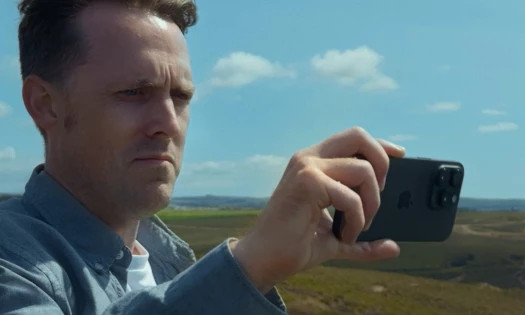
Brett’s story makes that difference clear. He describes how his diagnosis at 37 affected his relationship with filmmaking, eventually making it difficult to continue doing the work he loved. In the ad, he uses Action Mode to record Dexter’s first bike ride. He says that while filming, he could concentrate on watching his son rather than worrying about whether the camera was shaking. For him, the experience was about more than getting a usable video. It meant being able to return to a creative activity he had slowly given up. His story also gives the campaign its strongest product demonstration: viewers see the technology working in a real situation instead of simply being told that it can stabilise footage.
The other stories show how the same feature fits into different family moments. Bette, who also lives with Parkinson’s, creates a birthday video for her 94-year-old mother, Marie. Their story carries an additional layer because both mother and daughter were diagnosed with the condition, despite their significant age difference. Recording the celebration allows Bette to put together a personal surprise for someone who has played an important role in her family. In another story, Ellen, a Brazilian creative living in New York, records the moment her partner Renata proposes to her. She later shares the footage with friends and family at their wedding celebration. Each situation is different, but the need is the same: being able to capture something meaningful while it is happening.
The campaign also draws attention to the accessibility tools that can make using an iPhone easier for people with different physical needs. Voice Control allows users to navigate their device and perform actions through spoken commands, including tapping and swiping. This can reduce the need to interact with the screen physically. Apple also highlights Touch Accommodations, which lets users adjust how the screen responds to touch. A separate tutorial featuring Brett demonstrates how to use Action Mode, giving viewers practical guidance alongside the personal stories. The ad therefore connects the emotional side of accessibility with features people can actually learn to use.
One of the campaign’s strongest decisions is that it lets the people featured explain what the technology means in their own lives. Parkinson’s is not presented as a problem that a smartphone can solve. The condition remains part of their everyday experiences, and the ad does not suggest otherwise. Instead, Apple focuses on a specific difficulty that its technology can help address. That makes the product benefit easier to understand without turning the people in the ad into demonstrations of a technical feature.
For a company that has long promoted the creative possibilities of the iPhone, ‘No Frame Missed’ gives that message a more personal meaning. The camera is still being used to tell stories, but the focus shifts to people who had found it difficult to tell their own through video. Brett gets to record his son’s first bike ride, Bette preserves a birthday celebration, and Ellen keeps footage of a life-changing moment. Apple shows that accessibility can mean more than making a device easier to operate. Sometimes, it means helping someone return to an activity they thought they had lost.
Watch the full campaign here.
Want to stay updated on the latest campaigns and creative ideas? Follow Markedium Campaigns for more.
Have a campaign you think deserves a closer look? Submit it to us here.














Leave a comment