































Anyone who grew up near a television remembers the iconic Amul girl and her catchy butter advertisements. The campaign sold an agricultural revolution where millions of farmers pooled their daily milk into a massive economic system. Amul built its enterprise on a three-tier cooperative system known as the Anand Pattern. This framework placed village producers in direct control of procurement, processing and national marketing. That same cooperative model birthed Bangladesh’s largest dairy processor, Milk Vita.
Amul operates on a direct return model and gives 85 percent of every rupee earned directly back to the farmers. That figure stands higher than the global average of 33 percent. An elected state-level council hires professional managers to run daily operations. The Gujarat Co-operative Milk Marketing Federation functions as a master brand housing over 50 dairy products. Instead of building separate marketing campaigns for butter, cheese and liquid milk, Amul promotes a single name. A single billboard for Amul butter promotes the entire product line simultaneously. This umbrella branding strategy keeps marketing costs low and brand recognition high. The International Farm Comparison Network ranks Amul eighth among the top 20 dairy companies globally for milk processing. What is stopping Bangladesh from unlocking the same multibillion-dollar dairy industry?
The Market Landscape for Milk Vita
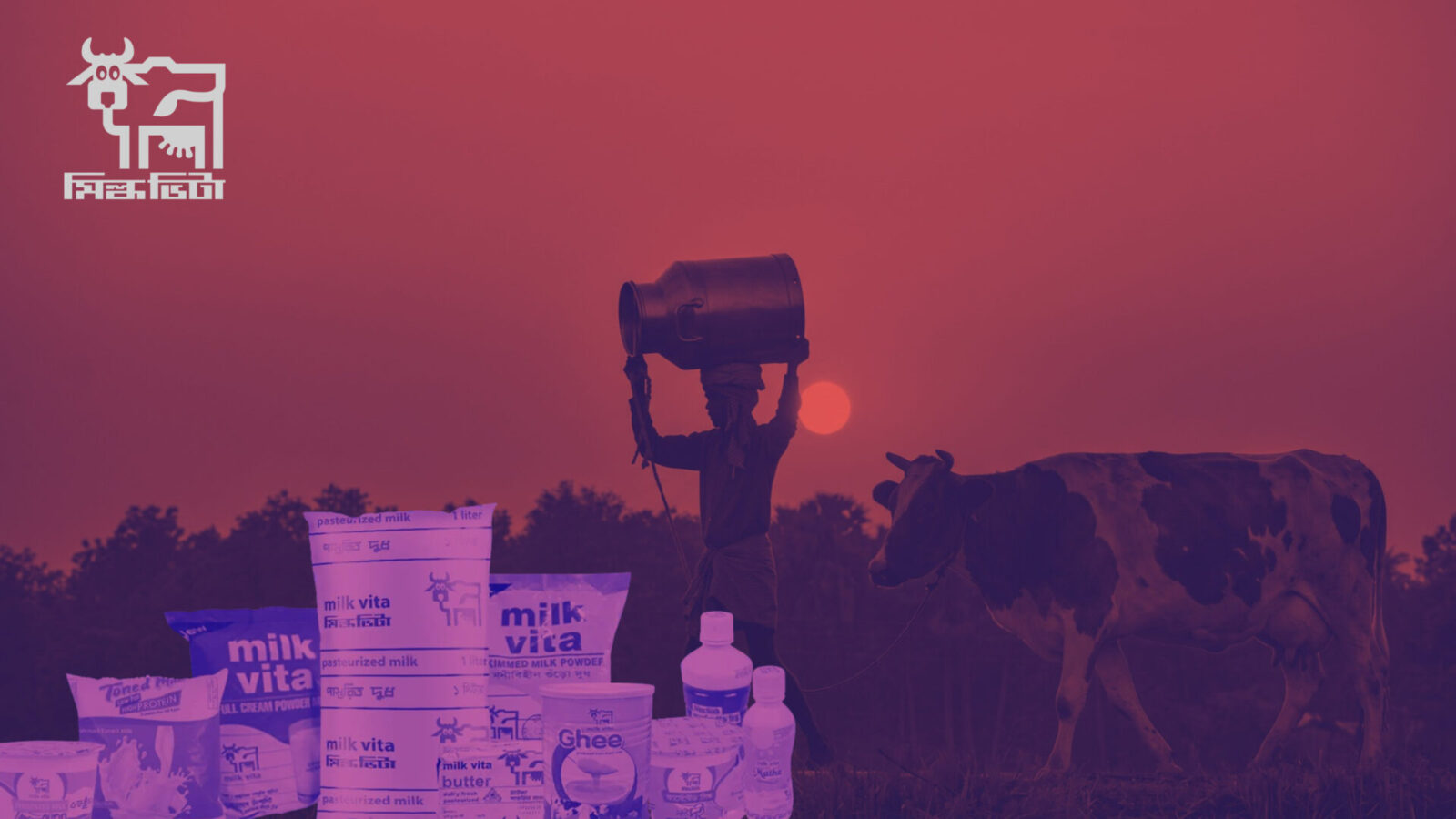
The Bangladesh Government established Milk Vita in 1973 based on recommendations by UNDP, FAO and DANIDA to replicate the cooperative model that Amul uses. Milk Vita operates as a massive cooperative holding a 40 percent market share in Bangladesh. The organization maintains a daily capacity of 3 lakh liters of pasteurised and ultra-high temperature milk.
But operating a large cooperative in Bangladesh presents distinct economic challenges. The Business Standard reports that Milk Vita incurred losses in the fiscal year 2022-23 reaching BDT 4.36 crore. The organization adjusted consumer prices in 2025. An official from the company told The Daily Star that the price of a one-litre packet of milk increased by BDT 10 from BDT 90 to BDT 100. The price of a half-litre packet of liquid milk rose from BDT 50 to BDT 55.
At the village level, farmers manage high production expenses. Research using International Farm Comparison Network data shows that animal feed prices in Bangladesh sit roughly 51 percent higher than the global average. The Daily Star reported in September 2021 that soaring wheat bran and feed prices pushed the basic production cost of raw milk to about BDT 45 per liter for marginal farmers. However, Milk Vita only paid their farmers BDT 40 to BDT 42 per liter at the farm level during that period. Farmers sometimes sell raw milk in local village markets to secure a price closer to their production costs. This dynamic caused the daily collection volume of Milk Vita to decrease.
Alternative Approaches in the Sector
Private competitors utilize different pricing strategies to maintain their supply chains. A 2022 Daily Star report notes that Aarong responded to rising feed costs by raising their milk procurement rate to around BDT 46 per liter. A May 2021 market study by LightCastle Partners confirms that Pran and Aarong held 24 percent of the national market each. These figures are quickly catching up to Milk Vita’s 40 percent share of the dairy industry.
In 2022, BRAC Enterprises senior director Mohammad Anisur Rahman told The Daily Star that due to the increase in fuel prices, the cost of milk procurement, processing and distribution had also increased, adding that “in this situation, Aarong is being forced to fix a new price.” These market adjustments show how private dairy processors are adapting to inflation and keeping farmers engaged in their supply network.
The domestic dairy of Bangladesh market holds a value of USD 2.47 billion. The country currently supplements its domestic supply with imported products. Bangladesh Bank data reveals we spent nearly BDT 4,000 crore, or about USD 370 million, importing milk powder and other dairy products in 2023. This reliance on imports presents a substantial opportunity for local dairy processors to expand their domestic procurement.

Pathways to Modernization
Recent initiatives show new pathways for cooperative modernization. The Daily Star reported that City Bank PLC, Milk Vita and Agroshift recently signed a tripartite memorandum of understanding. This Digital Dairy Financing Initiative aims to expand access to formal finance for dairy and cattle farmers through a technology-enabled ecosystem. Providing financial tools can address a key hurdle for rural dairy producers. Industry research by the Agriculture Institute highlights that democratic governance ensures farmer engagement at every tier. The research also notes that professional management ensures true commercial competitiveness. Providing backward linkages like veterinary services, training, fair pricing and digital tools can strengthen the supply base.
Blending technological partnerships with responsive pricing models offers a practical route for Milk Vita to capture more of the Bangladeshi dairy market. By placing farmers back at the center of operations, Bangladesh can hope to build a cooperative network as effective as the one introduced by those iconic Amul advertisements.
For more updates, be with Markedium.
















Leave a comment