























Background
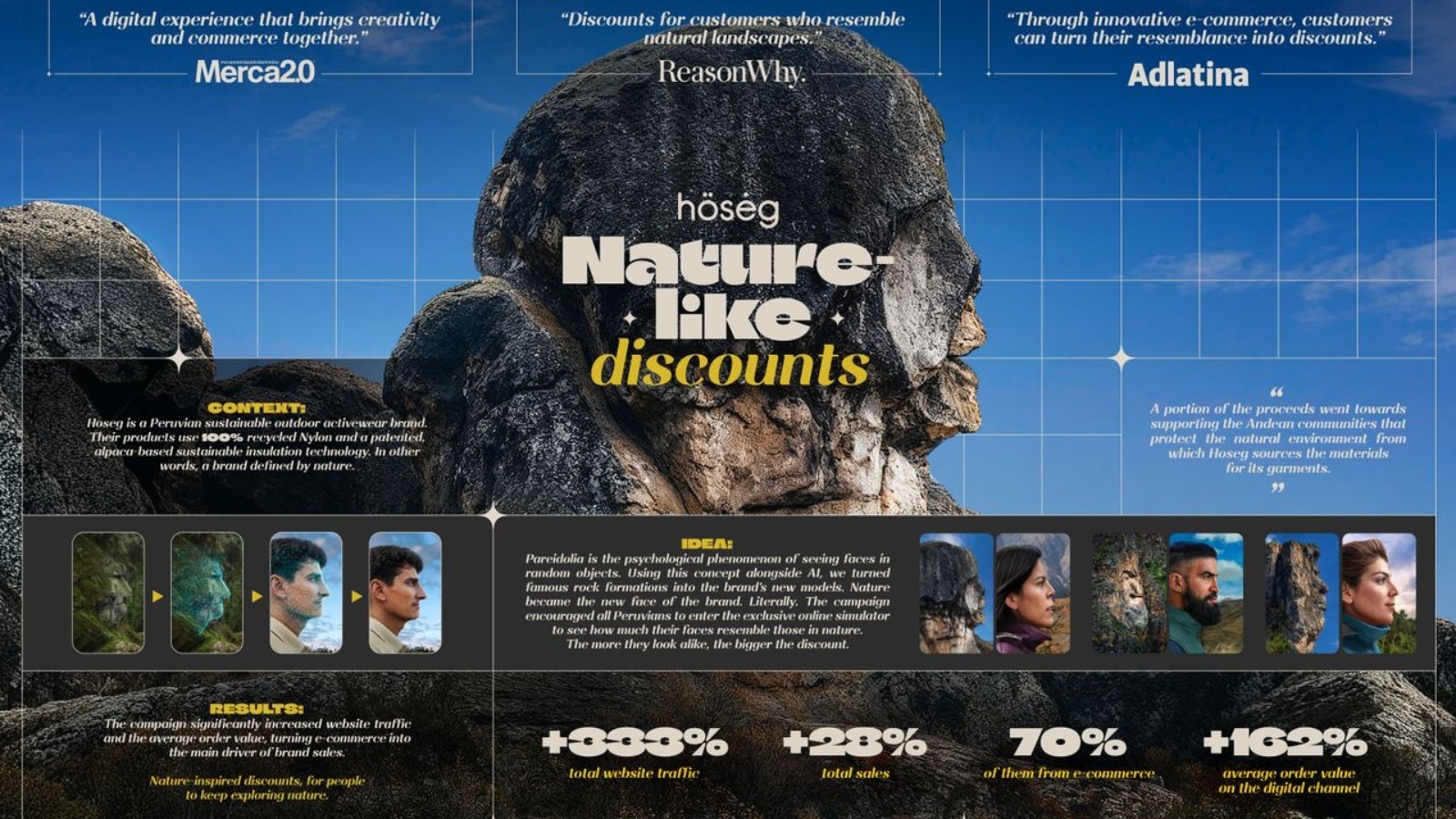
A discount is one of the oldest tricks in retail. Brands offer percentage cuts, promo codes and seasonal sales to give people a reason to buy, but in a crowded market, another sale banner rarely gives customers a reason to remember who offered it. For Hösėg, a Peruvian outdoor apparel brand, the opportunity was to make a promotion feel like a natural extension of the brand itself, rather than another attempt to compete on price.
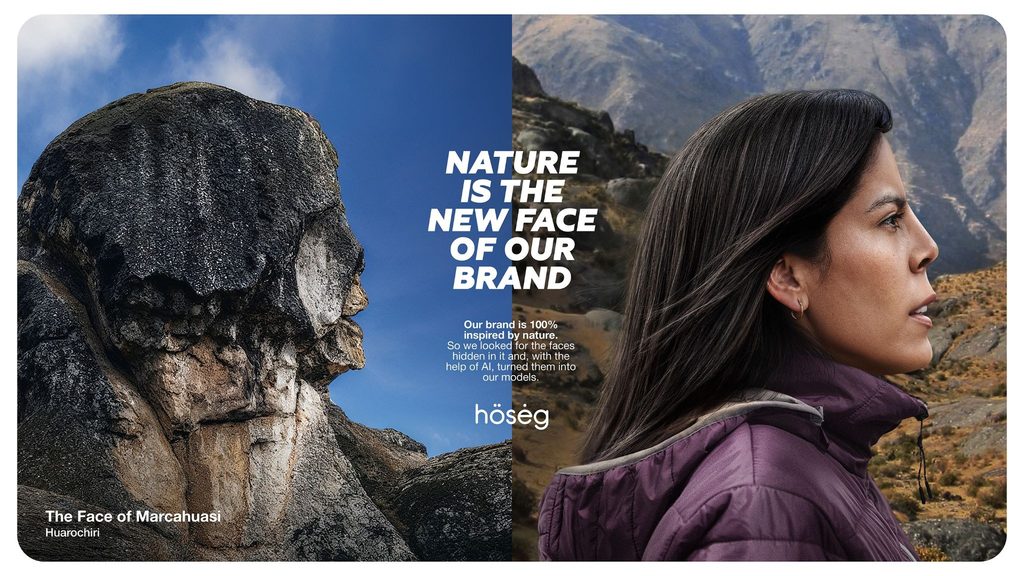
Hösėg had already been building its identity around the landscapes that inspire its clothing. Under the platform “Nature is the new face of our brand,” the company moved away from conventional fashion models and put mountains, rocks, lagoons and other natural formations in the spotlight. The thinking was straightforward: if nature is at the heart of the brand, it should have a more active role in its communication. Working with TBWA Perú, Hösėg took that thought into its next challenge: how could the brand turn its connection with nature into an experience that would encourage people to interact with it and shop? Rather than relying on a conventional discount mechanic, the team found an answer in a behaviour people already recognise from everyday life.
Insight
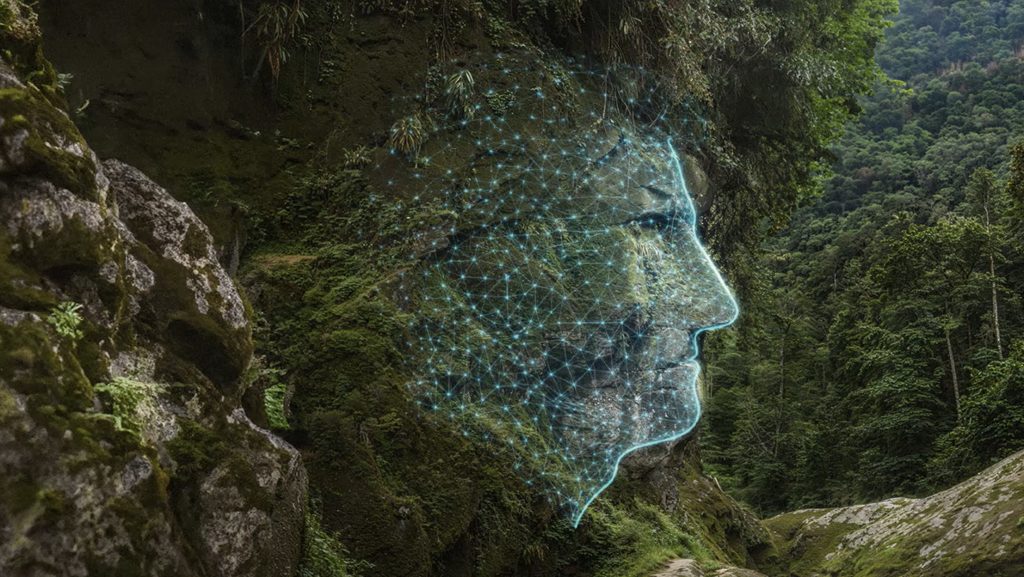
Have you ever looked at a cloud and noticed a face staring back at you? Or spotted what looks like a human profile in the shape of a mountain or rock? This familiar tendency has a name: pareidolia, the human habit of finding recognisable patterns, especially faces, in objects and shapes that are not actually faces.
The team saw an opportunity in that instinct. People did not need to be taught to find faces in nature because they were already doing it. Hösėg had also established a creative platform in which natural formations served as the faces of the brand. The next step was to bring customers into that world. If nature could become the face of Hösėg, why couldn’t customers discover how much they looked like it? The observation gave the brand a way to connect its identity with a shopping incentive, turning a familiar human reaction into something customers could experience for themselves.
Idea
Nature-like Discounts turned facial resemblance into a personalised discount.
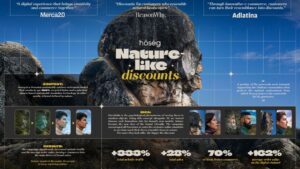
Created by TBWA Perú for Hösėg, the campaign invited customers to choose a natural formation with a face-like appearance, take a selfie and compare their face with the selected landscape through a digital simulator. The discount depended on the percentage of similarity between the two. The closer the resemblance, the bigger the discount.
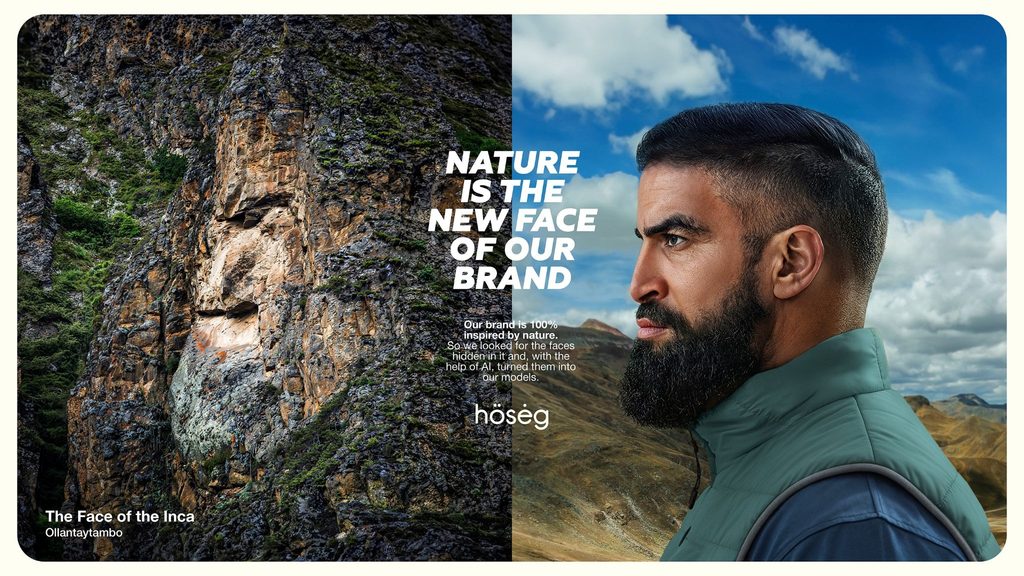
The idea gave an ordinary promotional benefit an unexpected twist. Instead of receiving an offer simply because a sale was running, customers could participate in an experience to discover what discount they would get. The natural formations were no longer just images used to communicate the brand’s outdoor identity. They became part of the shopping mechanic itself. The idea also made technology serve a clear creative purpose. Facial comparison helped calculate the offer, but the appeal came from something much more human: the curiosity of seeing whether you look like a mountain, a rock or another face hidden in nature. It was playful, easy to understand and directly connected to what Hösėg stood for.
Execution
The campaign brought the experience into the places where customers encountered the brand and made purchasing decisions. The digital simulator formed the centre of the activation, connecting the act of discovering a natural face with a personalised offer. Customers could select a landscape, upload a selfie and receive a discount based on the similarity result, giving them a reason to spend time with the brand before making a purchase.
The campaign was rolled out across e-commerce, physical stores, out-of-home advertising, social media, print materials and point-of-sale communication. Each touchpoint invited people to look at nature differently and take part in the experience. This wider rollout mattered because the idea was designed to do more than entertain people online. The promotion connected creative discovery to an actual shopping opportunity, allowing the same concept to work across digital and physical retail. The initiative also tied back to Hösėg’s environmental commitments, with campaign information stating that part of the profits supported Andean communities protecting the natural environments associated with the brand’s products. Nature therefore played several roles at once: it inspired the creative, powered the interaction and remained connected to the brand’s wider purpose.
Results
According to Little Black Book’s published campaign report, Nature-like Discounts increased website traffic by 333%, grew the average purchase value in the digital channel by 162% and raised total sales by 28%. The report also stated that e-commerce accounted for 70% of sales during the campaign. These figures suggest that the idea did more than generate attention. It gave people a reason to visit the website, interact with the brand and move closer to a purchase. The campaign’s effectiveness came from connecting the creative experience to a commercial incentive rather than treating engagement as the final destination.
The work also received international recognition. In 2026, Hösėg’s CEO, Juan Carlos Sznak, announced that the campaign won Bronze at FIAP, following finalist recognition in production and artificial intelligence categories. The campaign’s significance, however, goes beyond its awards or sales figures. It showed how a brand could take an established identity and turn it into something customers could actively experience. In a category where nature is often used as a backdrop for outdoor clothing, Hösėg gave it a practical role in the purchase journey.
Nature-like Discounts demonstrates that promotions do not always need bigger percentage cuts or louder sales messages to attract attention. Sometimes, the more interesting opportunity is to give customers a reason to participate. Hösėg and TBWA Perú took a familiar habit, finding faces in natural landscapes, and transformed it into a personalised shopping experience. A mountain became a model, a selfie became a way to unlock a discount, and a routine transaction became an interaction with the brand. The strongest part of the idea was that the promotion did not interrupt Hösėg’s brand story. It gave customers a new way to become part of it.









Leave a comment