



















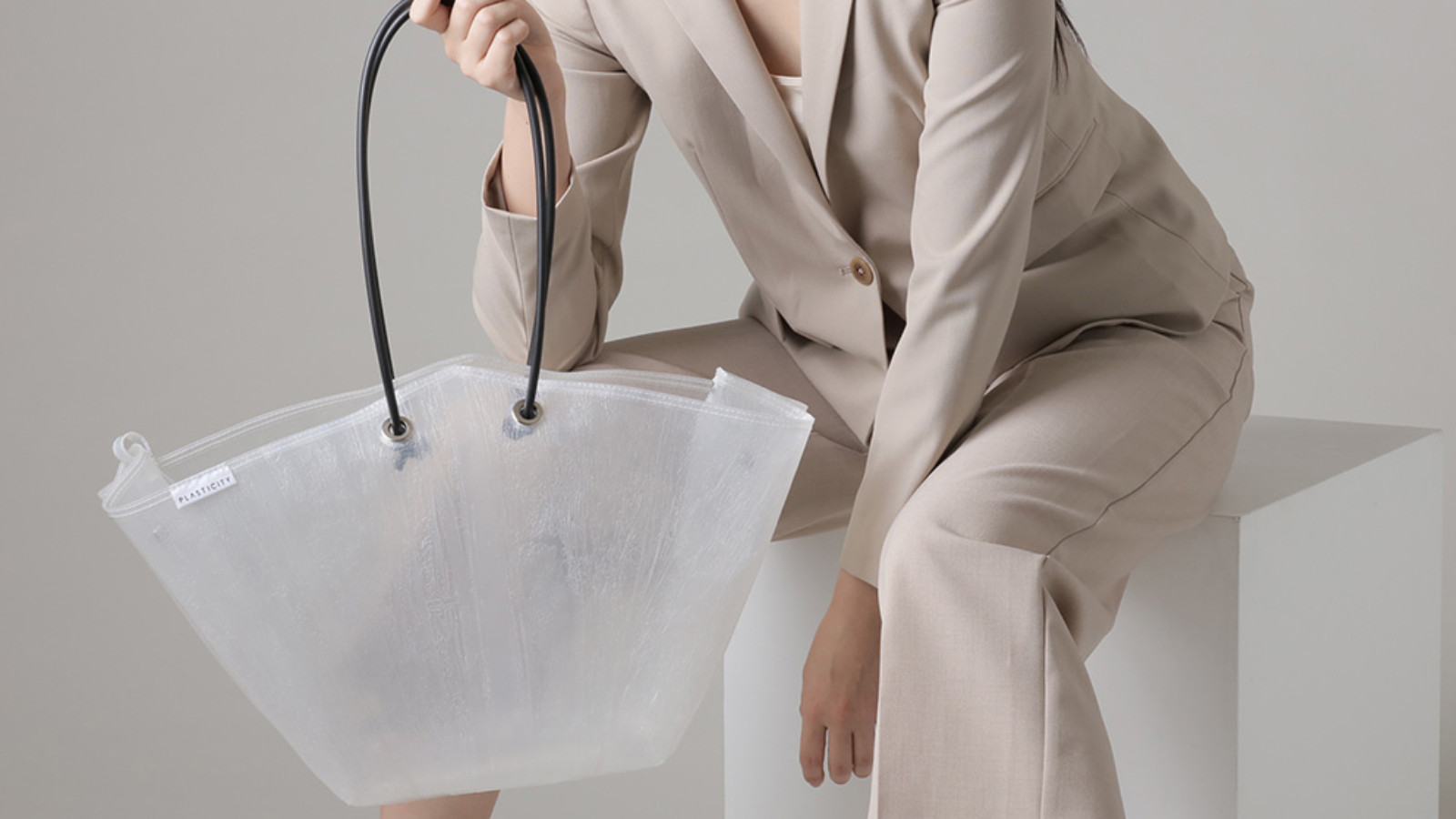
An umbrella is supposed to protect people from the rain, but in Japan, millions of them end up creating another kind of environmental problem. Around 80 million vinyl umbrellas are discarded in the country every year, many of them forgotten at train stations, left behind in shops or thrown away after limited use. Their plastic canopies are difficult to recycle through conventional methods, while their metal frames and other components make the separation process more complicated. For something designed to be used on rainy days, a discarded umbrella can leave behind a much longer environmental footprint.
Japanese design brand PLASTICITY saw an opportunity to give these forgotten umbrellas a different future. Launched in April 2020 by Mondo Design in collaboration with creator Aki Saito, the brand turns discarded vinyl umbrellas into bags and everyday accessories. However, its ambition goes beyond making useful products from waste. PLASTICITY was built around a rather unusual goal: to become unnecessary within ten years. The idea is that if fewer plastic umbrellas are discarded in the future, there will eventually be no need for a brand dedicated to reusing them. It is a business that measures its long-term success not only through the products it sells, but also through the environmental problem it hopes to eliminate.
The thinking behind PLASTICITY comes from Mondo Design’s wider approach to product development. Founded in 2006, the company launched its recycled-product label SEAL in 2007, using materials such as discarded tire tubes to create bags and other products. Its founder, Yohei Horiike, believed that materials considered waste could still have useful qualities if they were approached differently. PLASTICITY emerged from a similar idea when the team came across designer Aki Saito experimenting with discarded vinyl umbrellas and turning them into new textile forms. The concept aligned with Mondo Design’s philosophy of giving unwanted materials a second life, and the team began exploring how the process could be developed for commercial production. Rather than breaking the plastic down to create an entirely new material, the brand wanted to preserve its original characteristics and find a way to make them useful again.
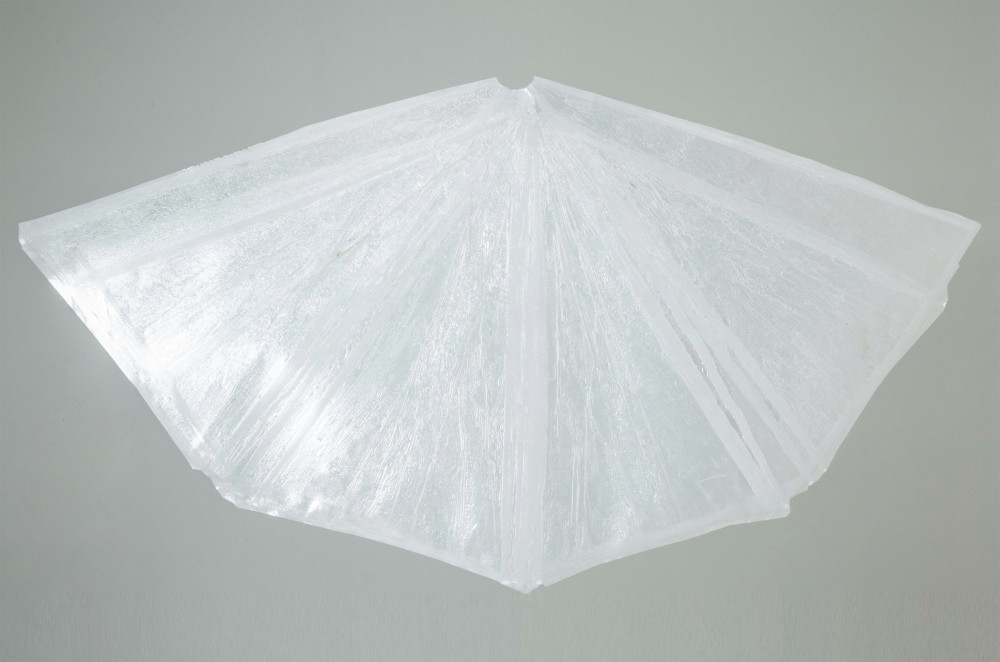
This led to the development of GLASS RAIN, PLASTICITY’s signature material. The process begins with discarded umbrellas collected from railway stations, commercial facilities, businesses and individual customers. Each umbrella is sorted, dismantled and cleaned by hand, with its plastic canopy separated from the metal frame. The metal components are sent through a separate recycling route, while the cleaned plastic is sorted according to its size, colour, thickness and condition. In the next stage, several layers of the material are carefully stacked and pressed together using heat and pressure. The process creates a distinctive translucent surface that resembles raindrops running down a glass window, giving the material its name. It also retains some of the qualities that made the umbrellas useful in the first place, including water resistance and ease of maintenance. Instead of hiding the material’s past, the brand makes its original appearance part of the product’s design.
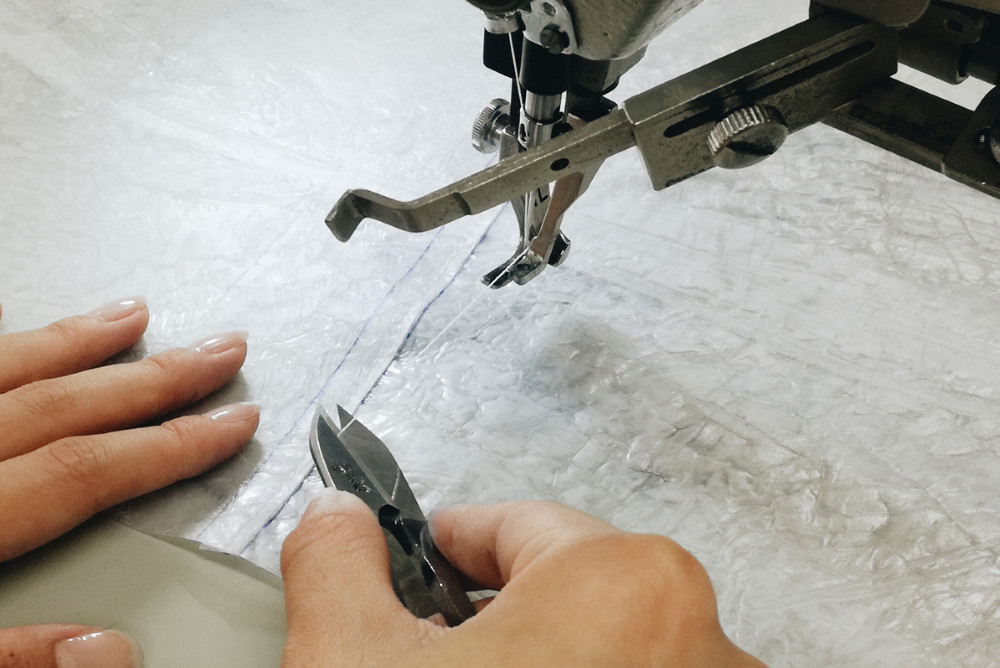
Turning this unusual material into durable bags requires considerable manual work. Since discarded umbrellas differ in size, thickness and condition, each piece of GLASS RAIN must be inspected before it can be cut and stitched. The material is produced through a series of specialised processes across different locations in Japan: umbrellas are dismantled and cleaned in Saitama, pressed into new fabric in Tochigi, and then inspected, cut and sewn by skilled craftspeople in Tokyo. The process is difficult to standardise, and only a limited number of finished products can be made from the collected umbrellas. PLASTICITY therefore places considerable importance on craftsmanship, product quality and the working conditions of the people involved. It also aims to minimise environmental impact throughout production, avoiding animal-derived materials and components wherever possible. The result is a collection of bags and accessories in which differences in the original umbrellas give each product its own appearance.
However, the brand recognises that turning discarded umbrellas into attractive products cannot solve the problem on its own. Hina Hasegawa of Mondo Design has explained that some of the umbrellas collected are almost new, which raises a concern that people might become more comfortable throwing them away simply because they can be upcycled. That would work against the brand’s original purpose. PLASTICITY wants people to understand that reducing unnecessary consumption and extending the life of existing products matter just as much as finding new uses for waste. To spread this message, the company has explored partnerships with businesses and organisations, umbrella collection initiatives and educational activities. One example involves SDG-focused workshops where junior-high students use dismantled umbrella materials to create their own products, introducing them to the possibilities of reuse through hands-on experience.
For PLASTICITY, the most meaningful outcome would be a future in which fewer umbrellas are abandoned and the need to turn them into new products gradually disappears. Its bags give discarded materials a practical second life, but the larger ambition is to change how people think about everyday waste. In a market where brands usually work to secure their place for the long term, PLASTICITY has chosen a different measure of success: creating a future in which its own existence is no longer necessary.
Visit the official website here.
Want to stay updated on the latest campaigns and creative ideas? Follow Markedium Campaigns for more.
Have a campaign you think deserves a closer look? Submit it to us here.







Leave a comment