
















From AI “workslop” to tomato athletes, what the new dentsu trends mean for brands in Bangladesh and beyond.
If you strip away the jargon, the Generative Realities report from Dentsu Creative Trends 2025 is saying something straightforward—and very uncomfortable—for brands:
The world is spinning faster, AI is pouring content onto every screen, people are more lonely and more broke, and they’re looking for brands that actually feel something.
This isn’t just another “Gen Z likes authenticity” deck. It’s a map of tensions:
- Fantasy vs. burnout
- Hyper-digital vs. hyper-local
- AI efficiency vs. human craft
- Always-on feeds vs. analog calm
From Markedium’s perspective, the report is basically a brief to marketers for 2026: build systems, spaces, and stories that sit within those tensions, rather than chasing every passing meme.
Here’s what that looks like—plus how we’ve already seen parts of it play out in the campaigns we’ve been covering across 2024–25.

Win with the algorithm, not for the algorithm
The report’s big warning: if you let algorithms write your strategy, you’ll end up looking like everyone else. The job is not to “follow TikTok” or “prompt AI harder.” It’s to understand the human forces underneath the trends—cost-of-living stress, loneliness, climate anxiety—and design for those.
You see this in how brands are using controversy, culture, and craft.
On Markedium, we framed American Eagle’s Sydney Sweeney “Great Jeans” saga as a strategic bet on controversy-driven brand value: a risky play that generated huge outrage and huge salience. Months later, the MarketingDive scoreboard showed the same cluster of celebrity campaigns driving record revenue, 44B+ impressions, and 1M+ new loyalty members.
That’s “winning with the algorithm”: not just farming outrage for clicks, but anchoring it to a real product story (denim), a loyalty system, and a long-term platform.
Brand takeaway:
- Don’t let your team measure success by “did it go viral?”
- Measure: Did it need our system? Did it grow our owned base? Did it deepen a product truth?
Blend AI efficiency with human craft and emotion
Dentsu is blunt about AI: it’s necessary, but dangerous. Used badly, it creates “workslop”—a flood of low-quality decks and content that feel dead on arrival. The winners will use AI to scale, but rely on humans to set taste, emotion, and differentiation.
We can already see both sides of this in the market.
- On one hand, you’ve probably seen the flood of generic AI social tiles and templated brand posts that feel like clones. That’s the slop.
- On the other hand, look at Revolut’s acquisition of Swifty, the AI travel agent we wrote about: AI isn’t a gimmick there—it’s wired into a clear lifestyle use case (booking travel inside your money app) and a long-term loyalty story.
Markedium POV
For Bangladeshi and regional brands experimenting with AI (copy, visuals, chatbots), the question isn’t “are we using AI?”
It’s:
- Where does AI make us faster but still recognisably us?
- Where do we insist on human craft—brand films, flagship visuals, critical CX moments—because emotion matters more than speed?
Build IP, characters and rituals (Escape Velocity)
One of the report’s strongest signals is ESCAPE VELOCITY—people retreating into toys, fandoms, collectibles, and “cute culture” as a way to cope with adult stress. Think Labubu, blind boxes, romantasy, Jellycat, kawaii everything.
Brands are told:
- Create mascots and characters
- Build worlds and lore, not just campaigns
- Accept a bit of “good friction”: fans like complexity and easter eggs
We’ve seen textbook examples on Markedium:
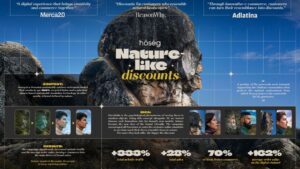
- Heinz’s tomato athletes at China’s National Games: turning tomato stems into tiny sports characters, with the line “Every tomato that strives to win is in Heinz.” That’s ingredient truth turned into IP.
- Duolingo killing Duo in a mock “mascot death” to out-meme Super Bowl spots. A hyper-defined character becomes the engine for ongoing stunts, not just a logo in the corner.
Bangladesh angle
Most local brands still treat mascots as decoration rather than assets. But in a world where fandoms and collectibles are a coping mechanism, your mascot could be your strongest media buy. Think:
- A telco owl that shows up in memes and festival stickers
- A bank “auntie” who becomes the face of financial literacy content
- A snack brand character that lives across comics, reels, and AR filters

Decenter the big city, go hyperlocal (Trad Lives)
Another major theme, TRAD LIVES, says people are being pulled back towards nature, second cities, land, and local rituals—both as an economic necessity and as a spiritual reset.
For brands, the report’s advice is clear:
- De-center capital cities; invest in second-tier cities and rural movers
- Elevate hyperlocal ingredients, crafts, and stories
- Build rituals, not just occasions—small, repeatable acts that structure people’s days
We’ve seen parts of this in:
- Our coverage of bKash shifting from “just payments” to a kind of national infrastructure—profit growth built on millions of everyday, small rituals (sending money home, topping up, paying utilities).
- Heinz again, rooting its tomato narrative in a very Chinese cultural moment (the National Games) rather than a generic global sports platform.
For Bangladeshi brands
The next phase of growth is not just in Dhaka’s Gulshan or Banani. It’s in the district-level stories:
- Tea gardens, river routes, and regional dialects
- Local festivals and melas
- Micro-rituals like iftar, village haats, and Friday leisure
Advertising that “could run anywhere” will feel less and less relevant. Advertising that smells like Sylhet rain or Barishal launch ghat will cut through.
Design new social spaces, not just ads (Alone Together)
The ALONE TOGETHER theme is brutal: loneliness is a crisis, especially for younger people. The old “third places” are disappearing, so people are creating new ones—silent book clubs, Mahjong nights, sauna raves, sober-curious clubs, creator meetups.
The report’s challenge to brands:
- Stop thinking in 30-second spots; start thinking in spaces and formats where people can gently be together
- Treat creators as infrastructure, not decoration—give them tools, IP, shared upside
On Markedium, we’ve seen glimmers of this in:
- No/low alcohol and “soft clubbing” formats in global campaigns
- American Eagle’s use of Martha Stewart as a cross-generational “host” figure—someone who can hold a space where teens, parents, and even grandparents meet
For Bangladesh
Imagine:
- A bank that hosts “silent study nights” for students during exam season
- A telco that turns its flagship shop into a monthly creator cafe/book club
- A beverage brand that owns the “early morning adda” at parks with walking clubs
These are not CSR events. They’re recurring formats—new third places—where your brand becomes the background music to authentic connection.
Embrace analog futures: archives, friction, and respect for offline
Finally, ANALOG FUTURES is the quiet counter-movement: young people leaning into flaws, friction, nostalgia, and archives as an antidote to polished algorithmic feeds.
The report suggests:
- Mine your archive—logos, packaging, campaigns—for reinvention
- Lean into textures and imperfections; don’t over-smooth everything
- Take disconnection and mental health seriously in your product and comms
Markedium’s favourite examples:
- Johnnie Walker’s “Keep Walking” refresh, reframing progress from big group manifestos to small, deeply personal “keeps.” That’s a heritage line, re-cut for a fractured, anxious era.
- Jaguar’s “Copy Nothing | Delete Ordinary” move—controversial, yes, but undeniably an attempt to escape copy-paste auto advertising and lean into a more art-like, analog-feeling brand world.
Local brands can
- Bring back old pack designs as limited runs with stories attached
- Accept production quirks (grain, film textures, hand-drawn typography) instead of obsessing over hyper-smooth CGI
- Bake “offline respect” into UX—settings that reduce notifications, features that encourage breaks, campaigns that celebrate logging off
Markedium POV in Dentsu Creative Trends 2025
From where we sit, the Dentsu report isn’t a trend toy. It’s a planning tool. For 2026, a Markedium-flavoured checklist might look like this:
- Strategy: Are we chasing trends or designing around real human tensions (money stress, loneliness, AI fatigue)?
- Systems: Is this idea a one-off stunt, or can it become a platform like Shot on iPhone, Heinz tomato worlds, or Duolingo’s ongoing Duo saga?
- AI: Where are we using AI deliberately, and where are we letting it quietly lower our standards?
- IP & Rituals: What’s our Duo, our tomato athlete, our festival ritual? Or are we just renting attention through media buys?
- Local Edge: What are we doing that only a Bangladeshi brand, from this city, in this culture, could do?
If 2025 was the year brands learned they could use AI and controversy to get attention, 2026 will be the year they’re judged on what they build with that attention.
From our side at Markedium, we’ll keep doing what we do best: connecting the global decks to local streets—and turning “Generative Realities” into campaigns that actually move people, not just pixels.





Leave a comment