

























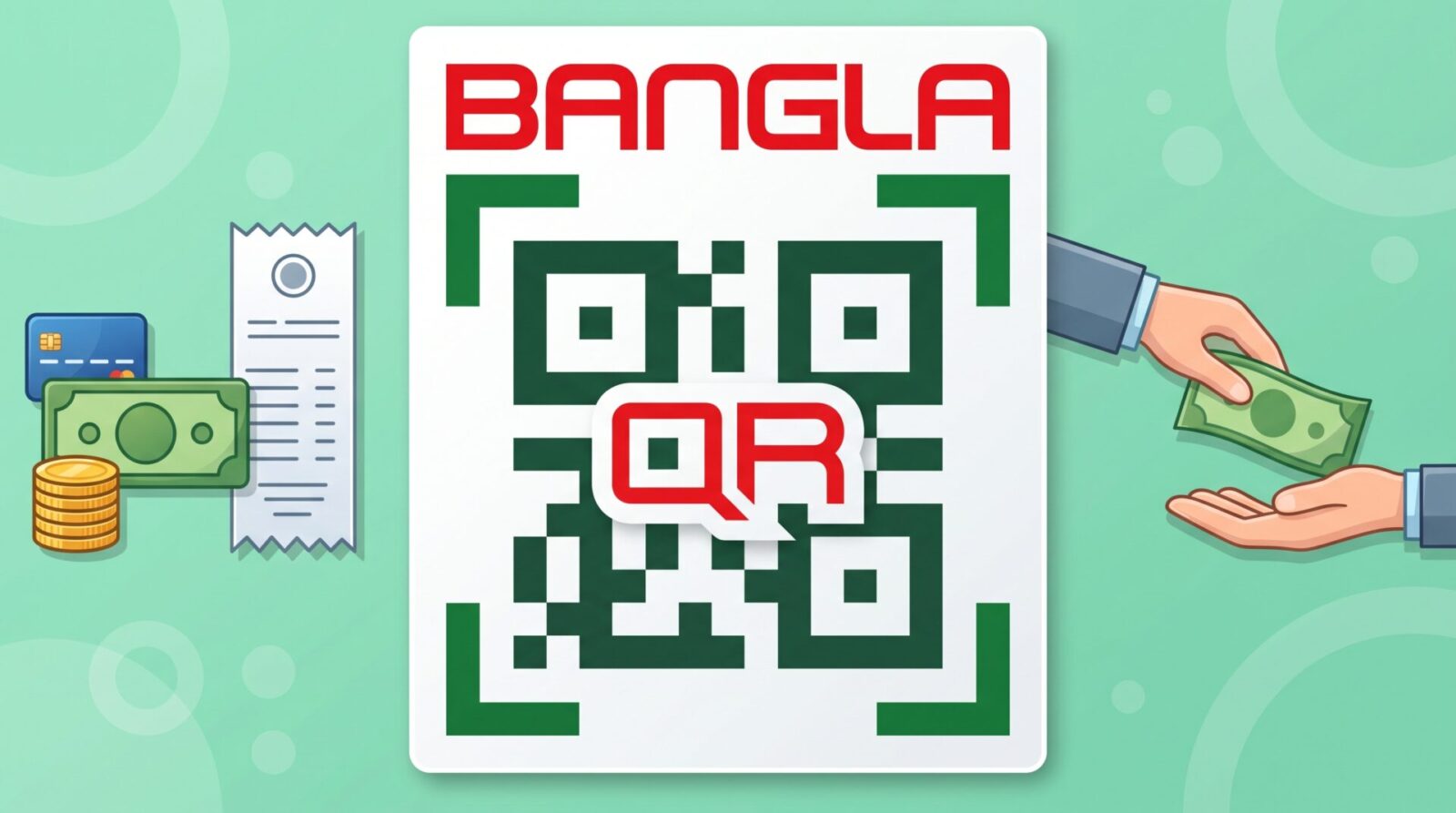
You have probably scrolled past dozens of posts about Bangla QR on your feed recently. Doesn’t it make you wonder why there is so much noise over a simple square code?
The buzz around Bangla QR is not just happening on social media. It is showing up in daily life every time you go out to buy something. When you pull out your phone to pay with bKash, Nagad or Rocket at a grocery counter, a standard Bangla QR logo is now displayed on the payment stand. More than 9 lakh outlets across Bangladesh now have Bangla QR as part of a nationwide plan by Bangladesh Bank. To replace the different QR codes used by different payment services with one common system, the central bank set a 1st July, 2026 deadline. Institutions that failed to comply faced fines of up to Tk 3 million. Regulators also introduced direct cash commissions for participating banks and mobile wallets to encourage faster adoption of Bangla QR.
Even so, a single code on a counter hardly seems like a big deal. Can Bangla QR really have a positive impact on everyday consumers?
One QR Payment
Previously, a shopkeeper with a bKash merchant code could only accept payments from bKash users. A customer using Nagad or Rocket had to pay in cash. This made digital payments inconvenient for shoppers and forced shopkeepers to manage multiple payment accounts. Bangla QR aims to solve this problem by creating one common standard. It connects banks, mobile wallets and payment apps through the National Payment Switch Bangladesh, which acts as a central system for routing payments between different financial providers.
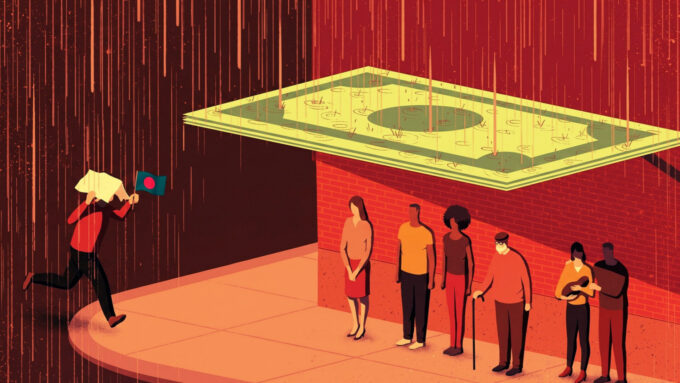
Bangladesh Bank prepared the Bangla QR framework in 2021 and brought its live settlement system into operation in 2023. But the real nationwide expansion began on July 1, 2026, when regulators ordered a large-scale adoption of Bangla QR. The expansion quickly ran into trouble. On the same day, Bangladesh Bank introduced a rule requiring merchants to pay a 1 percent fee whenever a customer paid through Bangla QR. For a roadside vendor, this meant losing Tk 10 from every Tk 1,000 in digital sales. For small businesses already working with thin margins, even this charge could cut into their daily earnings.
On August 10, 2026, Bangladesh Bank removed the 1 percent merchant fee to make Bangla QR more affordable for small businesses to accept. It also reduced the interbank charges on Bangla QR transactions to zero. Merchants can now receive the full amount paid by customers without a transaction fee being deducted from their sales. A customer can now open any supported banking or wallet app, scan a Bangla QR code and complete a payment in seconds. This makes everyday payments simpler for both shoppers and small retailers. A local grocer in Kapasia or a clothing seller in Sylhet no longer needs to buy an expensive card machine to accept bank card payments. They can display one QR stand and accept payments from customers using different digital payment services.
Bangladesh Bank has also mandated that customer payments made through Bangla QR be transferred to merchants’ accounts almost instantly. This gives small businesses immediate access to the money from their sales instead of making them wait for the payment to settle. Bangla QR benefits could go beyond faster payments. Financial institutions are now testing programs that use verified sales records generated through Bangla QR payments to assess small traders for loans. This could allow traders without collateral or a formal credit history to access bank financing based on their recorded sales.

Why Is BB Going All Out for One QR?
Bangladesh Bank broadcasts official podcasts on its Facebook page to explain the Bangla QR shift directly to citizens. In a recent podcast, Payment Systems Department Director of Bangladesh Bank, Md Sharafat Ullah Khan explained how the common QR standard simplifies retail payments. He said Bangla QR directly benefits ordinary consumers and micro-merchants while supporting wider financial inclusion. Bangladesh Bank Governor, Md. Mustakur Rahman also toured Nila Market in Purbachal on July 25, 2026, personally paying vendors through Bangla QR to demonstrate the system and urging shopkeepers and shoppers to adopt it as a safe, fast, and convenient payment method. Regulators are also organizing promotional events such as the Bangla QR Mela and running field workshops in regional commercial hubs. An August 20, 2026 awareness session in Rajshahi, organized with the International Finance Corporation, saw Bangladesh Bank officials say the national Bangla QR standard enables seamless, interoperable payments for both customers and merchants and serves as a crucial pillar for a cashless economy.
There is a financial reason for Bangladesh Bank to push people away from cash. Physical money costs the country money to produce and manage. The Security Printing Corporation (Bangladesh) Limited manufactures the banknotes of the country. A September 2026 report by Prothom Alo shows that Bangladesh spends around Tk. 5 billion annually to print new banknotes. Production costs have surged over the past five years due to rising raw material prices and exchange rate shifts. An analysis of the central bank shows it now costs Tk 10.44 to manufacture a single Tk 1,000 note. The printing cost for smaller denominations has jumped even higher. A Tk 50 note now costs Tk 4.89 to print and a Tk 20 note costs Tk 5.20. Every transaction that moves from cash to digital will reduce the ongoing need to print, transport and replace this expensive physical money.
There are also wider economic benefits to having more transactions take place digitally. Bangladesh Bank Deputy Governor Dr Habibur Rahman said that when more businesses accept digital payments, more of their sales are automatically recorded. This makes previously unrecorded business activity easier to see and gives a clearer picture of how much the economy is producing and selling. Deputy Governor Kabir Ahmed said this shift could also help the government collect more taxes. As more previously unrecorded sales become visible, more businesses and their income can eventually come within the tax system.
The Flip Side of Bangla QR
Making digital payments free for merchants solves one problem but creates another. Banks and mobile wallet companies still have to pay for servers, agents and the systems needed to process transactions. Bangladesh Bank has removed the interbank fees that financial institutions previously charged one another to process Bangla QR payments. The central bank now offers small cash commissions of 0.10 percent for acquiring institutions and 0.20 percent for issuing institutions, but only for transactions up to Tk 2,000. This means financial institutions must process larger payments without receiving interbank fees to cover their operating costs. These companies also cannot easily pass those costs on to everyday users without making digital payments less attractive and slowing adoption.
Bangla QR also faces a growing problem with fraud at retail counters. Some shopkeepers misuse QR codes to conduct unauthorised cash-out activities instead of selling actual goods. Customers can become involved in these fake transactions without understanding the legal risks. To prevent people from exploiting the incentive system, Bangladesh Bank has prohibited splitting one large payment into several smaller transactions simply to claim the cash bonuses. Financial institutions are required to monitor unusual increases in sales and verify merchant activity.
The central bank has also said it will withhold government bonuses on fake, failed, cancelled or disputed transactions. If misuse is established, the central bank will hold the responsible financial institution accountable and take action under the Payment and Settlement Systems Act of 2024.

Did Any Other Country Do Something Like Bangla QR?
Bangladesh is not the first country to use one QR standard to bring different payment services together. Singapore was the first country in the world to launch a unified QR code payment system, with SGQR combining 27 digital payment schemes under a single merchant code at its 2018 launch. Bank Indonesia has launched the Quick Response Code Indonesian Standard to connect different payment codes across the country. The system reached 65.77 million users and 44.86 million merchants by June 2026. Their central bank data shows that 96.68 percent of those merchants are micro, small and medium enterprises.
India also built its massive Unified Payments Interface (UPI) network by eliminating merchant fees. The Indian government used public funds to compensate payment providers for processing low-value digital transactions. This included a 1,500 crore rupee budget allocation for the 2024-25 fiscal year. China has expanded its mobile payment services such as Alipay and WeChat Pay by investing heavily in digital payment infrastructure, including in rural areas.
Likewise, Bangladesh has many of the tools needed to build a successful digital payment system. The central bank has removed the main cost barrier for small retailers by replacing merchant fees with direct incentives. But technology and subsidies alone do not automatically create a cashless economy. According to a Transparency International Bangladesh review of Bangladesh Bank data, as of December 2024 the country had about 237 million registered mobile financial service accounts, of which only 37.6 percent were active. Many accounts remain inactive for months because they were created mainly to receive government stipends. Beneficiaries often withdraw the full amount in cash immediately. For many Bangladeshis, mobile wallets still function more like temporary cash collection points than everyday payment tools. Wholesale markets and supply chains also continue to rely heavily on physical cash.
The success of Bangla QR therefore depends on whether digital payments can become part of people’s everyday habits. Consumers and roadside sellers will choose a QR scan over paper notes only if the digital process is fast, safe and reliable. Bangladesh Bank has already put Bangla QR on hundreds of thousands of shop counters. The real task now is getting people to trust it and use it every day.
For more updates, be with Markedium.










Leave a comment