































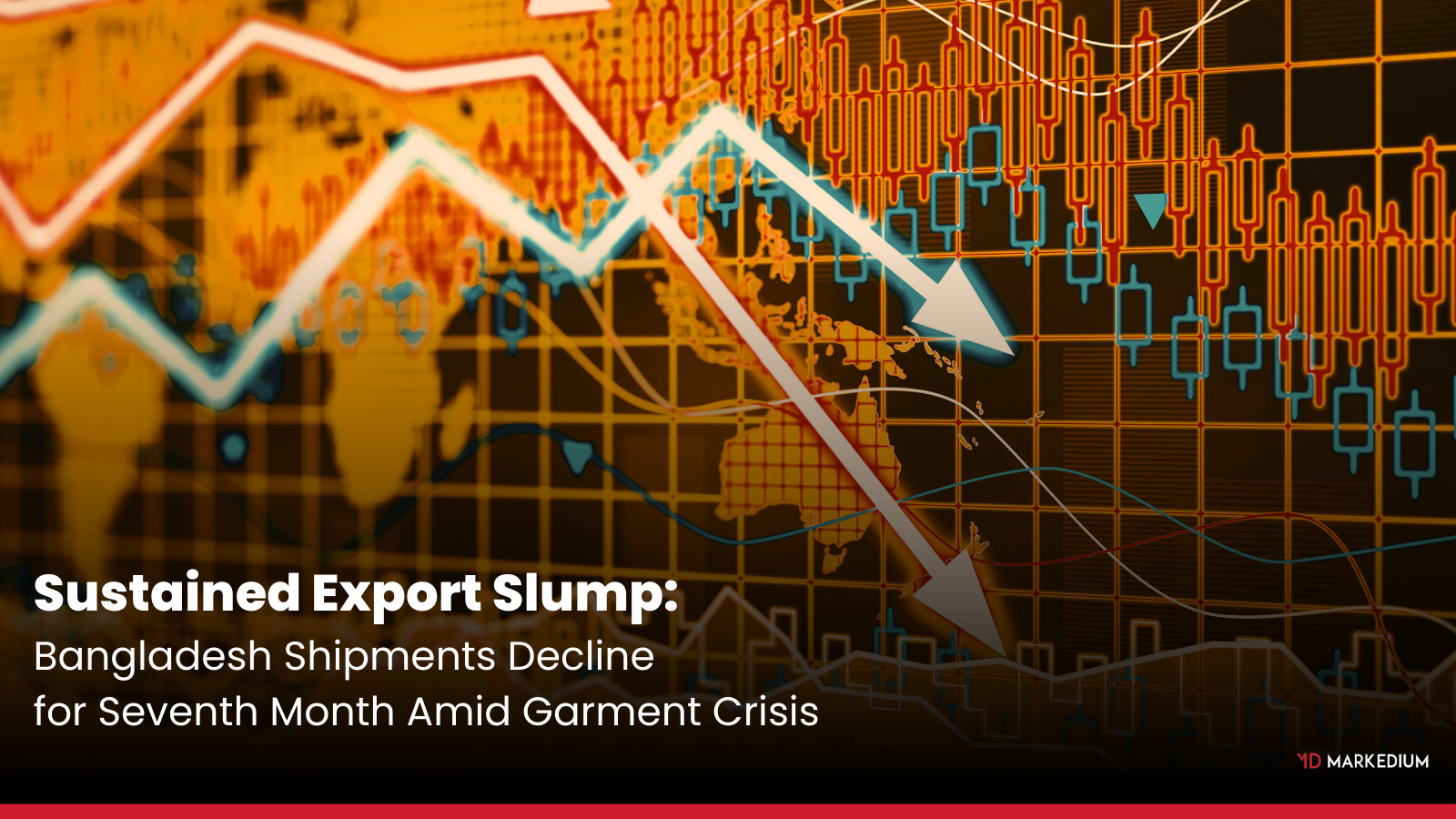
Bangladesh’s export sector is navigating a prolonged downturn, with merchandise earnings falling for the seventh consecutive month in February 2026. Data from the Export Promotion Bureau (EPB) reveals a 12.03% year-on-year (YoY) decline, with monthly shipments dropping to $3.49 billion. This contraction has pulled down the total export performance for the first eight months of the current fiscal year (FY26), which saw a 3.15% dip to $31.90 billion compared to the same period last year.
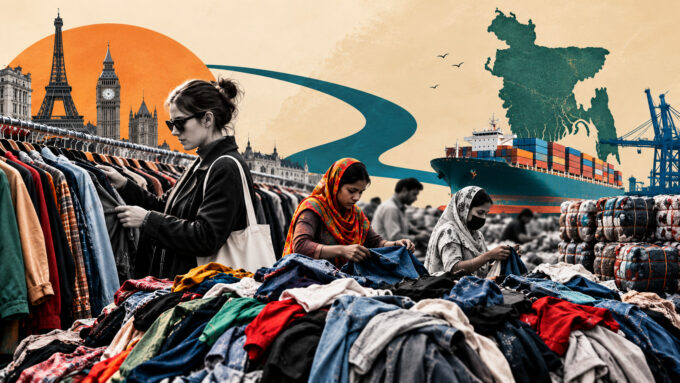
The Ready-Made Garment (RMG) sector, the backbone of Bangladesh’s economy, accounting for over 80% of all exports is currently the main reason for the overall trade slump. Between July and February, garment earnings fell to $25.79 billion, a 3.73% drop compared to last year. February was particularly difficult, as exports plummeted by 13.21% compared to the same month last year, totaling only $2.81 billion. This was also a sharp 22.10% decrease from January’s $3.61 billion. This decline hit both major areas of the industry: knitwear sales dropped by 4.56% to $13.68 billion, while woven garment sales fell by 2.79% to $12.10 billion over the eight-month period.
Industry leaders attribute this persistent decline to a combination of domestic and global challenges. Faruque Hassan, Managing Director of Giant Group, highlighted that reciprocal tariffs from the United States and uncertainty surrounding the February national election led international brands to adopt a cautious “wait-and-see” approach. Furthermore, rising production costs driven by higher utility tariffs and shipping disruptions have eroded competitiveness.
The escalating conflict between the US, Israel, and Iran has added a new layer of concern. Exporters fear that a prolonged war will drive up oil prices, further inflating production costs and dampening global consumer spending. Logistics are also at risk; rerouting vessels around the Cape of Good Hope to avoid the Suez Canal could add 5,000 kilometers to journeys, significantly increasing freight costs and insurance premiums.
Despite the overall contraction, certain niche sectors showed resilience. Pharmaceuticals, home textiles, leather goods, and frozen fish maintained positive growth during the July-February period. Notably, China emerged as a key growth destination, recording a 19.12% YoY increase in imports from Bangladesh. Meanwhile, the United States remained the largest single market at $5.87 billion, albeit with a marginal growth of only 0.74%.
With February’s reduced working days and ongoing holiday cycles, industry insiders do not anticipate a rebound in March. The sector’s recovery now hinges on global geopolitical stability and domestic policy interventions to address structural bottlenecks.
For more updates, follow Markedium.

















Leave a comment