
























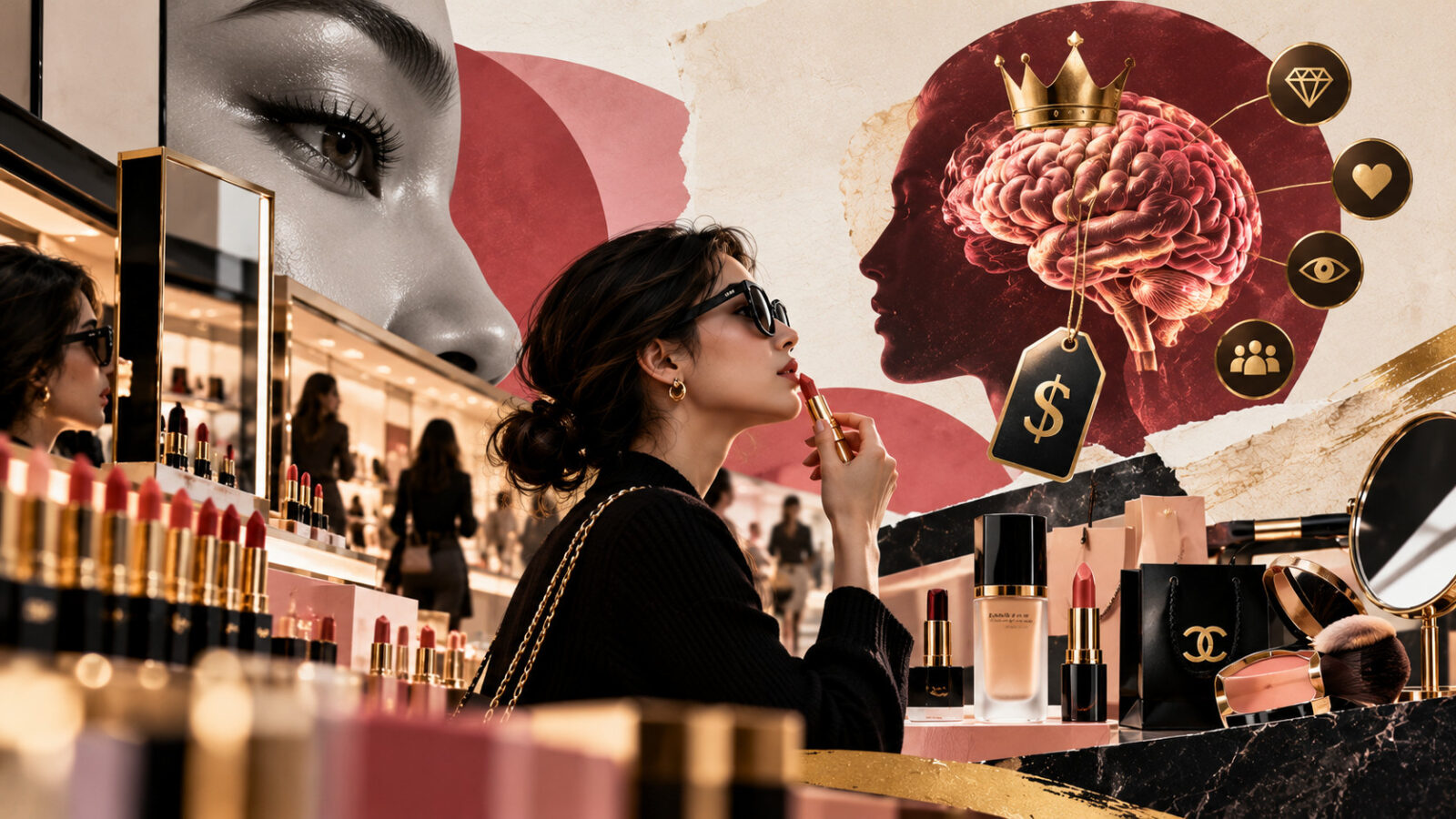
A $7 product and a $70 product can contain very similar ingredients. Yet one can feel more desirable, more effective, and more worth buying. The Ordinary decided to test how much of that difference comes from the product itself.
Its Markup Marché campaign turned everyday groceries into luxury-style beauty products, giving them elaborate packaging, exaggerated claims, and inflated price tags. The experiment appeared in Toronto, Paris, Melbourne, Mexico City, São Paulo, and London. The products remained ordinary; only the presentation changed.
The results show how easily perceived value can shift with price and presentation. US shoppers were willing to pay 45% more for an identical product when it was packaged to look premium. In the UK, 20% of consumers said they would pay up to £20 more for something labelled “magic.”
That psychology is particularly important in beauty, where the price of a product reflects far more than its formula. Packaging, advertising, brand reputation, retail experience, and exclusivity all contribute to the final price consumers see.
The global beauty market is now worth around $450 billion, and McKinsey expects it to reach roughly $590 billion by 2030, growing at about 5% annually. But the market is entering a more demanding phase. Beauty grew by around 7% annually between 2022 and 2024, with rising prices accounting for a significant share of that growth. As prices climb, consumers are becoming more critical of whether premium products actually offer enough additional value to justify the cost.
Mintel’s research highlights this contradiction: 74% of makeup users said affordable makeup products work just as well as those from premium brands. Yet 41% of those consumers still preferred premium makeup, regardless of price. Performance, then, is clearly not the only reason people pay more.
For many consumers, the brand, packaging, and experience are part of the purchase. A premium lipstick can offer the same basic function as a cheaper one while carrying a very different sense of identity or status.
The bigger challenge for premium brands is coming from the dupe economy. Circana reported in 2026 that 58% of shoppers had purchased a dupe, while 70% would intentionally buy a beauty dupe even if they could afford the original. Only 14% believe higher prices consistently indicate better quality.
The meaning of “dupe” has changed alongside this behavior. It is increasingly viewed as a smart alternative rather than simply a cheap imitation. Consumers can compare ingredients, watch product tests, read reviews, and find cheaper substitutes almost instantly.
Gen Z is at the center of this shift, although it would be wrong to describe the generation as anti-luxury. Across 18 countries, 65% of Gen Z consumers said they were willing to splurge on categories that matter to them, the highest share among all generations. At the same time, 64% identify social media as one of their top sources of beauty inspiration.
That means the opportunity for brands is not necessarily to become cheaper. It is to make the premium easier to understand and justify. McKinsey found that quality (39%), pleasure of use (26%), and performance or effectiveness (21%) are the strongest reasons consumers choose their most frequently purchased beauty brands. People are still willing to spend. They are simply becoming more selective about where the extra money goes.
The Markup Marché makes that tension visible. Remove the prestige, change the packaging, and inflate the price, and an ordinary grocery product can suddenly resemble a luxury one. It is a useful reminder that some of the most valuable elements of a premium product cannot be measured in the formula at all.
And that is precisely where the luxury markup becomes worth questioning.
For more updates, be with Markedium.











Leave a comment