









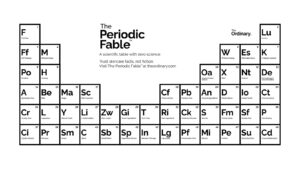

















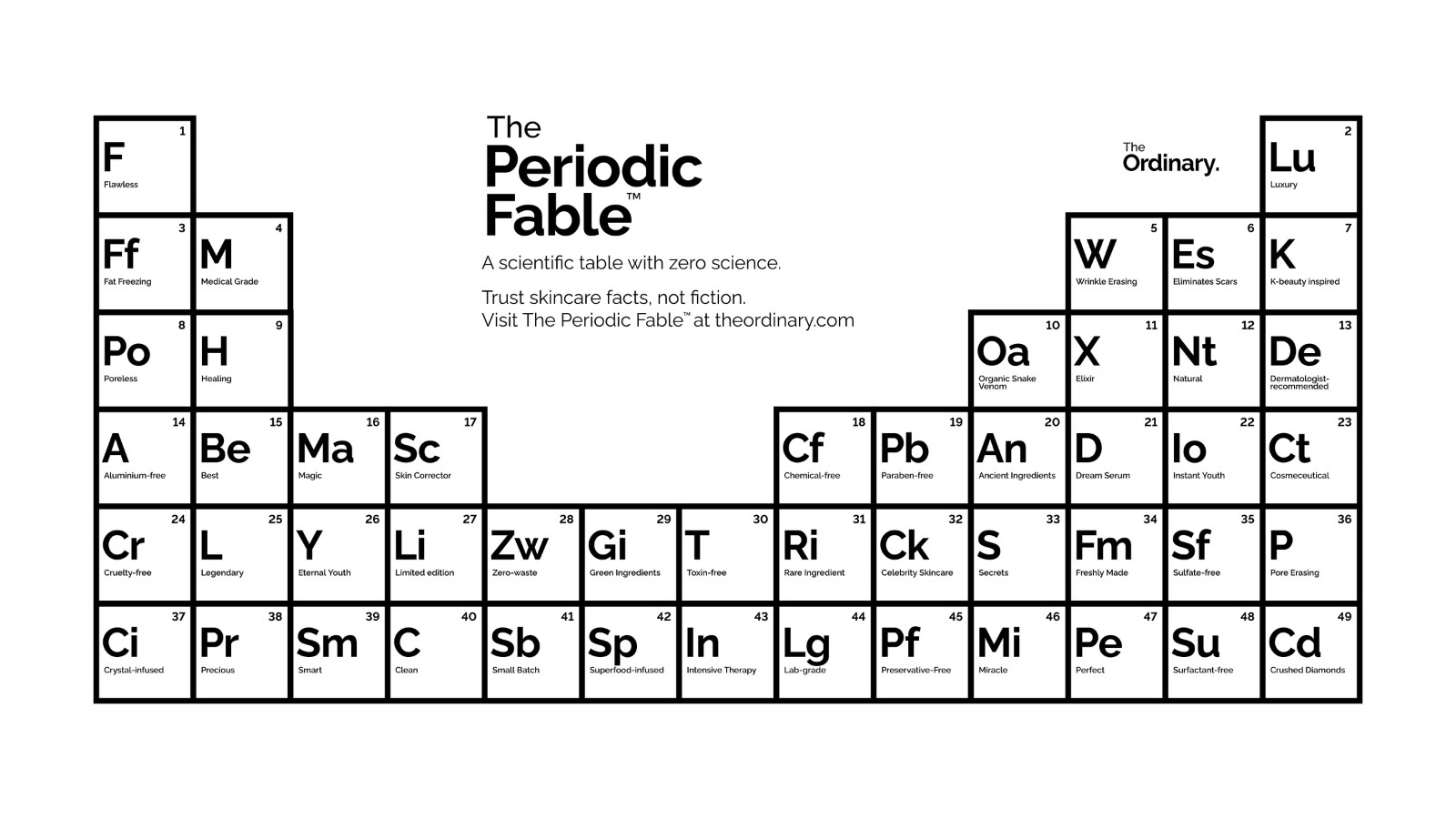
What if the skincare words that make a product sound more trustworthy are actually the ones that deserve the most questioning? In an industry where consumers are constantly surrounded by phrases such as “medical grade,” “rare ingredients,” “eternal youth” and “poreless,” The Ordinary’s latest campaign turns the language of beauty marketing into something that looks scientific, sounds convincing and, in many cases, may not tell consumers very much at all. “The Periodic Fable,” created with Uncommon Creative Studio, uses a familiar symbol of scientific authority, the periodic table, to expose how beauty brands can use scientific-sounding language to make ordinary marketing claims feel more credible.
The idea is built around a worrying consumer insight: these words can actually influence how people judge products. Research cited by the campaign found that 51% of UK skincare shoppers are more likely to trust a product described as “luxury,” while one in 10 US consumers said they would pay an additional $75 for a product described as containing “rare ingredients.” That means words that appear to be little more than packaging language can change how consumers perceive value and even how much they are willing to spend.

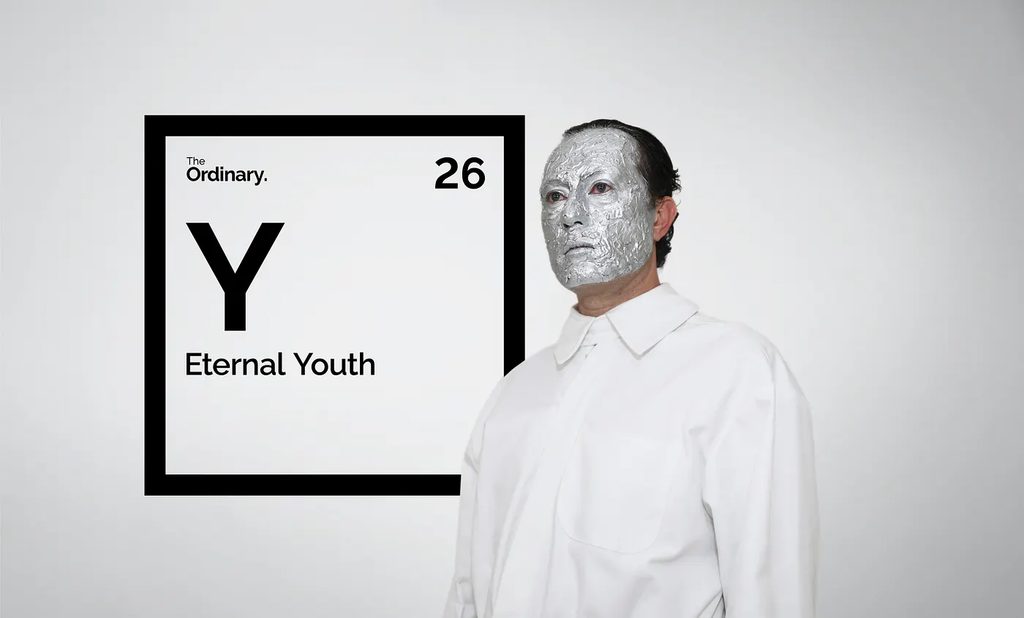
The Ordinary responds by creating a periodic table that contains 49 beauty marketing buzzwords instead of chemical elements, turning terms such as “medical grade,” “fat freezing,” “poreless,” “magic” and “eternal youth” into fictional elements with their own place in the table. The visual joke works because the periodic table normally represents something tested, classified and scientifically understood, while The Ordinary is using that same structure to question language that can give skincare products an appearance of scientific certainty without necessarily providing scientific evidence.
The campaign film takes that idea into a much stranger world, showing a cold, futuristic classroom where students appear almost hypnotised as they repeat skincare buzzwords and mechanically perform viral beauty routines such as ice rolling and the “morning shed,” with their movements choreographed to resemble sculpting and massage techniques. Directed by Olivia De Camps and produced by Smuggler, the film makes the students look as though they have been trained to follow every new beauty trend without stopping to ask whether the routine actually works, turning the increasingly complicated world of skincare into something that feels more like a lesson in obedience than personal care.
That classroom setting is important because the campaign is not only questioning individual words; it is questioning how consumers learn what beauty is supposed to look like in the first place. Social media has turned skincare into a constant stream of routines, ingredients, hacks and product recommendations, where repetition can make an idea feel true simply because people see it everywhere. The Ordinary’s film pushes that behaviour to an extreme, showing what happens when consumers stop questioning the information being presented to them and simply repeat what they have been taught.
The campaign also fits closely with The Ordinary’s long-standing approach to skincare, which has been built around making ingredients and formulations easier for consumers to understand rather than relying heavily on luxury positioning or vague beauty promises. The brand’s wider philosophy argues that science-backed, repeatable evidence should replace the uncertainty that marketers can sometimes use to sell products, making transparency part of the brand rather than simply a message used for one campaign.
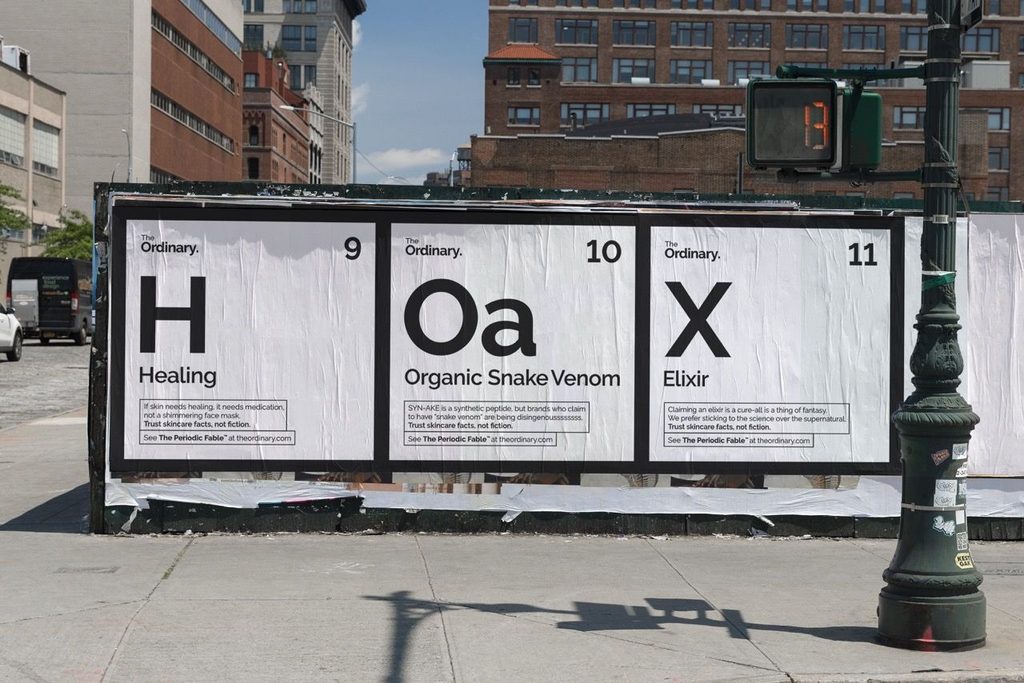
That philosophy continues outside the film through an interactive Periodic Fable website where consumers can explore the fictional elements and learn why The Ordinary considers particular beauty terms misleading, while the wider campaign appeared across OOH, social and influencer activity in the UK, US and Canada. The format gives the idea more depth than a conventional awareness film because consumers are not simply told that certain words are questionable; they are invited to investigate them for themselves and understand what sits behind the language.
The campaign’s creative strength has also been recognised beyond the beauty industry. At the 2026 D&AD Awards, The Periodic Fable won a Black Pencil, the organisation’s highest level of recognition, alongside Yellow, Graphite and Wood Pencils across multiple categories. D&AD described the work as a simple but powerful way of taking down beauty-industry misinformation by replacing the elements of the periodic table with 49 marketing buzzwords.
The Ordinary could have responded to beauty misinformation with another list of ingredients or another educational skincare guide. Instead, it turned the industry’s own language into the subject of the campaign, using humour, surreal imagery and a familiar scientific symbol to make consumers question the words they have learned to trust. The Periodic Fable does not ask consumers to know more skincare jargon. It asks them to believe less of it without evidence.
Watch the full campaign here.
Want to stay updated on the latest campaigns and creative ideas? Follow Markedium Campaigns for more.
Have a campaign you think deserves a closer look? Submit it to us here.











Leave a comment