































Mangroves are often valued for their environmental benefits and biodiversity, but their contribution goes far beyond conservation. In Bangladesh, they are among the country’s most significant resources. They support fisheries, coastal livelihoods and tourism, and they save hundreds of millions of dollars in avoided disaster damage. These benefits barely show up in GDP, which is exactly why they are often overlooked in conventional measures of economic growth.
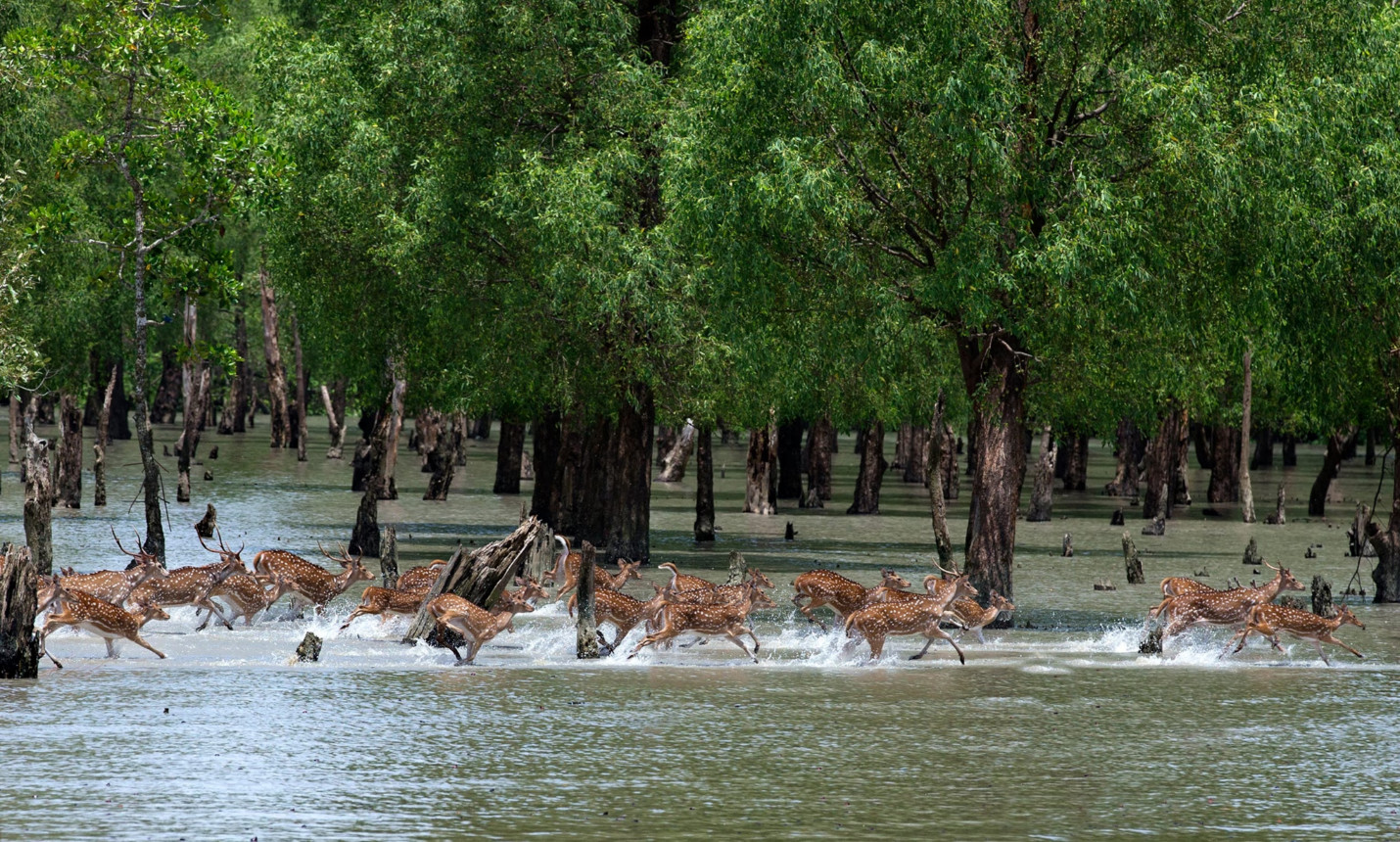
Mangroves are salt-tolerant trees, shrubs and other vegetation that grow along tropical and subtropical coastlines, particularly where land meets the sea, an area known as the intertidal zone. These ecosystems thrive in saline water and in areas that are frequently flooded. Bangladesh is home to the Sundarbans, the largest contiguous mangrove forest in the world. It accounts for about 3% of the world’s mangrove area and spans 10,000 sq km. Of this, 62% (6,200 sq km) lies in Bangladesh and the remaining 38% (3,800 sq km) lies in India.
Bangladesh’s mangroves are more than an environmental treasure; they are an important source of economic value. About 3.5 million people in Bangladesh and 4 million in India depend on them, directly or indirectly, for their livelihoods and socio-economic wellbeing.
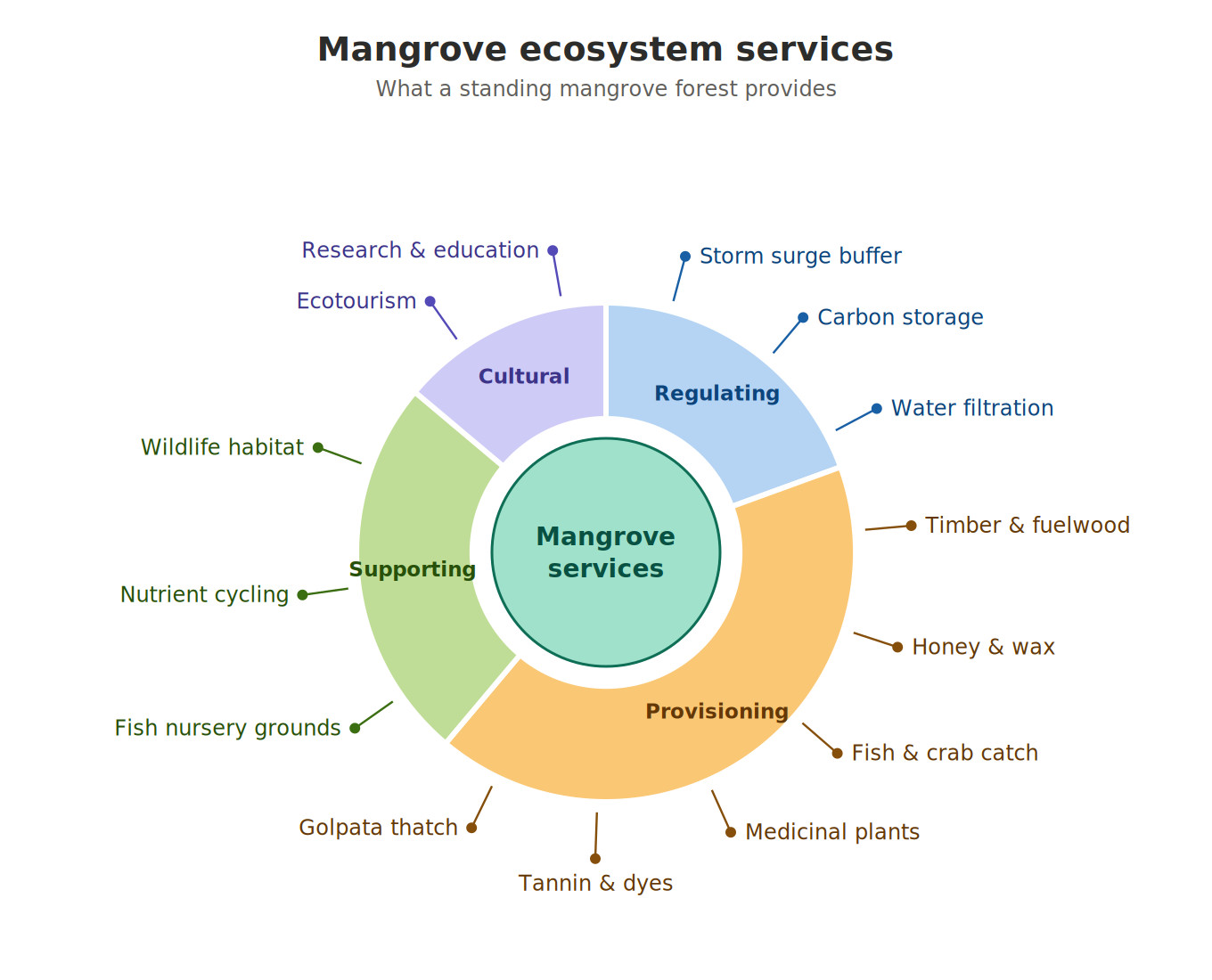
According to the Millennium Ecosystem Assessment (MEA), ecosystem services are the benefits that ecosystems provide to humans. In forest ecosystems, these benefits include the goods and services that support human wellbeing, livelihoods and economic activity. The Common International Classification of Ecosystem Services (CICES) builds on the MEA’s 2005 framework and groups ecosystem services into three broad categories:
- Provisioning services, which provide goods such as food, timber and other forest products
- Regulating and Maintenance services, which help regulate natural processes such as climate, water flow and coastal protection
- Cultural services, which include recreational, educational and other non-material benefits
A 2024 meta-analysis of the Sundarbans’ economic and livelihood values drew on 26 studies that together provided 145 monetary estimates. It showed how mangrove ecosystem services generate value through provisioning, regulating and cultural services. The research estimated annual values of US$713.30 per hectare for provisioning services, US$2,584.46 per hectare for regulating and maintenance services, and US$151.88 per hectare for cultural services. The study also compared the two sides of the forest. Provisioning services and regulating and maintenance services were valued at roughly 1.5 to 2.5 times more in the Bangladesh Sundarbans than in the Indian Sundarbans. Cultural services were the exception.
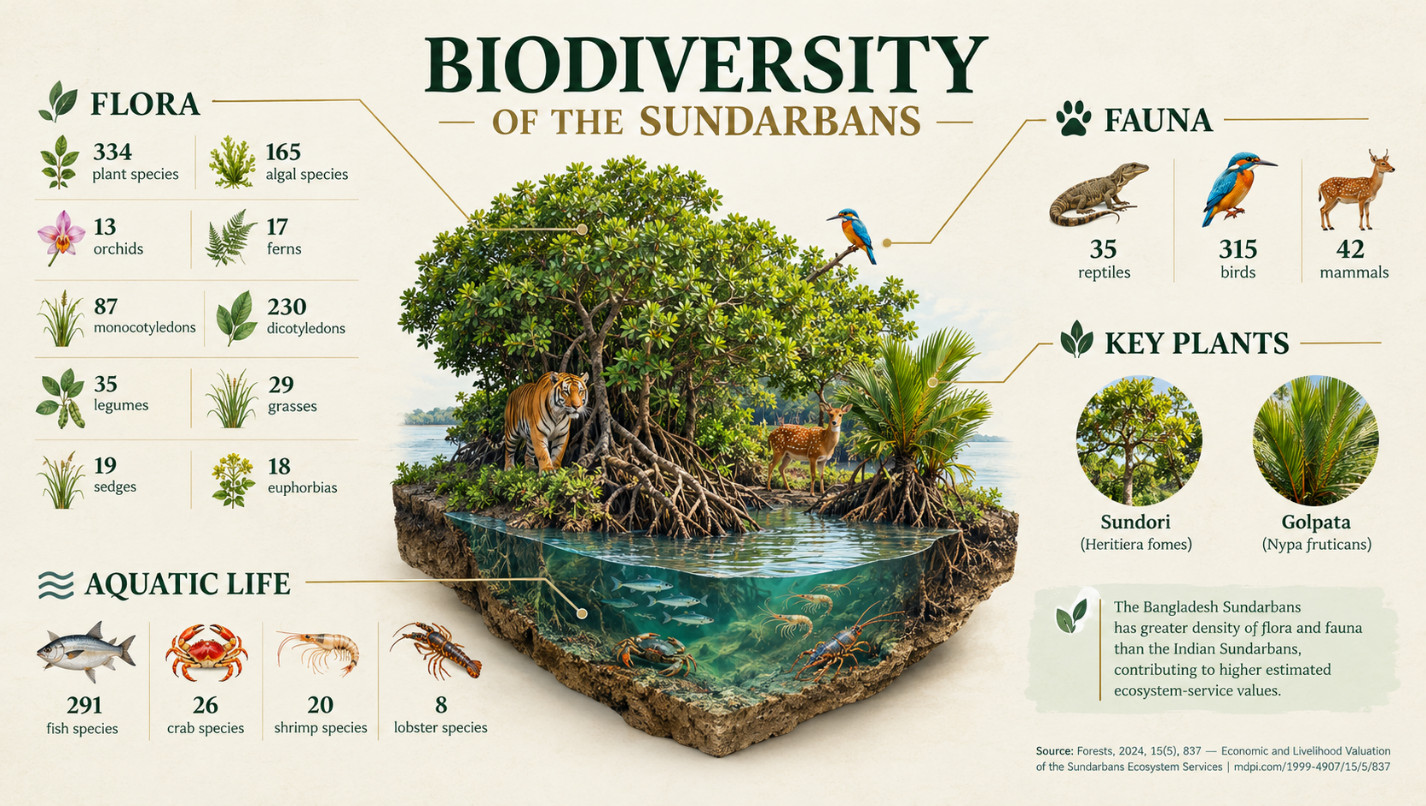
Mangroves also support the livelihoods of communities living around the Sundarbans, many of whom depend on fisheries for food and income. The forest’s complex root systems give fish, shrimp and crabs food and shelter during the early stages of life. This helps sustain aquatic populations and the fishing that local households rely on. This dependence shows the economic importance of conserving mangrove ecosystems, whose benefits extend beyond the forest itself to the wider coastal economy.
One of the most significant monetary benefits comes from shrimp, one of Bangladesh’s major exports. In FY2024–25, the Khulna region earned approximately Tk 2,499 crore (US$206.5 million) from shrimp exports alone. The economic value of shrimp resources in the Sundarbans is estimated at US$80.12 per hectare annually. The industry supports the livelihoods of many people living on the coast. However, unplanned expansion of shrimp farming can lead to mangrove loss. The trade-off is not shrimp versus nature; it is short-term output versus the long-term productivity of the coast.
Mangroves play a vital role in reducing the economic and social costs of natural disasters, especially in Bangladesh’s cyclone-prone areas. Their dense vegetation and complex roots help stabilize shorelines and limit erosion, protecting homes, farmland, embankments and other assets. During Cyclone Sidr in 2007, the forest helped avoid an estimated US$543.3 million in damage.
This figure represents a single historical event rather than an annual economic benefit. Even so, it shows the scale of losses a healthy mangrove ecosystem can help prevent. Bangladesh is a developing country, and its coastal communities depend heavily on agriculture, fisheries and other climate-sensitive livelihoods. For them, this protection matters far beyond the immediate value of property saved. Disaster damage can destroy household assets, disrupt incomes and put further pressure on already limited resources.
This beautiful, lush green forest attracts tourists from around the world who contribute significantly to the economy. The Sundarbans offers visitors a unique experience through its rivers and rich biodiversity. Tourism generates income for local guides, boat operators, transport services, accommodation providers and small business owners. It creates jobs while adding economic value to the mangrove forest. The annual economic contribution of Sundarbans tourism to Bangladesh is reportedly estimated at US$53 million.
Ask most people what drives Bangladesh’s economy, and they will talk about garments, remittances or exports. Very few would think of a forest. Yet the Sundarbans, the world’s largest mangrove forest, contributes substantially to our economy. It is productive natural capital: it feeds fisheries, cushions disasters, supports tourism and may one day earn carbon revenue. Conserving it is also an investment in livelihoods, coastal resilience and long-term economic benefits. Protecting the Sundarbans will almost certainly cost less than replacing what it provides.
For more updates, be with Markedium.




















Leave a comment