


























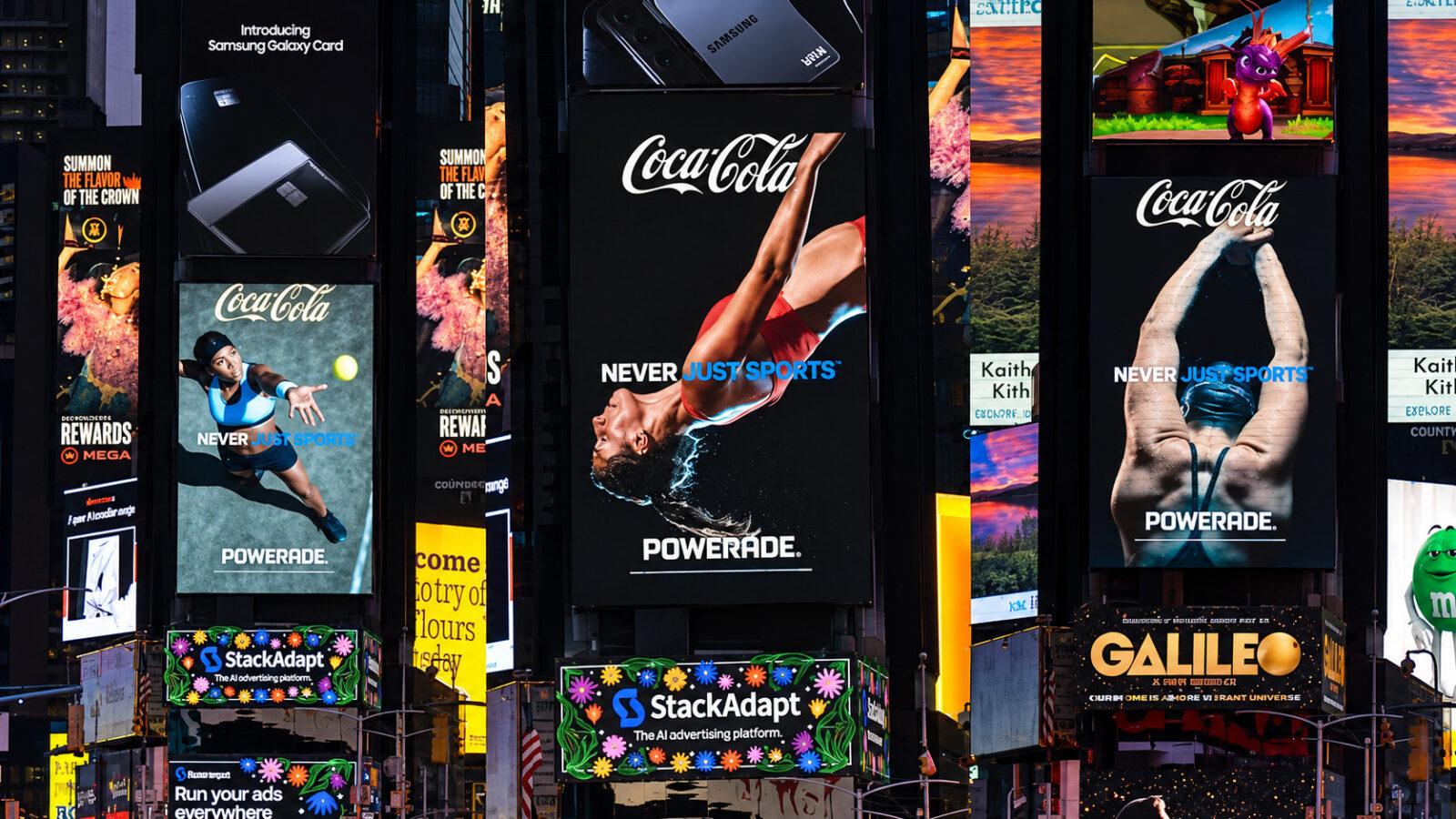
Some of the sharpest ads are the shortest. Powerade didn’t write a long statement, run a hashtag or name anyone. It added a single word to a slogan someone else had made famous, and put it on a screen in the same square.
The slogan was “Just Sports.” It belonged to Novig, a sports prediction platform, whose campaign featuring Sydney Sweeney launched on 9 September 2026. In it, Sweeney used footballs, pads and other sports equipment to cover herself, and she is also a strategic partner and equity holder in the company. The ad got attention quickly, and so did the reaction.
Female athletes including Olympic swimming champion Ariarne Titmus and British Olympic cycling champion Sophie Capewell criticised the campaign. Others answered it in their own way. Former gymnast Gracie Kramer started a trend by posting training videos captioned “this is what a woman in sport looks like,” and elite athletes from several sports joined in. The argument was never only about one ad. It was about whether women’s sport gets to be taken seriously on its own terms.
Novig’s side deserves a fair hearing too. Its CEO, Jacob Fortinsky, defended the campaign and said Sweeney helped shape the creative. He said the company never intended to portray women’s sports and is a prediction market focused on sports. Sweeney also shared images of athletes who have posed nude in publications, including Serena Williams. The company has not backed away from it, and it has since released a second Sweeney spot called “No BS.”
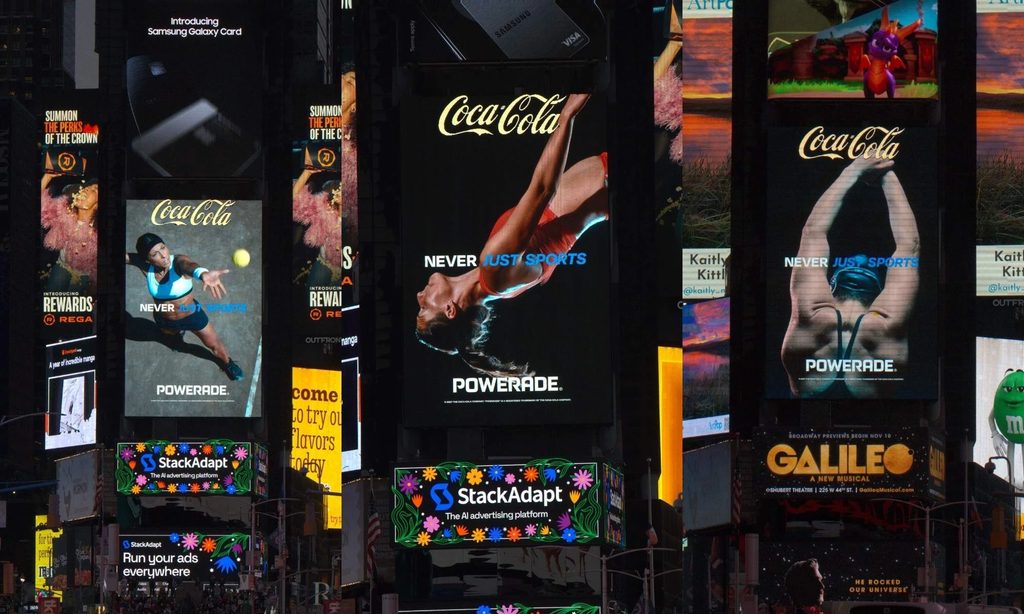
Into that debate stepped Powerade. Its “Never Just Sports” work was developed by WPP Open X and Ogilvy and appeared on a Times Square screen. The ad ran opposite the Novig billboard, never mentioned Sweeney or Novig, and trusted viewers to remember the original line. It features women in swimming, tennis, sprinting, weightlifting and the high jump, with a caption saying there is “no ‘just’ in sports.”
The brand also has a history to stand on. Powerade’s ambassadors have included Sam Kerr, Simone Biles and Kayla Itsines. That matters, because a reactive ad only works if people believe the company already cares. Even so, the story isn’t tidy. Creative Bloq pointed out that a good-ad versus bad-ad frame is too easy, and that women can be glamorous without undermining what they’ve achieved. It also asked whether a reactive ad really gives female athletes a platform or is remembered only as a clever troll. That is a fair test for every brand that joins a fight.

What stays with you is how small the move was. Powerade didn’t argue or explain. It changed one word and let real athletes do what the slogan couldn’t, show the work behind the result. In a loud debate, the strongest reply is sometimes the quietest one, as long as you were already showing up long before the argument started.
Want to stay updated on the latest campaigns and creative ideas? Follow Markedium Campaigns for more.
Have a campaign you think deserves a closer look? Submit it to us here.














Leave a comment