



























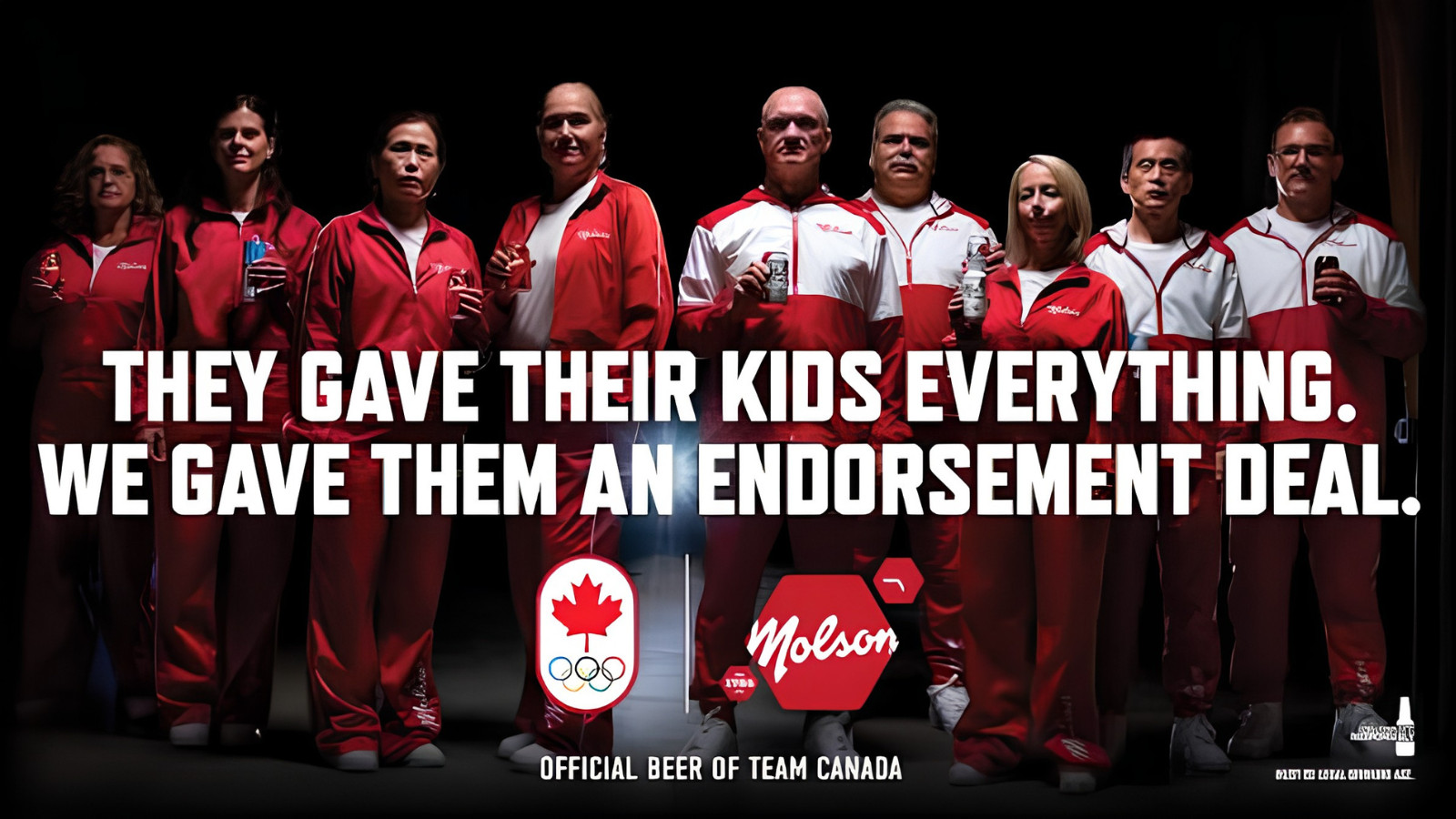
Olympic sponsorships usually come with a familiar checklist: world-class athletes, impressive medals and plenty of camera time. Molson Canadian decided to sponsor the people who helped make those athletes possible, giving nine Team Canada parents a taste of the endorsement deals their children might be more accustomed to.
Created by Canadian agency Rethink for the Paris 2024 Olympics, the campaign, titled Sponsor the Parents, recognizes the often-overlooked contributions of parents who spend years helping their children pursue sporting excellence. Instead of limiting its Olympic sponsorship to the competitors in the arena, Molson extended the opportunity to the people who have supported them long before the world started watching.
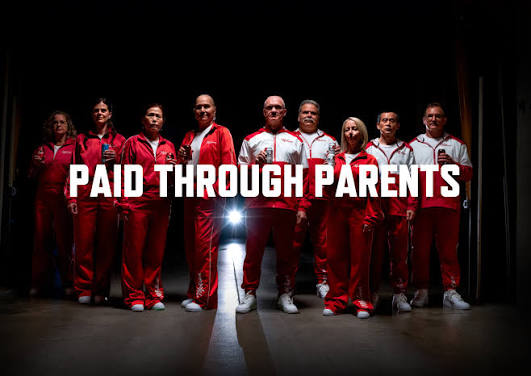
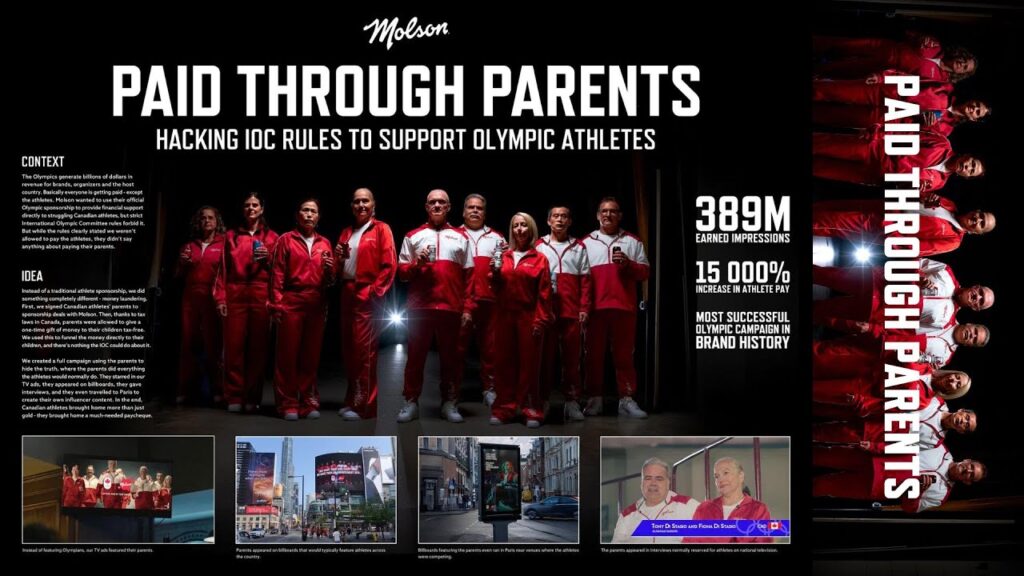
The initiative signed nine parents to official paid endorsement deals, offering them perks typically associated with professional athletes. These included contract signings, starring roles in a commercial, social media coverage of their journey to Paris and, of course, Molson beer. The idea was to give these parents more than a passing thank-you by treating their contributions as worthy of an actual sponsorship.
The nine sponsored parents belong to five Canadian athletes competing across different sporting disciplines, each with a journey that required its own combination of training, commitment and family support. Tony and Fiona Di Stasio are the parents of Justina Di Stasio, a Canadian wrestler. Joe and Rachelle Clay raised Zachary Clay, a gymnast, while Travis and Susan Wog are the parents of swimmer Kelsey Wog. Lynda South-Simoneau is the mother of Jacqueline Simoneau, a synchronized swimmer, and Nancy Tan and Michael Yang are the parents of badminton player Brian Yang.

From gymnastics and swimming to wrestling, synchronized swimming and badminton, the athletes represent different sporting worlds. Their parents, however, share a familiar experience: supporting an ambitious sporting career often requires a substantial investment of time, money and energy, much of which happens away from public view. There are early-morning practices, long drives to training facilities, weekends spent in competition venues and the costs of travelling to events across the country and beyond. The journey to an Olympic stage is rarely a solo effort, even if the athlete is the one standing under the lights.
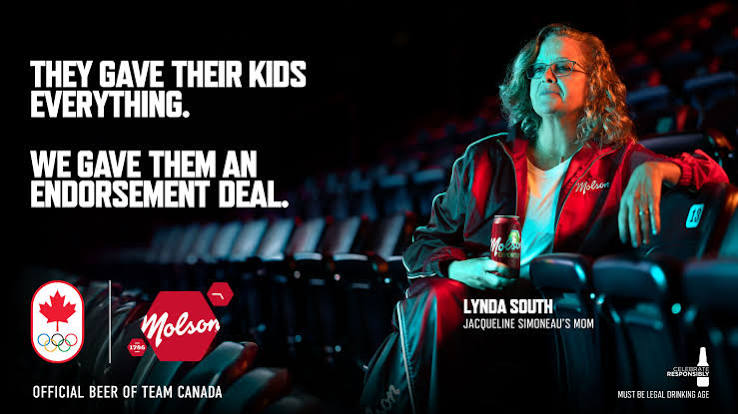
Molson’s campaign recognizes that reality by extending the language of professional sports sponsorship to the people who have helped their children reach the highest level of competition. The parents receive the contracts, branded tracksuits and media attention usually associated with the athletes themselves, giving them a chance to occupy a space they have more often watched from the stands.
The campaign’s hero film builds its idea around a clever misdirection. Figures dressed in Molson tracksuits appear in a dimly lit sporting environment, creating the impression that athletes are preparing to make their entrance. But the anticipated stars turn out to be their parents.The group marches into the spotlight before cracking open their beers together, turning a familiar sports-advertising setup into a celebration of the people who rarely receive such treatment.
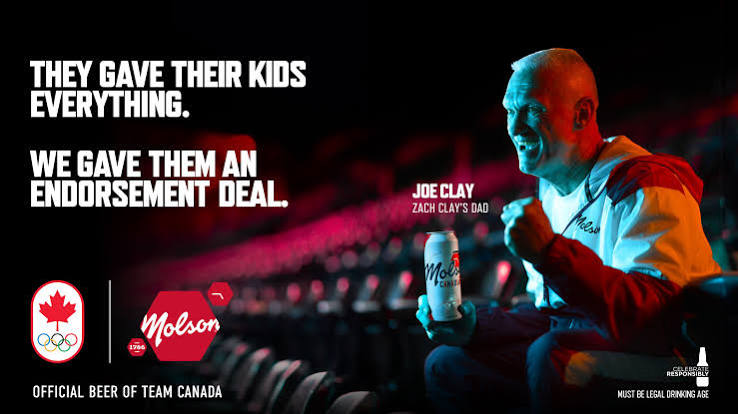
The humour comes from the contrast. The production borrows the visual language of athlete endorsements, from the coordinated outfits to the dramatic entrance, but replaces the usual sporting heroes with the people who helped raise them. Rather than simply telling audiences that parents deserve recognition, Molson gives them the commercial treatment to prove its point.
The campaign was rolled out across online video, social media and Connected TV, including CBC Gem. Localized outdoor advertising in Toronto, Vancouver and Montreal also brought the campaign closer to the parents’ hometowns, connecting a national sporting event with the communities that were part of their journeys.
The idea fits Molson’s broader Bringing Everyone In platform, which seeks to make room for more people in the brand’s celebrations. In this case, inclusion means looking beyond the athletes who represent Canada and recognizing the families whose contributions are less likely to appear in highlight reels.
What makes Sponsor the Parents work is not simply the novelty of giving moms and dads endorsement deals. It is the recognition that sporting success has a much larger cast than the final result suggests. And perhaps that is the most interesting part of the campaign. It does not need to make parents into athletes or pretend that their contributions are identical to those of their children. It simply acknowledges that helping someone reach their dream can be a demanding achievement in its own right.
After all, not everyone who helps make an Olympic dream possible gets to stand on the podium. Sometimes, they are the ones sitting in the stands, hoping their kid makes it.
Want to stay updated on the latest campaigns and creative ideas? Follow Markedium Campaigns for more.
Have a campaign you think deserves a closer look? Submit it to us here













Leave a comment