




























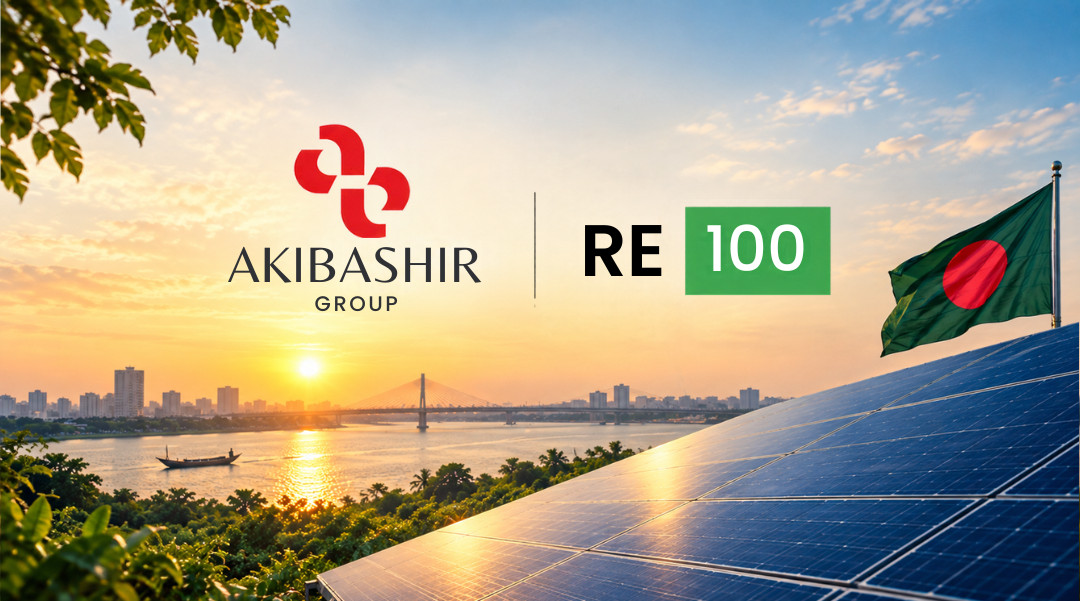
Bangladesh’s industrial sector has taken a huge step toward a greener future as AkijBashir became the first-ever company from the country to join RE100, a global corporate initiative that unites influential businesses committed to sourcing 100% of their electricity from renewable sources.
This step shows how environmental sustainability has become a core business strategy rather than just a corporate responsibility exercise. By joining RE100, AkijBashir became part of the same global initiative as other large companies that have also committed to using only renewable energy in their business operations. For a group that operates across different industries, showing that it uses energy in a way that meets a well-known global standard means that the change is part of a long-term plan. This change affects how the company makes its products, how it stays competitive, and how it presents itself to customers and partners both in the country and abroad.

For a country that heavily relies on fossil fuels and imported energy, it is certainly a significant initiative. It shows how sustainability is no longer only an environmental choice but is also becoming an economic opportunity. As global buyers tighten environmental requirements across supply chains, companies that invest early in clean energy stand to gain a competitive advantage.
RE100 members commit to using 100% renewable electricity by 2050 at the latest. They report their progress every year, and their renewable electricity is reviewed against the initiative’s technical criteria. Membership also opens the door to peer learning, renewable energy expertise, policy engagement, and international best practices. This provides a globally recognised framework that makes the renewable energy journey more structured, measurable, and transparent. It also strengthens accountability around how the group sources its electricity and builds credibility with international customers and partners.
However, this commitment did not come overnight. AkijBashir Group has been working toward this goal for several years by investing in rooftop solar projects across its industrial facilities. It has developed one of the country’s largest private-sector solar portfolios, with more than 90 MWp of rooftop solar capacity installed or under development through partnerships with Infrastructure Development Company Limited (IDCOL). Earlier this year, Akij Ceramics introduced an 18.69 MWp rooftop solar project expected to generate nearly 19,500 MWh of clean electricity annually while reducing carbon emissions by more than 14,000 tonnes each year. The company has also set a target of running its manufacturing facilities on 100% renewable energy by 2030.
Bangladesh has set renewable energy goals, aiming to increase the share of clean energy in its electricity mix. Hence, the significance of this initiative goes beyond AkijBashir Group, as the government is also encouraging rooftop solar expansion, net metering, and private-sector investment to reduce dependence on imported fuels and strengthen energy security. This could eventually reduce the need to purchase expensive fuel from foreign countries.

Low-carbon products now have high value in the international market, making renewable energy a critical factor in maintaining export competitiveness. Industries with lower emissions and cleaner production processes are more likely to be in a better position in the global supply chain.
AkijBashir Group’s entry into RE100 could be a turning point for Bangladesh’s industrial sector. If other manufacturing companies follow the same path, the country could accelerate its transition toward cleaner energy while strengthening its position in global markets. At a time marked by energy security concerns and growing sustainability requirements, the milestone illustrates how corporate leadership can help shape the future of Bangladesh’s green industrial transformation.
For more updates, stay with Markedium.













Leave a comment