


























Almost anyone with an email address has seen some version of that line. What began as an internet scam eventually became a meme, then a global punchline. But somewhere along the way, the joke flattened the meaning of “Nigerian Prince.” In Nigeria, a real prince is a respected figure, someone whose title carries genuine social weight. The stereotype and the reality could hardly be further apart.
Vaseline saw an opportunity in that contradiction.
The brand was dealing with a very real problem in Africa, particularly in Nigeria: counterfeit skincare products. Fake versions of its Body Oil had been circulating in the market, part of a much larger global counterfeit trade estimated at USD 467 billion. Beyond the damage to the brand, the consequences can be more serious for consumers. Counterfeit products may contain unregulated ingredients, meaning a product that looks trustworthy can end up harming the very person who trusted it.
So Vaseline decided to fight the problem with an unlikely ally: a real Nigerian prince.
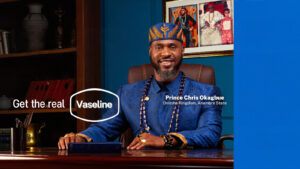
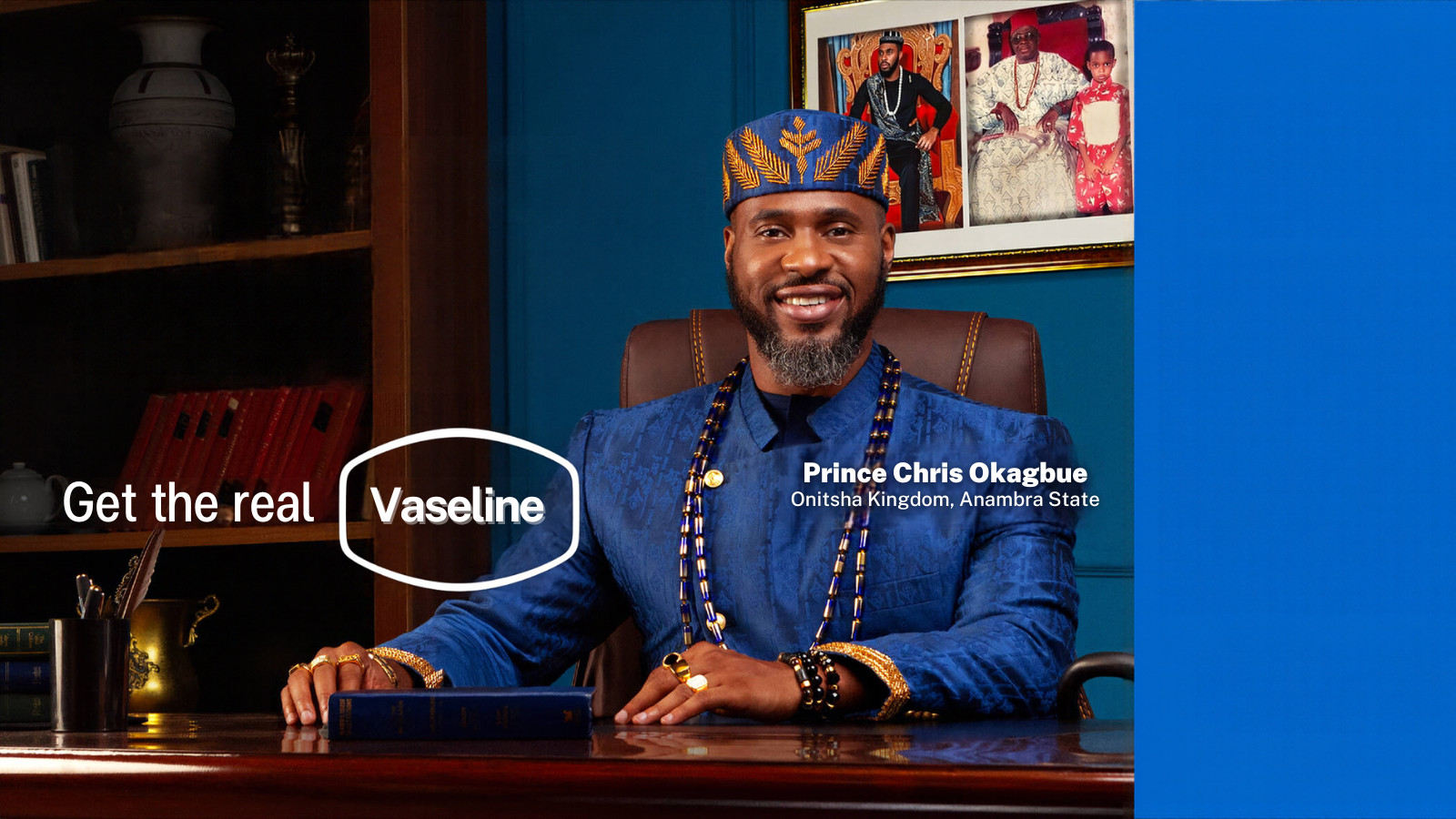
His name is Chris Okagbue, a member of the Onitsha royal family. At the centre of the campaign, created by Leo Singapore of Publicis Groupe in collaboration with Unilever International, is a short social film that immediately plays with the stereotype. Okagbue introduces himself, acknowledges the infamous “Nigerian Prince” scam, and makes it clear that, in his case, the title is very much real.
Then he does something unexpected. He picks up a bottle of Vaseline that appears perfectly genuine and throws it away.
It is a simple gesture, but it makes the problem instantly clear. When counterfeit products become convincing enough, people can start questioning even the real thing. And that is precisely what Vaseline wants to address.
Enter the Vaseline Authenticator.
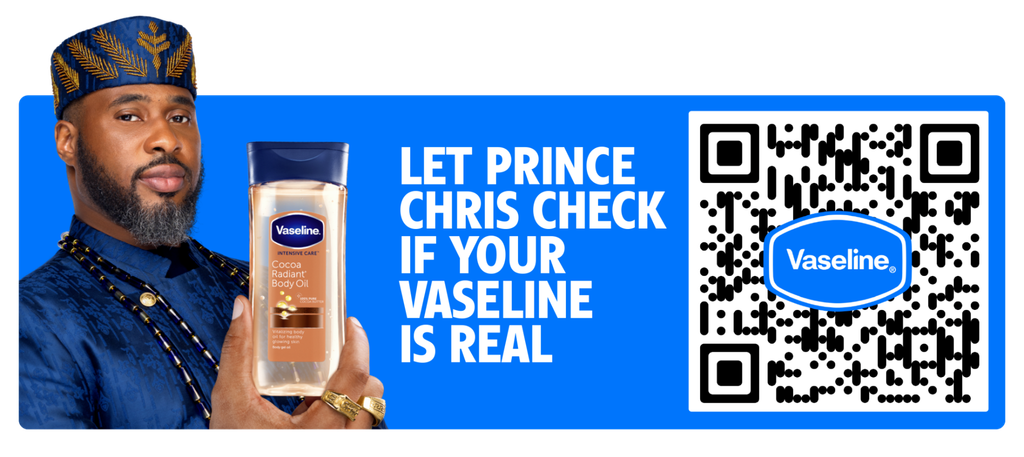
Designed to make verification almost effortless, the tool works through WhatsApp, a platform consumers are already familiar with. Users can scan a QR code or tap a link, send photos of the front and back of their Vaseline bottle, and receive an answer from the “Prince’s assistant” within seconds, telling them whether the product is authentic or fake.
For now, the service covers Vaseline Body Oils, the category the brand says is most frequently counterfeited in Nigeria. The ambition, however, is broader: as Unilever’s Shazan Zahir explained, the goal is for every Vaseline product picked up in Lagos, Abuja or anywhere else in the country to be genuine.
What makes the campaign particularly effective is not just the tool, but the person introducing it.
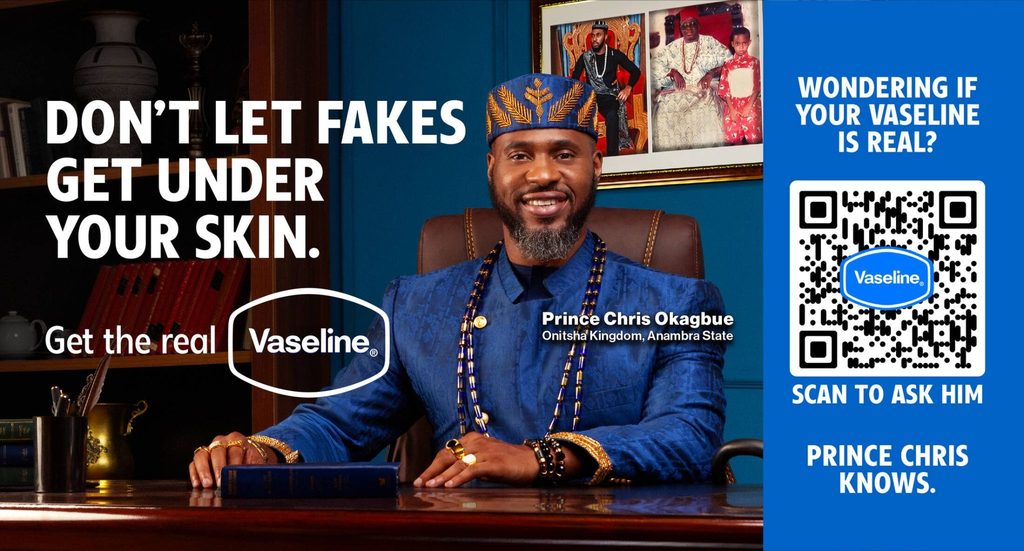
For years, “Nigerian Prince” has been shorthand for a scammer. Vaseline could have easily avoided the association altogether. Instead, it leaned directly into it. The joke is already familiar, so the campaign does not need to explain it. It simply takes the image everyone knows, puts a real prince at the centre of it, and lets the contrast carry the story.
In other words, the punchline becomes the messenger.
The campaign’s central line works in much the same way: “Don’t let fakes get under your skin.” It speaks directly to the problem of counterfeit products while playing on the literal purpose of skincare. More importantly, it positions counterfeiters, rather than consumers, as the common enemy. Instead of telling people to be more careful because they might buy the wrong product, Vaseline gives them a simple way to protect themselves.
Launched in April 2026, the campaign has also received a warm response from Nigerian audiences, who have connected with both the humour and the practical solution behind it.
Leo Singapore’s Asheen Naidu described the campaign as a surprising solution to a real business problem. That may be the simplest way to understand why it works.
For two decades, the internet has taught people to be suspicious when a Nigerian prince appears in their inbox.
This time, the prince was the one telling them to check.
Want to stay updated on the latest campaigns and creative ideas? Follow Markedium Campaigns for more.
Have a campaign you think deserves a closer look? Submit it to us here.











Leave a comment