

























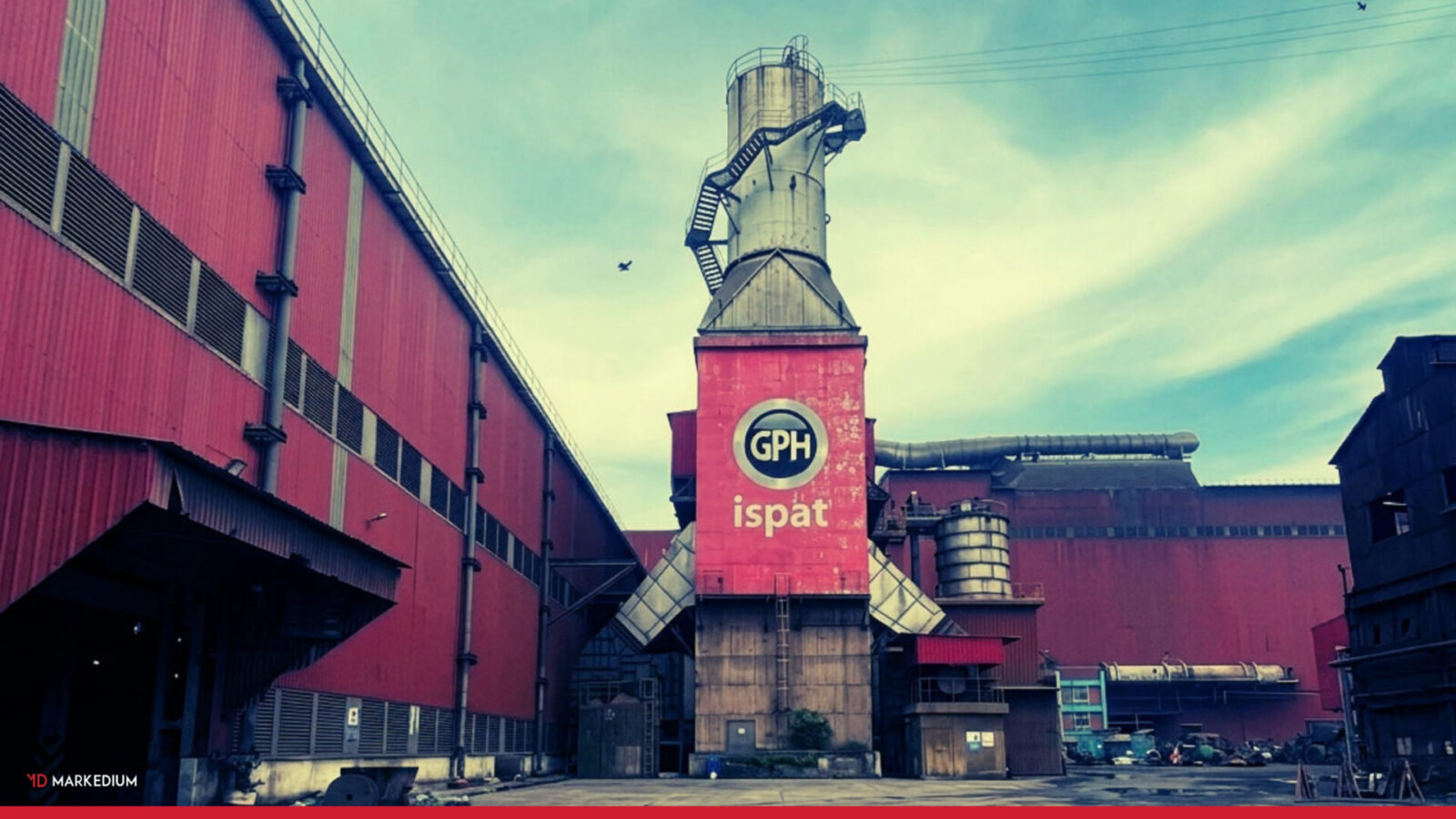
GPH Ispat, one of Bangladesh’s listed steelmakers, is seeking a four-month relaxation of Credit Information Bureau (CIB) requirements from Bangladesh Bank as it works to restructure part of its roughly Tk12,000 crore debt owed to more than two dozen banks and financial institutions (As stated in The Daily Star). The company made the request in a September 24 letter to the central bank governor, saying existing CIB procedures and regulatory requirements were complicating its efforts to secure banking facilities and complete the proposed restructuring within the required timeframe.
The request comes as the company faces pressure on liquidity and working capital amid weak steel demand. GPH Ispat said its CIB status was affecting its ability to access fresh financing needed to maintain uninterrupted operations. The CIB, Bangladesh Bank’s central database of borrowers’ credit histories, is routinely checked by banks before approving new credit facilities, making a borrower’s status an important factor in accessing working capital.
GPH Ispat’s liabilities are spread across more than two dozen lenders, including United Commercial Bank, Pubali Bank, Mutual Trust Bank, Trust Bank, City Bank, One Bank, Dutch-Bangla Bank, BRAC Bank, Eastern Bank, Modhumoti Bank, Sonali Bank, NRBC Bank, Meghna Bank, Southeast Bank, NCC Bank, Mercantile Bank and Uttara Bank.
The company’s request follows a similar intervention involving City Group. In June, City Group received a three-month lifeline until September to restructure its outstanding loans, which now stand at around Tk25,000 crore across 48 banks and non-bank financial institutions. The precedent has highlighted the possibility of coordinated restructuring for large corporate borrowers facing liquidity pressure.
For GPH Ispat, the requested relaxation is intended to provide time to complete its restructuring and rescheduling process, secure approvals and documentation from lenders, arrange working capital, implement its financial restructuring and deleveraging plan, and improve cash flow so it can regularise outstanding dues.

The company stressed that the request was not intended to weaken regulatory requirements or avoid compliance. It said the measure was aimed at supporting recovery and business continuity while maintaining transparency with lenders and complying with applicable laws, prudential regulations and Bangladesh Bank directives.
A central bank meeting on the matter was held on September 13 under the leadership of the governor. Discussions covered the restructuring and rescheduling of GPH Ispat’s loans and credit facilities, alongside a coordinated turnaround strategy. A committee led by the managing director of United Commercial Bank was subsequently formed to work on the issue.
Syed Mahbubur Rahman, managing director and CEO of Mutual Trust Bank, said lenders were discussing ways to support the company, including possible loan restructuring, rescheduling and new working-capital facilities.
GPH Ispat’s financial performance, however, shows the scale of the challenge. An analysis of its financial statements indicates that the company earned more than Tk100 crore in profit only twice during the decade since FY2014-15, despite repeatedly expanding capacity through bank borrowing. Its profit margin has generally remained below 5 percent.
At the end of FY25, the company reported long-term loans of Tk4,718 crore and short-term loans of Tk2,802 crore. Its sales fell around 30 percent year-on-year to Tk3,940 crore, while it recorded a profit of only Tk3 crore, compared with a Tk24 crore loss in the previous year.

The pressure extends beyond the company to Bangladesh’s broader steel industry. GPH Ispat has an annual production capacity of 8.4 lakh tonnes of mild steel billets and 6.4 lakh tonnes of MS rods and medium sections. Yet the country’s overall steel production capacity of roughly 13-15 million tonnes significantly exceeds effective demand, with capacity utilisation estimated at only 30-40 percent.
The mismatch between installed capacity and demand has therefore become a major short-term challenge for steelmakers. For GPH Ispat, the proposed CIB relaxation and coordinated debt restructuring could determine whether the company can secure the working capital needed to sustain operations while gradually addressing its substantial financial obligations
For more updates, be with Markedium.













Leave a comment