

















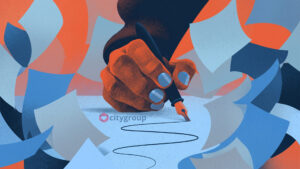




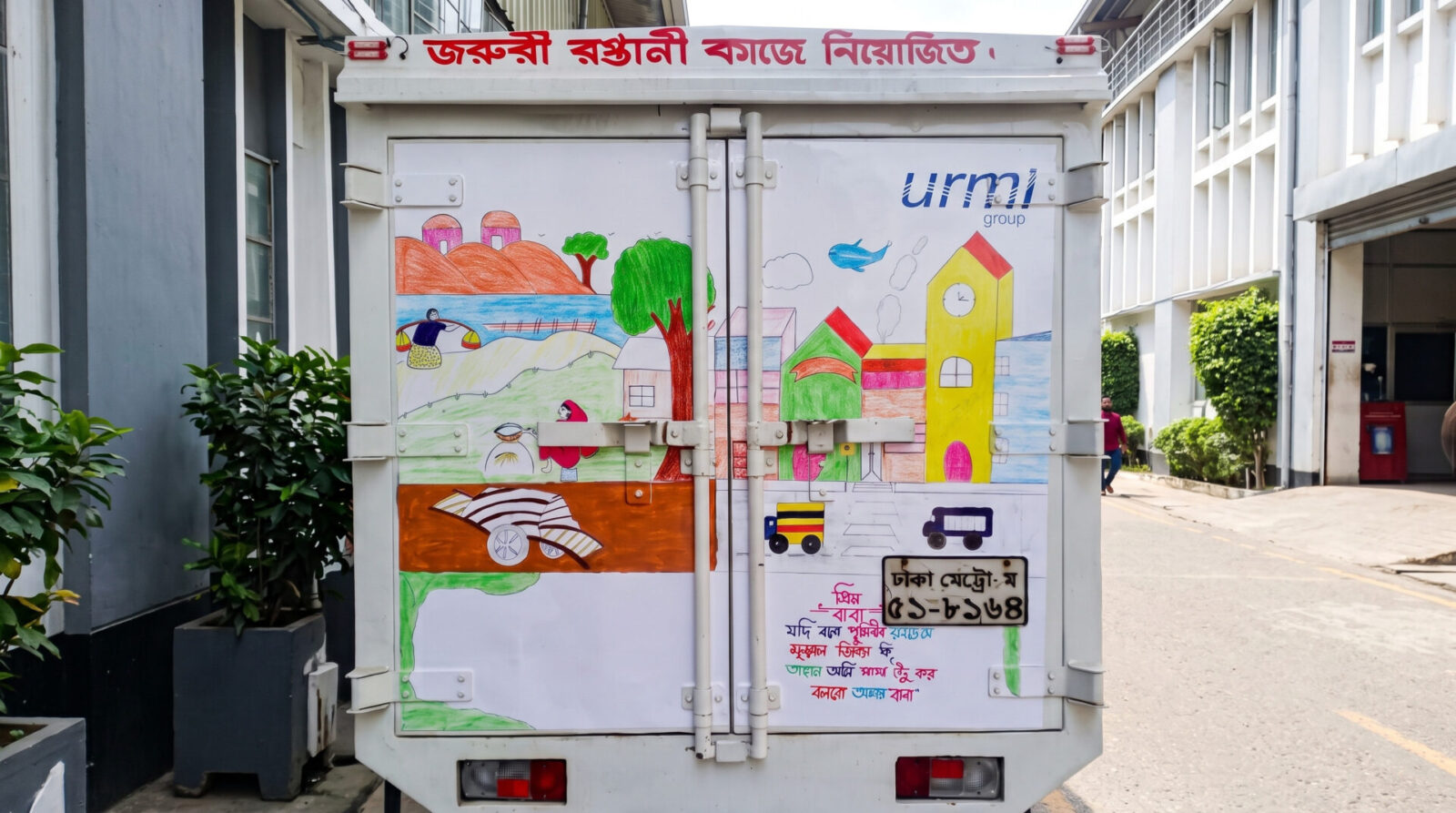
A truck passes you on the road. You see the metal body, the cargo, the noise. But what if you could see who is waiting for the person behind the wheel? Urmi Group is trying to make that invisible story visible. The company has launched a road-safety initiative where commercial vehicles transporting its products carry drawings and messages made by the drivers’ own children. A simple picture from home now travels with the driver, carrying a reminder that is far more personal than any road-safety warning: Dad, drive carefully and come home safely.
A truck driver can easily become just another person behind a large vehicle in traffic. For other road users, the truck is cargo, the driver is a stranger and the journey is simply another vehicle. But the drawings change that picture. A child’s colourful sketch can remind everyone that the person driving that truck is also someone’s father, someone’s husband, someone’s son. For the driver, however, the message means something even more personal. Every time the drawing appears in the rear-view mirror of another vehicle, or every time the driver sees it before starting a journey, it can serve as a small reminder of home. Someone is waiting. Someone expects him to return. The journey is no longer only about reaching the destination safely. It is also about making it back.
The idea itself comes from Japan’s Children’s Museum Project, introduced by transport company Miyata Unyu following a fatal road accident. The initiative placed drawings made by drivers’ children on company trucks as personal reminders to drive safely. Miyata Unyu later reported an accident-rate decline of around 40% after introducing the initiative. In 2019, the project became an independent association and expanded to other companies in Japan. Urmi Group has taken that idea and placed it into a visual language Bangladesh already knows. Trucks and commercial vehicles across the country have long carried paintings, messages and colourful artwork. But this time, the art has a different voice. Instead of a generic slogan, the message comes from the people who matter most to the driver: his children.

That difference matters because road-safety communication often tells people what not to do. Slow down. Wear a helmet. Follow the rules. Don’t drive recklessly. These messages are important, but repetition can make them easy to ignore. A child’s handwriting or drawing can make the same message feel much harder to dismiss. And the campaign changes more than the driver’s perspective. It can change the way everyone behind the truck sees it. The vehicle is no longer just something blocking the road or carrying products. There is a family behind it. There is a child who drew a picture. There is a parent who needs to come home.
According to Bangladesh Road Transport Authority data for 2023, 7,837 vehicles were involved in reported road accidents, including 1,389 trucks and covered vans and 370 pickup vehicles. Together, those categories accounted for around 22% of the vehicles involved. With thousands of commercial vehicles moving goods across Bangladesh every day, even small interventions that encourage safer driving can carry a much wider message. Perhaps that is what makes this initiative feel bigger than a road-safety campaign. It takes something ordinary on Bangladesh’s roads and gives it a human story. A picture that might look small from a distance carries the weight of an entire family waiting at home. Because behind every truck is a driver. Behind every driver is a family. And behind every journey, there may be someone waiting for them to come home.
Want to stay updated on the latest campaigns and creative ideas? Follow Markedium Campaigns for more.
Have a campaign you think deserves a closer look? Submit it to us here.











Leave a comment