






























The liquefied petroleum gas (LPG) market in Bangladesh is undergoing a significant transformation as stricter banking regulations, introduced following the 2024 political changeover, have sidelined once-dominant industry leaders. Traditional giants like Bashundhara LP Gas Ltd and Beximco LPG have seen their market presence diminish, creating a vacuum rapidly filled by emerging players and mid-sized firms. This shift is largely driven by new “group-level” compliance mandates from the central bank, which can freeze credit lines for an entire conglomerate if even one sister concern faces financial irregularities.
As a result these established giants struggle to open essential Letters of Credit, agile competitors like Meghna Fresh LPG and Jamuna Spacetech are aggressively securing new supply chains. These emerging leaders are now pivoting toward the United States for imports to bypass Middle Eastern volatility and stabilize national energy demands.
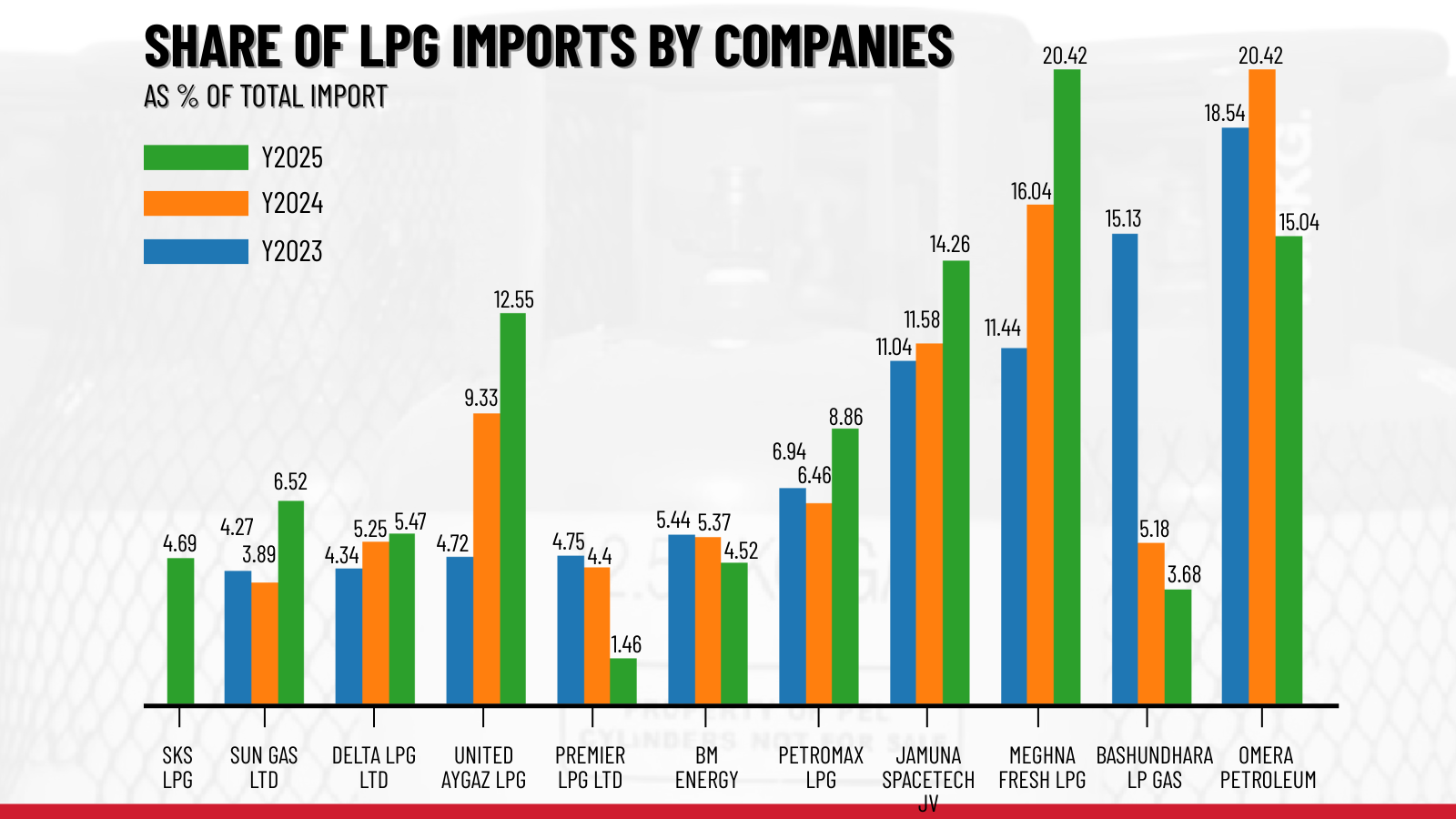
The primary catalyst for this shift is the Bangladesh Bank’s stringent directives regarding Letters of Credit (LCs). Under current rules, if one concern within a business group fails to meet compliance requirements, restrictions can extend to all affiliated entities. Consequently, Bashundhara which held a 15.5% market share in FY2023 saw its share plummet to 3.68% in FY2025, with zero imports recorded in early 2026. Similarly, Beximco LPG has recorded no direct imports since 2025.

Emerging Leaders and Market Growth
As established players struggle with financing, other companies have aggressively expanded their footprint:
- Meghna Fresh LPG Ltd: Now the market leader, increasing its share from 11.44% in FY2023 to 20.43% in FY2025.
- Jamuna Spacetech Joint Venture: Grew to 14.24% of total imports.
- United Aygaz LPG Ltd: Saw a dramatic rise from 4.73% to 12.55%.
Despite these internal shifts, the overall demand for LPG continues to climb. National imports rose from 12.23 lakh tonnes in 2023 to 14.47 lakh tonnes in 2025. With annual demand growing at 12%, the market is projected to reach 30 lakh tonnes by 2030, currently valued at approximately Tk 16,000–17,000 crore.
The shifting supply chain has also seen the United States emerge as the primary source of LPG for Bangladesh, accounting for more than 60 percent of imports in early 2026. This move away from traditional Middle Eastern suppliers reflects broader geopolitical changes and a search for more reliable trade agreements. However, these structural shifts have not yet translated into lower prices for the average consumer. Retail costs for a standard 12-kg cylinder have remained stubbornly high, often exceeding government-set rates by a significant margin. Industry analysts suggest that while the entry of new players signals a move toward a more diversified and competitive market, the ongoing transition continues to create short-term instability in both supply and pricing across the nation.
For more updates, follow Markedium.







Leave a comment