






























What if a plastic bottle could become part of one of Bengal’s most cherished festive traditions? For Durga Puja 2025, Coca-Cola India explored this possibility through Laal Paar, a campaign that transformed recycled plastic into sarees inspired by Bengal’s iconic red-and-white drape. Conceptualised by Ogilvy India, the campaign brought together sustainability, traditional craftsmanship and cultural identity in a way that went beyond conventional festival advertising.
The familiar colours of Coca-Cola found a natural connection with the traditional Laal Paar saree. Known for its white fabric and red border, the saree holds a special place in Bengali culture, particularly during Durga Puja. Women wearing Laal Paar sarees are a familiar sight during the celebrations, especially during rituals such as Sindoor Khela. Coca-Cola’s own red-and-white identity created an immediate visual connection. Instead of simply placing its logo on a festive advertisement, the brand used this shared colour palette to build something people could actually wear.
Behind each saree was a combination of traditional craftsmanship and recycled materials. The project used yarn made from recycled Coca-Cola PET bottles blended with cotton. PET, or polyethylene terephthalate, is the type of plastic commonly used in beverage bottles. Through the initiative, this material was given another purpose as part of a traditional garment. The sarees were woven by master weavers from Phulia in Nadia district, West Bengal, a region known for its handloom heritage. Artisans from the suburbs of Kolkata also contributed through block printing and embroidery. Their involvement placed local craftsmanship at the centre of the campaign rather than treating it as a decorative afterthought. (Ogilvy)
Bengal’s cultural symbols gave the sarees an identity beyond their unusual material. The Shiuli flower, known for appearing around the arrival of Durga Puja, was featured alongside fish motifs, which are associated with prosperity in Bengali culture. These details helped preserve the traditional character of the Laal Paar while introducing a contemporary element. Coca-Cola’s iconic contour bottle was incorporated into the fabric, bringing the brand into the design without making the saree look like ordinary promotional merchandise. The familiar bottle shape became part of a garment closely connected to local culture.
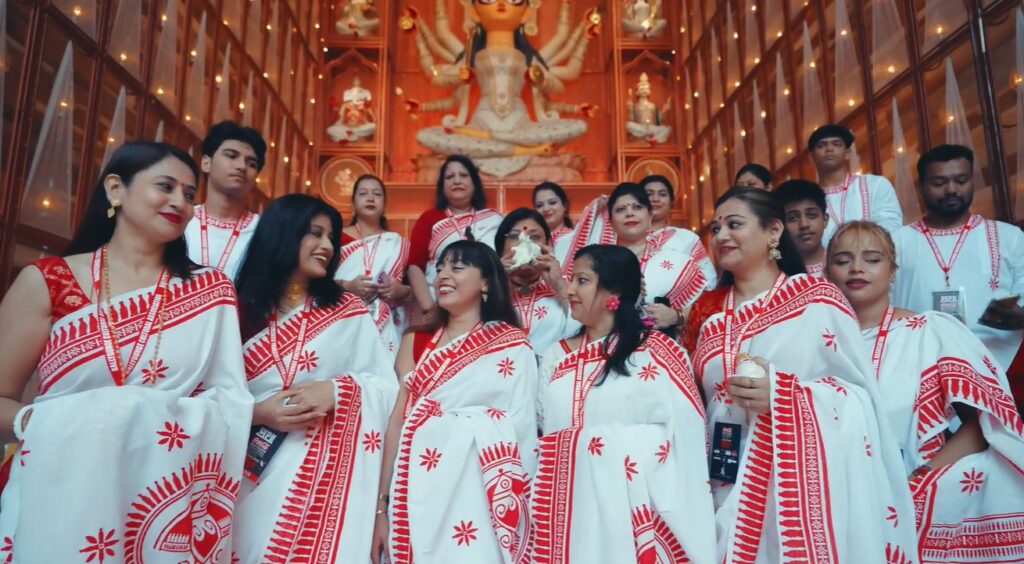
The sarees made their public debut at Ballygunge Cultural Association’s 75th-year Durga Puja celebrations in Kolkata. Women from the community wore the designs during the festivities, bringing them into the celebrations rather than limiting their display to a branded exhibition. The collection was also presented to members of the West Bengal Ministry of Culture, according to reports by News18. The sarees were not made available for commercial sale. Instead, the project centred on showcasing the designs and the artisans behind them. Weavers from Phulia and block-printing and embroidery artisans from the Kolkata suburbs contributed their skills to the collection, connecting traditional techniques with a new application. While the campaign highlighted their craftsmanship, its longer-term impact on artisan livelihoods remains unclear from the publicly described outcomes.
The campaign brought sustainability into the design of the sarees, using recycled materials as part of the final product rather than relying on messaging alone. The recycled PET yarn was part of the saree itself, making the connection between discarded material and a finished garment easy to understand. The initiative aligned with Coca-Cola’s broader World Without Waste vision, which focuses on packaging collection and recycling. However, the campaign’s significance was not simply that plastic was reused. It showed how recycled material could become part of an object with cultural and emotional value. The project did not, by itself, establish the overall environmental impact of the material, but it offered a tangible way to communicate the possibilities of reuse.
At a time when brands compete for attention through festival sponsorships, advertisements and elaborate installations, Laal Paar took a more culturally specific approach. It did not ask people to stop celebrating their traditions to notice the brand. Instead, it found a place for Coca-Cola within a familiar symbol of the celebration. By bringing together its red-and-white identity, recycled materials and Bengal’s handloom heritage, the campaign created a connection that felt relevant to the occasion. More than turning plastic bottles into sarees, Coca-Cola showed how a brand could become part of a cultural experience by contributing something people could wear, recognise and remember.
Want to stay updated on the latest campaigns and creative ideas? Follow Markedium Campaigns for more.
Have a campaign you think deserves a closer look? Submit it to us here.
















Leave a comment