






























Cotton can be coloured with plants, but keeping that colour attached to the fabric without synthetic chemical binders has been a challenge for textile manufacturers. Japanese-German startup AIZOME is tackling the problem with sound waves. Its patented AIZOME ULTRA technology uses ultrasound to help plant-derived colour bind to cotton, offering a different way to approach textile dyeing with water, medicinal plants and no conventional synthetic chemical binders.
Plant-based dyes have been used for centuries, but bringing them into modern textile production comes with challenges. According to AIZOME, natural colours can fade or lose their properties when they are not properly bound to fabric. Conventional methods often rely on synthetic chemical binders to keep the colour in place, making it difficult to move towards plant-based alternatives without compromising performance. The company says more than 1,500 synthetic chemicals are still used in textile dyeing, raising concerns about their potential effects on workers, consumers and the environment.
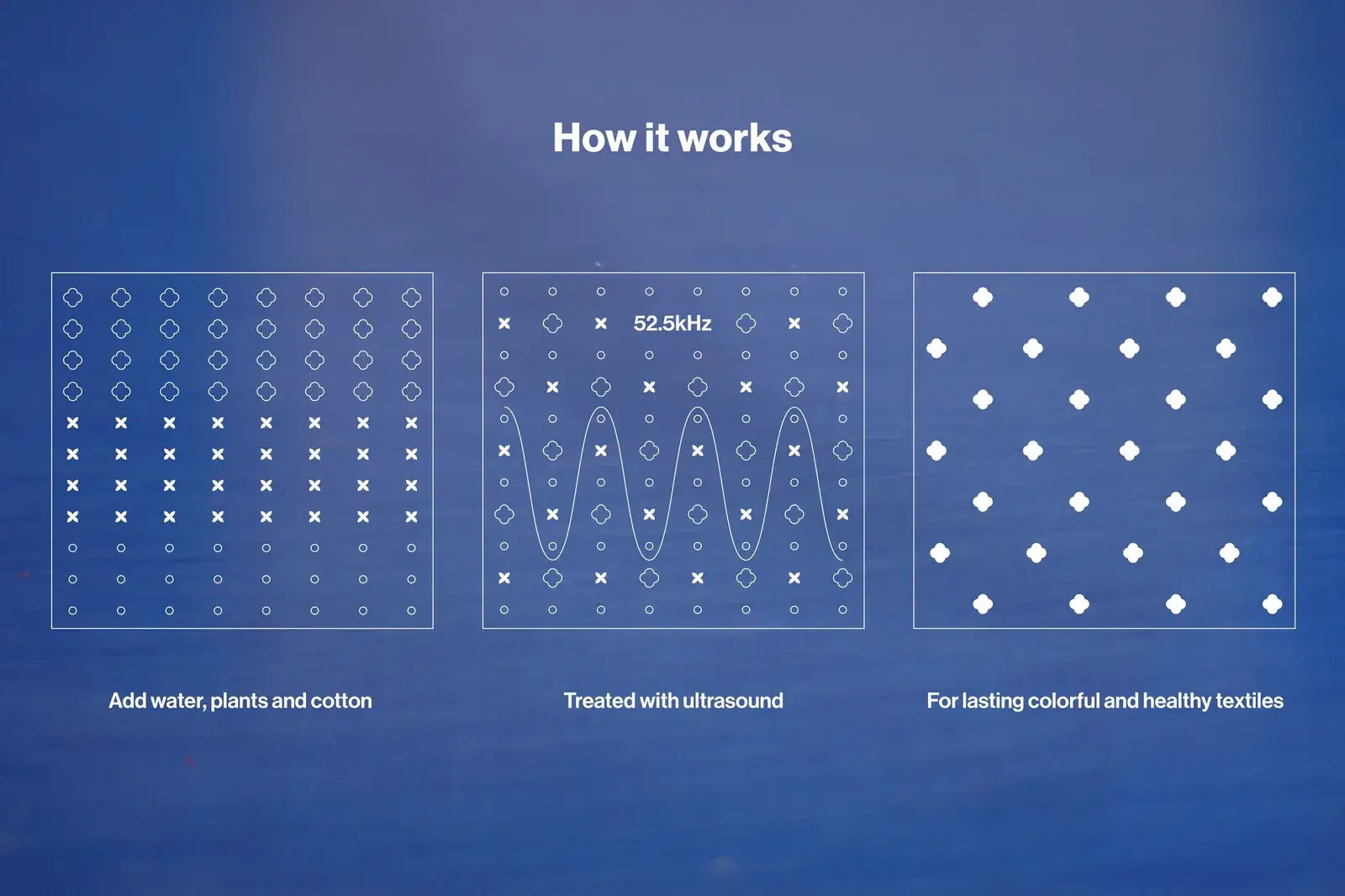
AIZOME ULTRA uses sound waves instead of conventional synthetic chemical binders. During the process, ultrasound operating at 52.5 kHz is applied underwater, setting plant particles in motion and helping them attach to cotton fibres. The dyeing stage takes approximately 60 to 90 minutes, with repeated applications of ultrasound. AIZOME says the method helps retain plant-derived colour and the properties associated with the plants used. The wider manufacturing process can take around a year, according to the company, as it monitors organic quality from the farms supplying the ingredients through to the finished fabric.
The technology takes inspiration from aizome, a traditional Japanese plant-based dyeing practice particularly associated with indigo. Indigo was historically valued for more than its colour, with AIZOME’s account highlighting its association with wound care and its use in Samurai armour. The introduction of synthetic dyes gradually changed the textile industry, contributing to the decline of traditional plant-based dyeing practices. By applying ultrasound to this older approach, AIZOME is attempting to make plant-derived colour more practical for contemporary cotton production without depending on conventional synthetic binders.
Wastewater is another part of the process the company draws attention to. AIZOME says the water left after dyeing retains benefits associated with the medicinal plants used. However, the company has not provided detailed wastewater test results in the supplied information, so its composition and environmental impact cannot be established from that claim alone. The same applies to the wider environmental benefits of the technology. Replacing certain synthetic inputs may offer an alternative manufacturing route, but a comparison of its overall impact would require data on water use, energy consumption, chemical residues and production at scale.
AIZOME is also exploring how plant-derived compounds in textiles could be used in healthcare and everyday products. Its proposed applications include bedsheets intended to support wound healing, T-shirts designed to reduce stress and underwear intended to ease menstrual pain. The company states that its technology has been validated by the University of Cambridge and recognised by the National Eczema Association. It also claims that its medical benefits received approval from the US Food and Drug Administration in 2023. However, the supplied information does not specify the studies, regulatory authorisation or medical indications behind these claims. The proposed health applications therefore need to be considered separately from the dyeing technology itself, as the presence of plant-derived compounds in fabric does not automatically establish a medical benefit.

AIZOME reports that more than 3,000 tonnes of fabric have been produced using its technology and that 2.4 million people have benefited from it. The company also describes ongoing partnerships with healthcare institutions, fashion brands and cosmetics producers. These figures and developments suggest an effort to take the technology beyond experimental textile production, although independent production records and details of how the beneficiary figure was calculated have not been provided.
AIZOME ULTRA shifts attention from finding new natural dyes to changing how those dyes are attached to fabric. Ultrasound gives the company a way to revisit plant-based textile dyeing using a different physical process. Whether it can deliver consistent colour, commercial durability and measurable environmental or healthcare benefits will depend on further testing. For an industry looking to rethink its use of synthetic chemicals, however, the approach opens up another possibility for bringing traditional plant-based materials into modern textile manufacturing.
Watch the full campaign here.
Want to stay updated on the latest campaigns and creative ideas? Follow Markedium Campaigns for more.
Have a campaign you think deserves a closer look? Submit it to us here.
















Leave a comment