































The price of gold in Bangladesh is no longer a slow-moving asset; it is a live wire, fluctuating wildly in response to every global tremor and every dip in the local currency. Over the five years spanning 2020 to 2025, the gold market transformed from one of steady growth to one of hyper-volatility, driven by a powerful and compounding interaction between international chaos and domestic economic stress.
The surge in global gold prices is rooted in a trifecta of factors: safe-haven demand (driven by geopolitical instability and crises like the Russia-Ukraine war), strategic central bank buying (particularly by countries diversifying reserves away from the U.S. dollar), and anticipation of interest rate cuts (which lowers the appeal of cash). Adding to this is the Trump tariff effect, where trade war threats and inflationary risk boost gold’s position as the primary investment hedge against economic and political chaos.
The surge, which has seen the price of 22-carat gold per bhori climb by over 229% in Bangladesh, is a spectacular showcase of this volatility, placing unprecedented pressure on the nation’s consumers and small businesses.
The Anatomy of Volatility: 2020–2025
The price trajectory of gold, set by the Bangladesh Jewellers’ Association (BAJUS), reflects how swiftly global events are monetized in the local market. The volatility is measured not just in price percentage, but in the sheer frequency of price adjustments—which reached an alarming 62 times in 2024 alone.
Phase I: Global Fear Multiplies (2020 – 2023)
In the initial years, the gold price was primarily reactive to the international bullion market’s safe-haven rally.
- 2020 Baseline: The price of 22-carat gold per bhori closed the year at approximately Tk 59,195, reflecting the initial shock of the global pandemic.
- The Taka Shockwave: As geopolitical tensions (like the Russia-Ukraine war) and global inflation began to crest, gold’s international dollar price soared past $4,000 per ounce. This external pressure instantly hit Bangladesh, where imported gold became vastly more expensive due to the weakening Taka.
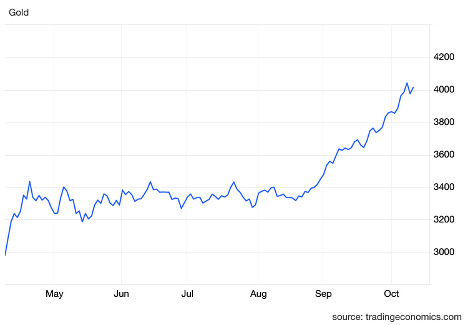
- Breaking the Barrier (2023): This synergy of global and local stress pushed the price past the psychological milestone of one lakh Taka, reaching Tk 1,02,876 by late 2023.
Phase II: Hyper-Frequency and Unstable Peaks (2024 – 2025)
The latter period saw volatility intensify, with price changes becoming a weekly, sometimes daily, occurrence.
- 2024’s Record Fluctuations: The market experienced extreme turbulence, evidenced by the 62 price changes recorded throughout the year. The closing price of the year was approximately Tk 138,288.
- The 2025 Spike: Volatility reached fever pitch in 2025, driven by global forecasts of gold reaching $4,000 per ounce. The price saw a stunning 40% increase in the first nine months alone.
- Extreme Monthly Jump: The month of September 2025 was marked by extreme instability, with the price soaring by an estimated Tk 21,000 per bhori in just one month.
- Historic Peak: This volatility culminated in the all-time high of Tk 195,384, announced by BAJUS in late September 2025.
The volatility in the Bangladeshi gold market is unique because it is amplified by structural economic weaknesses:
1. The Smuggling Multiplier
Bangladesh has an annual gold demand of 20 to 40 tonnes, but most of this is met through smuggling due to strict official import regimes and currency constraints. High official gold prices widen the gap between the domestic market and the global market, incentivizing illicit trade. This unofficial supply chain, operating outside regulatory control, adds further price distortion and opacity, fueling greater instability.
2. USD/BDT Exchange Rate Dominance
Unlike markets with a robust supply of physical gold, Bangladesh’s price is highly leveraged to the US Dollar exchange rate. Since Taka has experienced significant depreciation due to the foreign exchange crisis, the Taka price of gold skyrockets regardless of moderate changes in the international dollar price. The local gold market is effectively mirroring the instability of the country’s foreign reserves.
3. Cultural Demand vs. Price Elasticity
Gold is indispensable for cultural events, particularly weddings. This inelastic demand means that even as prices become prohibitive, a certain volume of buyers are forced to enter the market, sustaining demand pressure and preventing any sharp decline. However, the result is a sharp drop in overall sales—jewelers reported sales had halved—as general consumer affordability collapses.
4. The BAJUS Pricing Mechanism
The Bangladesh Jewellers’ Association (BAJUS) maintains control over domestic pricing. Their constant “adjustments”—such as the 62 shifts in 2024—are desperate attempts to align local rates with the soaring international cost and currency fluctuations. This frequent, reactive re-pricing is the very mechanism that makes the market feel so volatile to the average consumer.
The gold market’s hyper-volatility is not merely a trading story; it is a macroeconomic alarm bell. The price surge forces the cost of global instability onto local households and exposes the fragility of the Taka, cementing gold’s role as the most dramatic barometer of Bangladesh’s ongoing economic struggle.
This article was first published in Market Script Issue 1, where we delved deep into the ‘mobile financial service’ industry of Bangladesh.
For more updates, be with Markedium.










Leave a comment