


























As Bangladesh’s capital market navigates a prolonged period of volatility and structural challenges, questions around investor confidence, market depth, and institutional reform have moved to the forefront of economic policy discussions.
In this context, Markedium sat down with Mr. Ahsanur Rahman, CEO of BRAC EPL Stock Brokerage Limited, to explore the post-election outlook for the market, the policy priorities needed to restore investor trust, and the structural reforms required to unlock Bangladesh’s capital market potential.

From foreign investment flows and bond market development to digital transformation and investor education, the conversation offers a strategic perspective on how the country’s capital market can evolve into a deeper, more resilient engine of economic growth.
Here’s a refined version of the interview:
Markedium: Bangladesh’s capital market has been in a prolonged bearish phase. With the national election scheduled for February, how do you assess the post-election outlook for the market? What structural or sentiment-driven changes do you anticipate in the near to medium term?
Mr. Rahman: Post-election, markets typically react first to sentiment rather than fundamentals. If the outcome is credible and the transition is orderly, we should see a reduction in the political risk premium, which could trigger a relief rally. Early indicators would include stronger liquidity and improving trading volumes, as investors shift from a risk-off to a risk-on stance. However, if uncertainty persists, sentiment can quickly reverse back into a risk-off phase.
In my view, among the structural changes that may follow the election—such as an increase in quality listings and stronger disclosure requirements, the most impactful will be the shift toward technology-driven market access. As confidence returns and the government stabilizes, we should see faster adoption of digital trading infrastructure, smoother investor onboarding, and improved access to market information.
Markedium: From a policy perspective, which priority areas should the incoming government focus on restoring investor confidence and stimulate sustainable growth in the capital market?
Mr. Rahman: The incoming government should prioritise capital market reforms centred on stability, governance, and market depth. For us, this translates into improving regulatory consistency, increasing the supply of quality listed companies, and developing a long-term institutional investor base. Without these elements, the market will remain retail-heavy, volatile, and unable to mobilise long-term capital effectively.
While the 2025 IPO Rules have largely addressed the supply side by easing the pathway for quality companies to list, attention must now pivot decisively toward the demand side. A healthy capital market requires a strong, long-term institutional investor base.
Foreign portfolio investment in Bangladesh remains insignificant compared to regional peers. To strengthen our institutional base, we must actively attract foreign investment—and to do so, we must focus seriously on reclassifying our market status from Frontier to Emerging. This shift is essential for foreign institutional investors to feel sufficiently secure to deploy long-term capital.
The new government should aim to transform Bangladesh’s capital market and attract sustainable foreign investment. One of its highest priorities should be securing market reclassification by global index providers from frontier to emerging market status.
Read more: In Conversation with Ali Ahmmed on Building Bangladesh’s Digital Finance Future
I would strongly advocate for the immediate formation of a National Task Force for Market Reclassification to align our regulatory and operational standards with global benchmarks. This effort must be guided by a clear, time-bound roadmap. To achieve our ambition of becoming a trillion-dollar economy, we must move beyond a bank-centric financing model. Transitioning from Frontier to Emerging Market status should be treated as a national economic priority. Vietnam offers a compelling example—its government made reclassification a core policy objective, coordinating closely between the central bank and the ministry of finance to remove technical barriers.
This reclassification is expected to unlock billions of dollars in foreign capital inflows, deepen market liquidity, and integrate Bangladesh more fully into global investment portfolios. I am prepared to assist the government in drafting the initial Terms of Reference (ToR) for this proposed Task Force. We have the IPO rules, and we have the potential. What we need now is the political will to synchronise our institutions and clearly signal to the world that Bangladesh is open for institutional business.
Markedium: Despite its importance in developed markets, Bangladesh’s listed bond market remains largely underdeveloped. What, in your view, are the key constraints behind this? How can regulators and policymakers incentivize corporates and institutions to issue and list bonds?
Mr. Rahman: Bangladesh’s listed bond market remains underdeveloped primarily because incentives on both the supply and demand sides are weak. From a corporate perspective, bank loans are easier, faster, and more convenient, which naturally makes bank financing the preferred option. In contrast, issuing listed bonds is still perceived as complex, time-consuming, and costly due to multiple approval layers and the involvement of numerous intermediaries.
A further structural constraint is the lack of market infrastructure, particularly the absence of an official benchmark yield curve and robust valuation standards. Without reliable pricing benchmarks, bonds cannot be priced efficiently, which suppresses trading activity. Consequently, secondary market liquidity remains thin, and a functioning ecosystem of market makers has yet to emerge. On the investor side, long-term institutional funds continue to remain parked in fixed deposit receipts (FDRs), awareness of bond products is limited, and confidence in credit ratings and issuer credit quality remains weak.
To address these challenges, regulators could simplify issuance by introducing fast-track approvals for repeat and high-rated issuers, alongside shelf registration or medium-term note programs.
Policymakers should also publish a benchmark yield curve, ensure regular bond price dissemination through exchanges, and introduce measures to stimulate institutional demand. In addition, targeted tax incentives, stronger oversight of credit rating agencies, and enabling bond repos or collateral eligibility at Bangladesh Bank would significantly enhance market liquidity and investor confidence.
Markedium: BRAC EPL Stockbrokerage Ltd has emerged as the market leader in foreign portfolio trading. Could you share the strategic pillars, operational strengths, or institutional practices that enabled the company to achieve this leadership position?
Mr. Rahman: First, trust and governance. We place a premium on transparency, robust internal controls, and the strict confidentiality of client information.
Second, uncompromised research. At BRAC EPL, we focus on independent, high-integrity research—our views are driven by fundamentals and data, not short-term market narratives. We emphasize transparency of assumptions, consistency in methodology, and clear articulation of risks, enabling investors to understand not just our recommendations but the rationale behind them.
Third, execution excellence. We treat execution as a product in itself—fast, accurate, and consistent, particularly in a market where microstructure frictions can materially affect outcomes.
Fourth, operational strength and client service. Foreign institutional investors value seamless onboarding, responsive communication, clean trade allocations, and dependable post-trade support, all of which are core to our operating model.
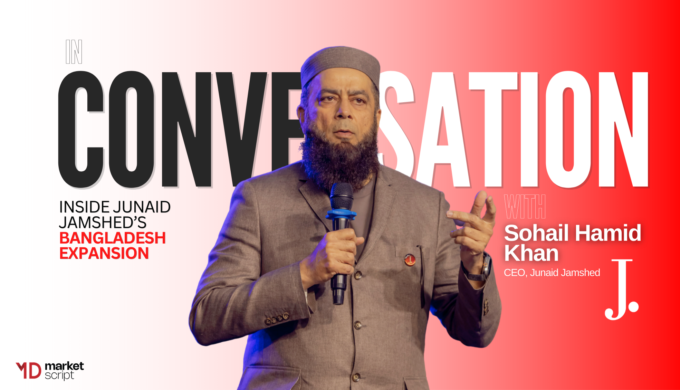
Read more: Inside Junaid Jamshed’s Bangladesh Expansion | J. CEO Sohail Hamid Khan on Growth & Strategy
We also take pride in our long-standing partnerships with leading global brokers. Beyond business, these relationships have helped elevate our internal standards, as we have learned directly from their best practices across markets. As a result, we have aligned ourselves more closely with international expectations in execution quality, compliance, and investor servicing.
Markedium: The company has recently placed strong emphasis on financial literacy through initiatives such as “Jene Bujhey Binoyog” and its MoU with BICM. What long-term objectives underpin this focus, and how do you see financial literacy shaping the future investor base?
Mr. Rahman: Our long-term objective behind initiatives such as Jene Bujhey Binoyog and the MoU with BICM is very clear: to help build a stronger, safer, and more mature investor base in Bangladesh.
Market volatility in Bangladesh is driven not only by macroeconomic factors, but also by a persistent education gap. The capital market remains heavily retail-dominated, and when investors lack financial literacy, they become more vulnerable to rumors, panic-driven behavior, and, unfortunately, manipulation.
For us, financial literacy is therefore not a CSR initiative, it is a long-term market development strategy. A better-informed investor base encourages more rational participation, healthier long-term savings behavior, and ultimately a more stable and resilient capital market.
We also believe that financial literacy today must be complemented by digital literacy. Many potential investors are losing money not only in the stock market, but even before entering it—through online scams, fake platforms, and widespread misinformation. Our aim is to redirect these individuals toward the regulated capital market by providing proper guidance, access to verified platforms, and education rooted in responsible investing.
Importantly, we do not view investor education through a traditional lens. The future lies in scalable, technology-driven learning—micro-learning formats, mobile-first modules, practical investor safety training, and structured programs capable of reaching new communities beyond the usual urban and metropolitan circles.
Our ultimate goal is to cultivate an investor base that is not just larger, but more resilient investors who understand risk, avoid shortcuts, and participate with knowledge and discipline rather than speculation.
Markedium: In mid-2025, BRAC EPL Stockbrokerage partnered with BRAC Bank to enable BO account opening via the Astha app. How has the market responded, and how does this integration advance your broader digital transformation and client acquisition strategy?
Mr. Rahman: Today’s investors prioritize convenience, speed, and seamless digital access. At BRAC EPL Stockbrokerage, our digital transformation initiatives have been deliberately designed to deliver exactly that. Our core focus has been on building an end-to-end digital ecosystem that makes the investing experience simpler, faster, and more reliable for both new and existing investors.
A major milestone in this journey has been the launch of our proprietary trading platform across both web and mobile—BRAC EPL Trade. This has significantly strengthened our execution capabilities and enabled us to deliver more consistent investor experience through improved speed, transparency, and service quality. The platform allows investors to access trading and account services anytime, anywhere—capabilities that are now a baseline expectation for modern market participants.
Another critical pillar of our transformation has been integration with trusted financial platforms. By connecting our services with BRAC Bank’s Astha app and bKash, we have made transactions easier, safer, and more convenient, while reducing friction across the investor journey.
Our objective is not merely to digitize brokerage services, but to build a true fintech bridge—one that enables every Bangladeshi with a smartphone to participate in the country’s growth story. We are increasingly focused on empowering investors through data, analytics, and intelligent tools, evolving from a traditional service provider into an essential part of our clients’ everyday financial lives.
Markedium: You assumed the role of CEO at BRAC EPL Stockbrokerage with 18 years of professional experience. Could you briefly walk us through your career journey and the leadership principles that have shaped your growth in the capital market?
Mr. Rahman: My 18-year career in the capital market has evolved through distinct phases. I began by building a strong foundation in market fundamentals—understanding valuation, investor behaviour, and the workings of Bangladesh’s market microstructure. In the early years of my career, I worked in the back office, before transitioning to the front office as a full-time trader.
During my eight years as Head of International Trade & Sales, I had the opportunity to participate in multiple international roadshows and global investor conferences—exposure that relatively few professionals in our market experience. These engagements allowed me to interact directly with global fund managers, frontier-market specialists, and institutional traders, and to understand first-hand how they assess markets like ours. More importantly, they gave me a clear view of the standards global investors expect in governance, transparency, research quality, and execution discipline—insights that continue to shape the way I think and operate today.
Over time, my role expanded into leadership—building teams, strengthening execution and operational processes, and contributing to institutional partnerships and digital transformation initiatives, including improvements in platform access and transaction convenience for investors. Having worked across both the back office and the trading floor, I understand the business end-to-end. This perspective has been invaluable in leadership roles, as it enables me to align strategy with operational realities and execution discipline.
The leadership principles that have shaped my growth are straightforward: integrity and transparency. I operate with a client-first mindset, believe strongly in research-led and data-driven decision-making, and place a high priority on developing people. I focus on empowering teams with full ownership—giving them the freedom, confidence, and accountability to make decisions and deliver results.
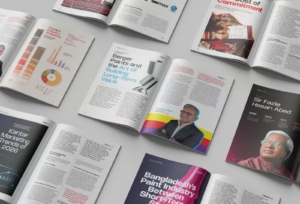
This interview was first published in Market Script Issue 5, where we delved deep into the ‘Capital Market’ of Bangladesh.
For more updates, be with Markedium.










Leave a comment