


























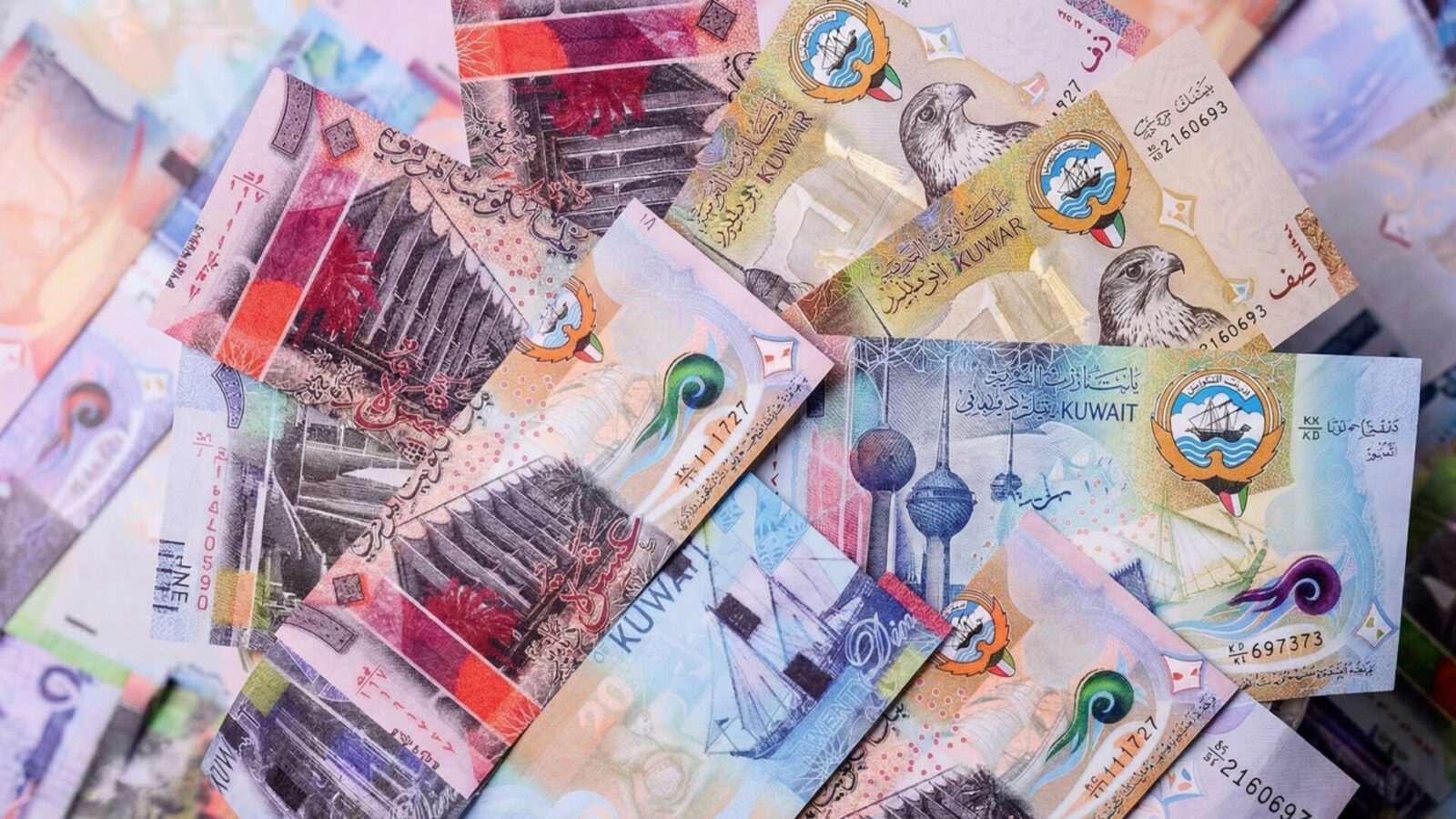
The Kuwaiti Dinar (KWD) consistently holds the distinction of being the world’s highest-valued currency in terms of its exchange rate, a fact that frequently leads to the assumption of Kuwait being among the wealthiest nations globally. This perception is significantly amplified by its impressive exchange rate, with 1 Kuwaiti Dinar equating to approximately 3.28 US Dollars as of July 2025. Such a phenomenal valuation often suggests an equally phenomenal national prosperity.
However, a comprehensive examination of economic indicators reveals a more intricate reality: while undeniably a nation with substantial per capita wealth, Kuwait does not consistently rank as the “richest country” when considering broader measures of national prosperity, economic diversity, and long-term sustainability.
The Kuwaiti Dinar’s Unrivaled Exchange Rate Strength
The Kuwaiti Dinar (KWD) is consistently recognized as the world’s most valuable currency when measured by its exchange rate against major global currencies. This exceptional valuation is not a mere coincidence but the culmination of several interconnected economic, financial, and geopolitical factors that reinforce its strength. As of July 2025, for instance, one Kuwaiti Dinar commands approximately 3.28 US Dollars. This high conversion rate positions the KWD at the apex of global currency valuations.
The primary driver of the Dinar’s high value is Kuwait’s abundant oil reserves. The country possesses approximately 7% of the world’s oil supply, establishing it as a significant force in the global energy market. The substantial and consistent revenue generated from these oil exports forms the bedrock of Kuwait’s robust economy. This continuous inflow of foreign currency from oil sales creates a high and sustained demand for the Kuwaiti Dinar, directly contributing to its elevated exchange rate.
Kuwait’s strong currency is supported not only by its oil wealth but also by prudent fiscal policies and the strategic management of its sovereign wealth fund, the Kuwait Investment Authority (KIA). Unlike some oil-rich nations that have faced currency devaluations, Kuwait maintains minimal public debt, significant budget surpluses, and a conservative approach to economic management. The KIA invests extensively in foreign assets, safeguarding the economy from shocks and currency volatility, while modernizing its internal systems to ensure efficiency and innovation. These foreign reserves help sustain the Dinar’s high valuation even during global uncertainty.
The Central Bank of Kuwait (CBK) employs a strategic currency peg to a basket of international currencies rather than a single currency. Reinstated in 2007, this policy maintains stability, reflects Kuwait’s diverse trade relations, and shields the domestic economy from imported inflation, reinforcing the Dinar’s strength.
Kuwait’s political stability and well-established governance further bolster investor confidence, enhancing demand for the Dinar and contributing to its consistent value in global markets.
The following table illustrates the Kuwaiti Dinar’s position among the world’s highest-valued currencies:
| Currency | Value in USD |
| Kuwaiti Dinar (KWD) | 3.28 |
| Bahraini Dinar (BHD) | 2.65 |
| Omani Rial (OMR) | 2.60 |
| Jordanian Dinar (JOD) | 1.41 |
| Gibraltar Pound (GIP) | 1.37 |
| British Pound (GBP) | 1.37 |
| Cayman Island Dollar (KYD) | 1.20 |
| Swiss Franc (CHF) | 1.26 |
| Euro (EUR) | 1.18 |
| United States Dollar (USD) | 1.00 |
Export to Sheets
Source: BankBazaar.com (as of July 2025)
Defining “Strong Currency”: Exchange Rate vs. Purchasing Power Parity
The term “strong currency” can be misleading, as it depends on context. It generally refers to exchange rate strength or purchasing power parity (PPP).
Exchange rate strength reflects how much of another currency a unit can buy. The Kuwaiti Dinar exemplifies this, trading at a high rate against the US Dollar, which lowers import costs and benefits cross-border transactions.
Purchasing Power Parity (PPP), by contrast, measures a currency’s true value by equalizing the cost of a standard basket of goods across countries. It better captures actual living standards, especially for non-traded goods and services, and avoids the volatility of market exchange rates.
For international comparisons and welfare assessments, PPP-adjusted GDP per capita provides a more accurate picture of real prosperity than nominal GDP, highlighting the difference between currency strength and true economic well-being.
Misconceptions: Currency Strength Does Not Equate to Overall National Prosperity
A common misconception is that a strong currency automatically indicates a rich or diversified economy. While it offers advantages, it does not guarantee broad-based prosperity.
Benefits include cheaper imports, greater purchasing power for consumers, more affordable foreign travel, and protection against inflation. Foreign firms may also see higher profits when converting earnings back to their home currency.
Drawbacks arise for exporters, whose goods become more expensive internationally, reducing competitiveness. For Kuwait, a persistently strong Dinar—driven by oil wealth and a strategic peg—can discourage non-oil export growth and the development of a robust private sector.
In essence, while the Dinar shields consumers from imported inflation, it can hinder domestic non-oil competitiveness, reduce incentives for local production, and slow economic diversification, highlighting the trade-offs of maintaining an exceptionally strong currency.
Kuwait’s Economic Landscape: Strengths and Structural Limitations
This section provides a detailed overview of Kuwait’s economy, highlighting its unique characteristics, its profound reliance on oil, and the structural challenges it faces in achieving broader, sustainable prosperity beyond its currency’s exchange rate strength.
Kuwait’s Economic Snapshot: GDP and Global Standing
Despite its strong currency, Kuwait’s global wealth position is more nuanced than headline GDP per capita figures suggest. For 2025, Kuwait’s projected real GDP growth is 1.9%, with a population of 5.112 million. Nominal GDP per capita was around $35.2k (2021 IMF), while PPP-adjusted GDP per capita—a better measure of actual living standards—is $50.96k.
Although this indicates a high standard of living, Kuwait ranks below several GCC peers, including Qatar ($121.6k PPP), UAE ($81.7k PPP), and Bahrain ($67.8k PPP), and global leaders like Ireland ($107.3k nominal). The high per capita income largely reflects oil revenues and state-driven wealth distribution, rather than a diversified or broadly productive economy.
Kuwait’s wealth system disproportionately favors citizens over expatriates and richer households over lower-income groups, creating inefficiencies and market distortions. Consequently, while citizens enjoy high living standards, the country’s nominal prosperity masks underlying structural and equity challenges that prevent it from being among the world’s wealthiest in a holistic sense.
The following table provides a snapshot of Kuwait’s key economic indicators:
| Indicator | Value (as of 2025 unless specified) | |
| Projected Real GDP (% Change) | 1.9% | |
| Country Population | 5.112 million | |
| GDP Per Capita (Nominal, 2021) | $35.2 thousand | |
| GDP Per Capita (PPP) | $50.96 thousand |
Oil Dependence and the Path to Diversification
Kuwait’s economy remains overwhelmingly dependent on its vast hydrocarbon resources, a characteristic that serves as both its primary source of immense wealth and a significant structural vulnerability. This heavy reliance on oil fundamentally shapes its economic performance and long-term prospects.
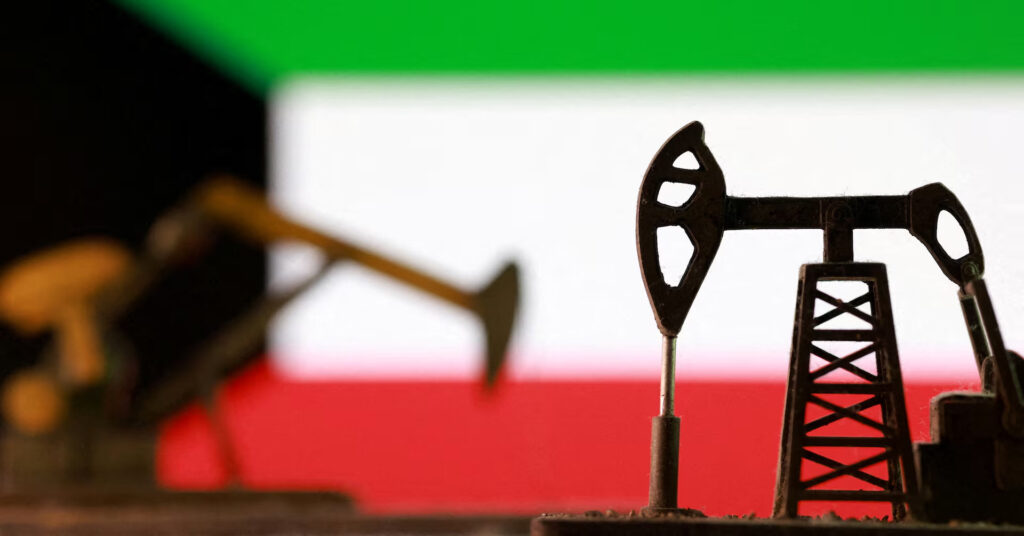
Kuwait stands out as one of the most oil-dependent members of the Gulf Cooperation Council (GCC). In 2015, the hydrocarbon sector alone accounted for approximately 90% of total exports, 66% of fiscal revenues, and 60% of real economic activity. This profound reliance means that Kuwait’s economic performance, including its per capita income and the growth of its non-oil sectors, has historically been highly susceptible to the volatile swings in global oil prices.
The impact of oil price volatility on Kuwait’s economy has been clearly demonstrated over time. Periods of high oil prices, such as from 2003 to 2014, enabled the government to stimulate growth through increased public spending and the creation of numerous public sector jobs, while simultaneously accumulating substantial fiscal reserves. Conversely, the sharp decline in oil prices since mid-2014 adversely affected Kuwait’s fiscal and external accounts, leading to a noticeable slowdown in non-oil real GDP growth. A stark illustration of this vulnerability occurred in 2020, when the economy contracted sharply by 8.9% due to the combined fallout from the global coronavirus pandemic and OPEC+ oil production cuts. This contraction led to a dramatic widening of the fiscal deficit, from 9.5% of GDP in FY19/20 to an alarming 33.2% in FY20/21.
Recognizing these inherent vulnerabilities and the long-term global shift away from fossil fuels, Kuwait has embarked on an ambitious national development plan known as “New Kuwait 2035”. This vision aims to transform the country into a diversified, sustainable economy and establish it as a regional financial and commercial hub, with a dynamic private sector leading the charge. These efforts explicitly include initiatives to establish alternative revenue sources and significantly reduce the nation’s reliance on oil exports. The success of this diversification hinges on overcoming deeply entrenched structural challenges and fostering a more dynamic, non-oil driven economic environment.
Investment in Innovation, Infrastructure, and Human Capital
To support its ambitious diversification goals outlined in Vision 2035, Kuwait has articulated plans for significant investments across critical areas, including infrastructure, innovation, and human capital development. However, the implementation of these plans faces inherent and persistent challenges.
In terms of infrastructure investments, Kuwait has demonstrated a commitment by allocating nearly $6 billion for infrastructure and services in its 2025-2026 budget. This substantial plan targets vital sectors such as transportation, water, and electricity, and notably includes the development of the strategic Mubarak Al-Kabeer Port, a project estimated to cost $3.2 billion. The government is also actively promoting Public-Private Partnerships (PPPs) for infrastructure and utilities, an approach that has already yielded positive results in the power sector, particularly in addressing power capacity shortages.
Regarding innovation and private sector empowerment, Vision 2035 explicitly emphasizes nurturing Kuwaiti small businesses and startups, attracting foreign investment into new industries, and empowering the private sector to develop innovative solutions to national challenges. To facilitate this, new economic zones, regulated by the Kuwait Direct Investment Promotion Authority (KDIPA), are being established, alongside fresh incentives for foreign investors. These initiatives are intended to lay the groundwork for a more diversified, private-sector-led growth model, aiming to generate new industries and employment opportunities in promising areas such as high-tech manufacturing and green technology. Evidence of this shift can be seen in Kuwaiti telecom and finance firms investing in local startups and digital infrastructure, thereby accelerating the country’s technological transformation. Even traditionally state-dominated sectors, such as the oil and gas industry (e.g., Kuwait Integrated Petroleum Industries Company – KIPIC), are reportedly fostering a “pro-youth culture” that encourages creativity and open data, leveraging young talent to drive innovation within the legacy sector itself.
A crucial pillar of Vision 2035 is investing in human capital and strengthening social cohesion. The government has increased its spending on education, which now accounts for 15% of the country’s total expenditure in recent years, and is implementing reforms to modernize the educational system to meet the demands of a technology-dependent economy. These initiatives include a focus on project-based learning, strengthening STEM (Science, Technology, Engineering, and Mathematics) and language subjects in the curriculum, and designing a professional licensing system for teachers to enhance their qualifications and status.
However, despite these commendable efforts and significant financial allocations, significant challenges persist in human capital utilization and private sector engagement. Kuwait currently ranks lowest in the Gulf region for the quality of its primary schools and the skillsets of its graduates, making it difficult for the private sector to find and recruit candidates with the necessary competencies. There is an acute underutilization of the native workforce, largely attributable to the overgenerous wages and working conditions prevalent in the public sector. Kuwaiti citizens typically prefer public sector employment due to greater job security, less burdensome responsibilities, generous pay and benefits, and shorter working hours compared to the private sector. Consequently, Kuwaiti nationals constitute only a small fraction (4.3%) of the private sector workforce, with the majority being expatriates, while a disproportionately high 76% of Kuwaiti citizens are employed in the public sector. This creates a deeply segmented labor market and significantly impedes the growth and dynamism of the private sector.
The public sector, in this context, functions as a de facto social safety net and a primary mechanism for wealth distribution to citizens. While this provides social stability, it simultaneously acts as a significant economic bottleneck. This reliance on public sector employment stifles private sector growth, creates disincentives for Kuwaitis to acquire market-relevant skills, and leads to underemployment and fiscal unsustainability. The ambitious “New Kuwait 2035” vision, while outlining a clear path for economic transformation, faces substantial hurdles in implementation. The persistent structural issues, such as heavy oil dependence, the pervasive dominance of the public sector, and deep-seated labor market inefficiencies, suggest that despite positive steps like infrastructure investment, achieving the vision’s full potential will require more profound and difficult structural reforms. Without addressing these underlying disincentives for private sector employment and the distortions in the labor market, the desired shift towards a diversified, innovation-driven economy may remain elusive.
Socio-Economic Challenges and Wealth Distribution
Kuwait’s socio-economic model, while historically generous, creates structural challenges that limit sustainable and equitable growth. The dominant public sector provides citizens with secure jobs, free education, healthcare, and subsidies, but this has led to underemployment, heavy fiscal burdens, and high youth unemployment (15.4% for ages 15–24). The system encourages reliance on government support and disincentivizes private sector participation.
The private sector remains underdeveloped, dependent on foreign labor, government contracts, and rent-seeking behaviors. Political and structural barriers have slowed non-oil growth, preventing the emergence of a dynamic economy.
Kuwait’s wealth distribution, though extensive, is inefficient and often favors wealthier households. Subsidies, high-paid public jobs, and lavish social services distort labor and energy markets, while the strong currency primarily benefits consumers through cheaper imports rather than broad economic productivity.
Reforms like a ‘resource dividend’—a direct cash grant for citizens—could replace distortive subsidies, encourage private sector engagement, and promote skill development among nationals.
Broader Economic Comparison: Wealth Beyond Exchange Rates
Kuwait’s model contrasts with global economies like the USA, Germany, and China, where sustainable wealth is driven by economic diversification, innovation, and global trade integration, rather than currency strength or resource dependency.
Case Studies: USA, Germany, and China
To understand why nations with comparatively lower-valued currencies often outperform in global wealth and influence, it’s insightful to examine the diverse economic models of the United States, China, and Germany—each thriving beyond exchange rate strength.
The United States, the world’s largest economy with a projected 2025 GDP exceeding $30.5 trillion, thrives on a highly diversified and innovation-driven system. Its dominance stems from the strength of its service sector—finance, real estate, healthcare, and technology—and the U.S. dollar’s global reserve status.
China, with a projected GDP of around $19.3 trillion (nominal) and $39.4 trillion (PPP) in 2025, has transitioned from export-led growth to a focus on domestic consumption and technological self-reliance. It now leads in AI and green technology, reflecting strategic industrial policies and market liberalization.
Germany, Europe’s largest economy, is projected at $4.7 trillion GDP in 2025. Its strength lies in advanced manufacturing, engineering excellence, and export dominance in vehicles, machinery, and chemicals. Backed by a skilled workforce and continuous innovation, Germany exemplifies industrial resilience and economic balance.
The following table provides a comparative economic snapshot of these leading economies alongside Kuwait:
| Country | Nominal GDP (trillions USD) | PPP Adjusted GDP (trillions USD) | Nominal GDP Per Capita (thousands USD) | PPP GDP Per Capita (thousands USD) |
| United States | $30.51 / $30.34 | $30.34 | $89.11 / $89.68 | $89.68 |
| China | $19.23 / $19.53 | $39.44 | $13.69 / $13.87 | $13.87 |
| Germany | $4.74 / $4.92 | $6.17 | $55.91 / $57.91 | $57.91 |
| Kuwait (for comparison) | N/A (smaller overall GDP) | N/A (smaller overall GDP) | $35.2 (2021) | $50.96 |
Sources: Forbes India , Investopedia , IMF
Key Drivers of Sustainable National Wealth
The experiences of the United States, Germany, and China illustrate that sustainable national wealth depends far more on economic diversity, innovation, and institutional strength than on currency value or natural resources.
Economic Diversity is a crucial safeguard against volatility. The U.S. leads through its vast service and tech sectors, China through a mix of manufacturing and innovation, and Germany through advanced industrial exports. In contrast, Kuwait’s dependence on oil leaves it exposed to global price fluctuations.
Innovation and Human Capital are central to long-term prosperity. The U.S. drives global technology leadership; China invests heavily in AI and semiconductors, backed by a strong STEM workforce; and Germany thrives on technical expertise. Kuwait, however, faces challenges in education quality and underutilization of its workforce.
Global Trade Integration enhances resilience. The U.S., Germany, and China are embedded in global supply chains, producing high-value goods and influencing trade dynamics. Kuwait, by contrast, remains concentrated in hydrocarbons, limiting its global economic leverage.
Private Sector Dynamism and Governance sustain growth. A competitive private sector, supported by effective institutions and governance, drives innovation and jobs. Kuwait’s public sector dominance and labor imbalances hinder similar progress.
Translating Currency Strength into Sustainable Prosperity
Kuwait’s Dinar—the world’s strongest currency—reflects its vast oil wealth, prudent fiscal management, and sovereign fund strategy. Yet, this strength does not equate to broad-based prosperity. True wealth requires a diversified, innovation-driven economy—something Kuwait has yet to achieve.
Structural challenges persist:
- Overdependence on oil, exposing the economy to price shocks.
- Public sector dominance, discouraging private enterprise.
- Inefficient wealth distribution, creating inequality and disincentives for productivity.
- Slow diversification, hampered by political and structural barriers.
To secure sustainable prosperity, Kuwait must:
- Accelerate diversification into non-oil sectors like tech, logistics, and green industries.
- Reform education and labor markets to align with private sector needs.
- Ensure fiscal sustainability by curbing oil reliance and public spending.
- Strengthen governance and institutions to foster transparency and investor confidence.
Kuwait’s strong currency symbolizes past success—but future prosperity depends on transformation. Shifting from a rentier state to an innovation-led, diversified economy is not optional; it is essential for enduring wealth in a post-oil world.
This article was first published in Market Script Issue 1, where we delved deep into the ‘Mobile Financial Service’ industry of Bangladesh.
For more updates, be with Markedium.









Leave a comment