

























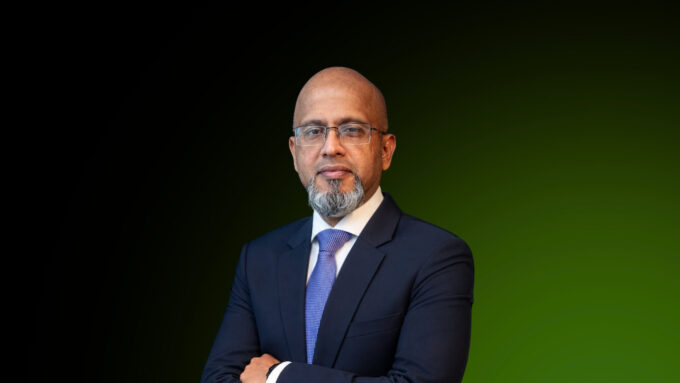
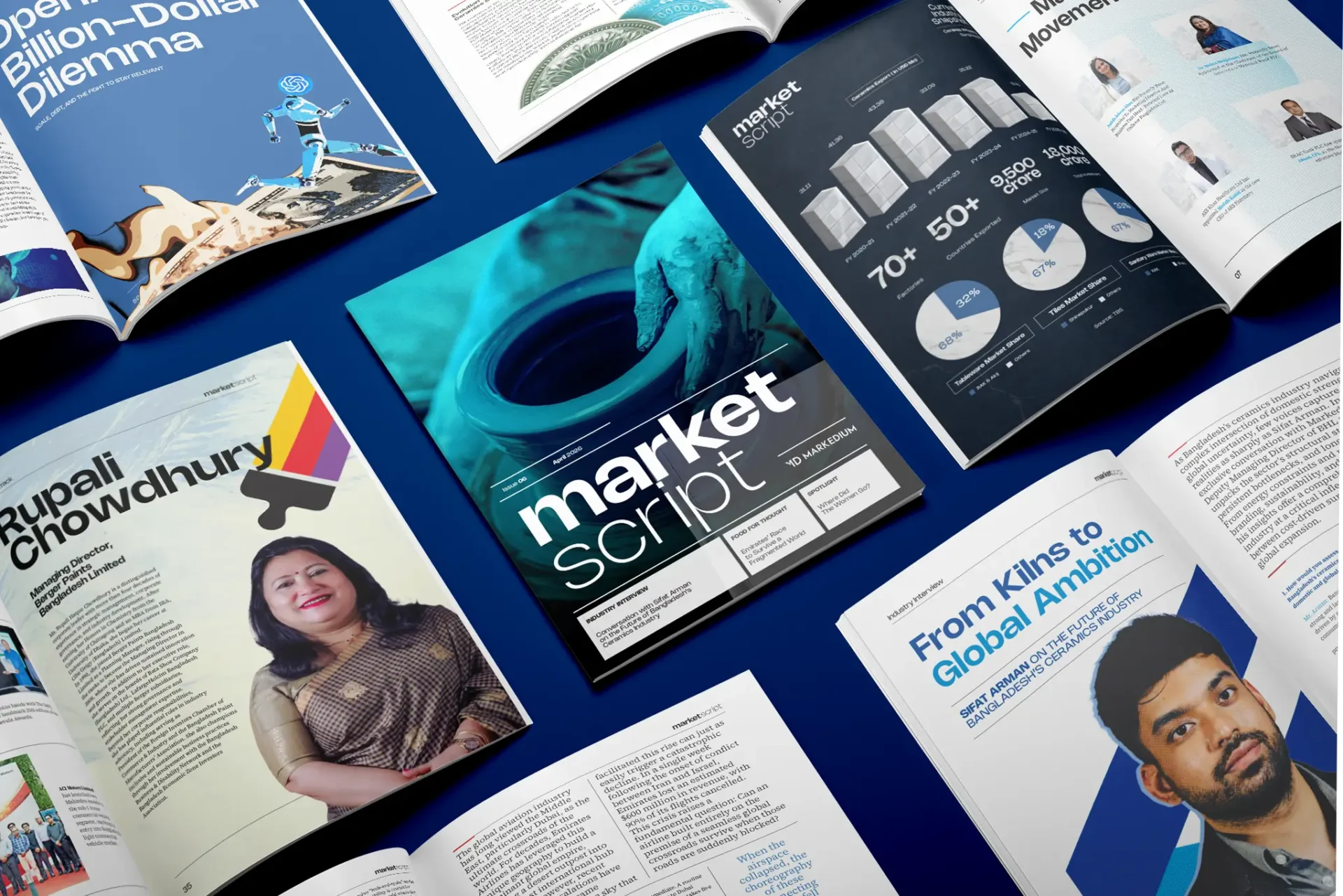
As Bangladesh’s ceramics industry navigates a complex intersection of domestic strength and global uncertainty, few voices capture its realities as sharply as Sifat Arman. In this exclusive conversation with Markedium, the Deputy Managing Director of BHL Group unpacks the sector’s structural strengths, persistent bottlenecks, and long-term potential. From energy constraints and policy gaps to branding, sustainability, and export ambitions, his insights offer a comprehensive view of an industry at a critical inflection point—poised between cost-driven survival and value-driven global expansion.
Here’s a refined version of the interview:
1. How would you assess the current position of Bangladesh’s ceramics industry in both domestic and global markets?
Bangladesh’s ceramics industry is strong and largely self-sufficient domestically, driven by growth in construction and rising consumer demand.
Globally, it has a growing but still limited presence, with competitive pricing but a small market share and underdeveloped exports.
With the right policy support—especially in energy and backward linkages—the sector has significant untapped potential to become a value-driven global player.
2. The Iran–US and Israel conflict has already shaken the global economy. Has this had any impact on the ceramics sector? If yes, how has it affected the already struggling industry?
Yes, the conflict has had an indirect but significant impact on the ceramics sector, mainly through higher raw material and logistics costs.
Rising global energy prices have increased the cost of processed inputs, while freight disruptions and economic uncertainty have further strained operations.
For an already challenged industry, this has led to margin pressure, reduced competitiveness, and slower investment, adding to existing structural constraints.
3. With rising global uncertainty, how do you see demand evolving in key export markets for Bangladeshi ceramics?
In the near term, global uncertainty, inflation, and slower construction activity in key markets like the EU and US are likely to dampen demand, especially for products like tiles and tableware.
As demand is closely tied to construction and consumer spending, this will lead to short-term volatility in order volumes.
Read more: bKash at 14: In Conversation with Ali Ahmmed on Building Bangladesh’s Digital Finance Future
4. One of the key agendas of the new Bangladesh Bank Governor was to reduce interest rates, but that now seems unlikely. How will a prolonged high-interest-rate environment impact the ceramics industry?
A prolonged high-interest-rate environment would have significant implications for the ceramics industry, which relies heavily on both working capital and investment for expansion.
Since around 95% of our raw materials are imported, higher interest rates increase financing costs for imports, raising production expenses and putting additional pressure on margins.
It also slows domestic demand, as costlier financing affects construction and real estate projects, reducing orders for tiles and sanitary ware.
Overall, sustained high rates constrain growth, delay modernization, and challenge the industry’s ability to compete globally.
5. The industry has been consistently facing issues with gas supply. How important is uninterrupted gas for maintaining production quality and efficiency?
Uninterrupted gas supply is vital for the ceramics industry, as our kilns must maintain precise, high temperatures. Even a brief disruption can ruin entire batches of premium tiles or sanitary ware. Reliable gas is therefore essential to ensure product quality, operational efficiency, and competitiveness.
6. Why is competitive gas pricing crucial for the growth and global competitiveness of the ceramics sector?
Competitive gas pricing is essential for the growth and global competitiveness of the ceramics sector because energy accounts for a large portion of production costs—often 40–50% for firing processes. If our gas prices are significantly higher than those of regional competitors like India or Vietnam, our products lose their edge in the global market. Affordable and stable gas pricing is a key driver for expansion, modernization, and strengthening Bangladesh’s position in international ceramics markets.
7. Apart from gas supply, what are the major structural impediments that need to be resolved for a thriving ceramics industry?
Beyond gas, we face several major hurdles:
• High import duties and supplementary duties further increase costs, as ceramics are often treated as luxury items, even though they are now daily necessities.
• Dependence on imported raw materials – About 95% of our raw materials are imported, making the industry vulnerable to global price fluctuations, currency volatility, and supply chain disruptions.
• High financing costs—Limited access to affordable credit slows capacity expansion, modernization, and adoption of advanced technology, affecting both productivity and competitiveness.
• Skilled workforce shortage—Modern ceramics production requires trained operators and technicians, and the current skills gap limits quality and innovation.
• Logistics and export constraints—High freight costs, port congestion, and regulatory hurdles impact timely delivery and export competitiveness.
8. As a next-generation business leader, how do you envision the future of Bangladesh’s ceramics industry over the next 10–15 years?
Over the next 10–15 years, I envision Bangladesh’s ceramics industry evolving into a globally recognized, value-driven sector rather than just a cost-competitive producer.
With strategic investments in technology and energy efficiency, we can improve product quality, introduce innovative products, and lower production costs. Stable energy supply and competitive gas pricing will be key enablers for this transformation.
I also see a greater focus on branding and high-value exports, moving beyond traditional markets to capture emerging global demand. Coupled with skill development and innovation, the industry can expand sustainably while contributing significantly to employment, export earnings, and domestic economic growth.
In short, with the right policy support and industry initiatives, Bangladesh has the potential to become a leading global ceramics hub in the next decade.
9. How can Bangladeshi ceramic manufacturers move up the value chain from cost-based production to design, branding, and innovation?
Bangladeshi ceramic manufacturers can move up the value chain by shifting from cost-driven production to design, branding, and innovation. It is not enough to simply produce a good tile or sanitary ware; success today depends on connecting with customers’ perceptions and aspirations.
At BHL Group, we are leading this shift through branding and value-driven strategies. Our brands—BHL Ceramic, Vinci Ceramic, and Kongfu Ceramic—focus on creating an emotional connection with customers while delivering quality and innovation. We are investing in design collaborations and nurturing local talent to ensure our products reflect global aesthetics while staying rooted in the local context.
10. How important is sustainability and environmental responsibility in shaping the future of ceramics manufacturing?
Sustainability and environmental responsibility are becoming central to the future of ceramics manufacturing, both globally and in Bangladesh.
Ceramics production is energy- and resource-intensive, generating emissions and waste that require careful management. Adopting energy-efficient kilns, cleaner fuel alternatives, and waste recycling not only reduces environmental impact but also lowers production costs and improves operational efficiency.
Integrating sustainability into operations is no longer optional; it is a strategic requirement for long-term growth, international recognition, and building a resilient, responsible industry.
11. During the 4th Ceramic Expo Bangladesh, it was said that the ceramics industry has strong export potential. Do you agree, and what policy support is needed to realize this potential?
I completely agree—the export potential of Bangladesh’s ceramics industry is significant. To fully realize it, we need enhanced innovation and quality, reduced import duties, and a stable, competitively priced energy supply compared to our global peers. Additionally, dedicated financing support and stronger export incentives are crucial to level the playing field against competitors benefiting from heavy subsidies in other countries.
12. Can you share the journey of BHL Ceramics from a ceramics tiles and sanitaryware importer to a key manufacturer in the ceramics sector, and what lies ahead?
BHL Ceramics began as an importer of tiles and sanitary ware and transformed into a leading local manufacturer through strategic investment in technology, skilled talent, and quality production. Today, with brands like BHL Ceramic, Vinci Ceramic, Kongfu Ceramic, and Perla Sanitaryware, we focus on design, innovation, and customer experience.
Looking ahead, we aim to expand capacity, strengthen exports, and establish BHL as a globally recognized ceramics hub, contributing to Bangladesh’s industrial growth and export potential.
13. What skill sets and mindset are essential for young professionals who want to succeed in the ceramics industry?
Young professionals in the ceramics industry need a blend of technical expertise, creativity, and a growth-oriented mindset. Skills in materials, kiln operations, quality control, and design are essential, along with the ability to innovate and develop market-relevant products.
Adaptability, problem-solving, and an understanding of customer preferences are equally important. In short, success comes from combining technical knowledge, creative thinking, and a proactive, globally aware attitude.
For more updates, be with Markedium.









Leave a comment