




















Over the past 18 months, Bangladesh’s macro-economic environment has been defined by volatility—rising inflation, currency devaluation, liquidity constraints, and shifting consumption dynamics. These pressures have tested the resilience of industries closely tied to construction, infrastructure, and consumer spending, with the paints sector standing at a critical intersection of all three.
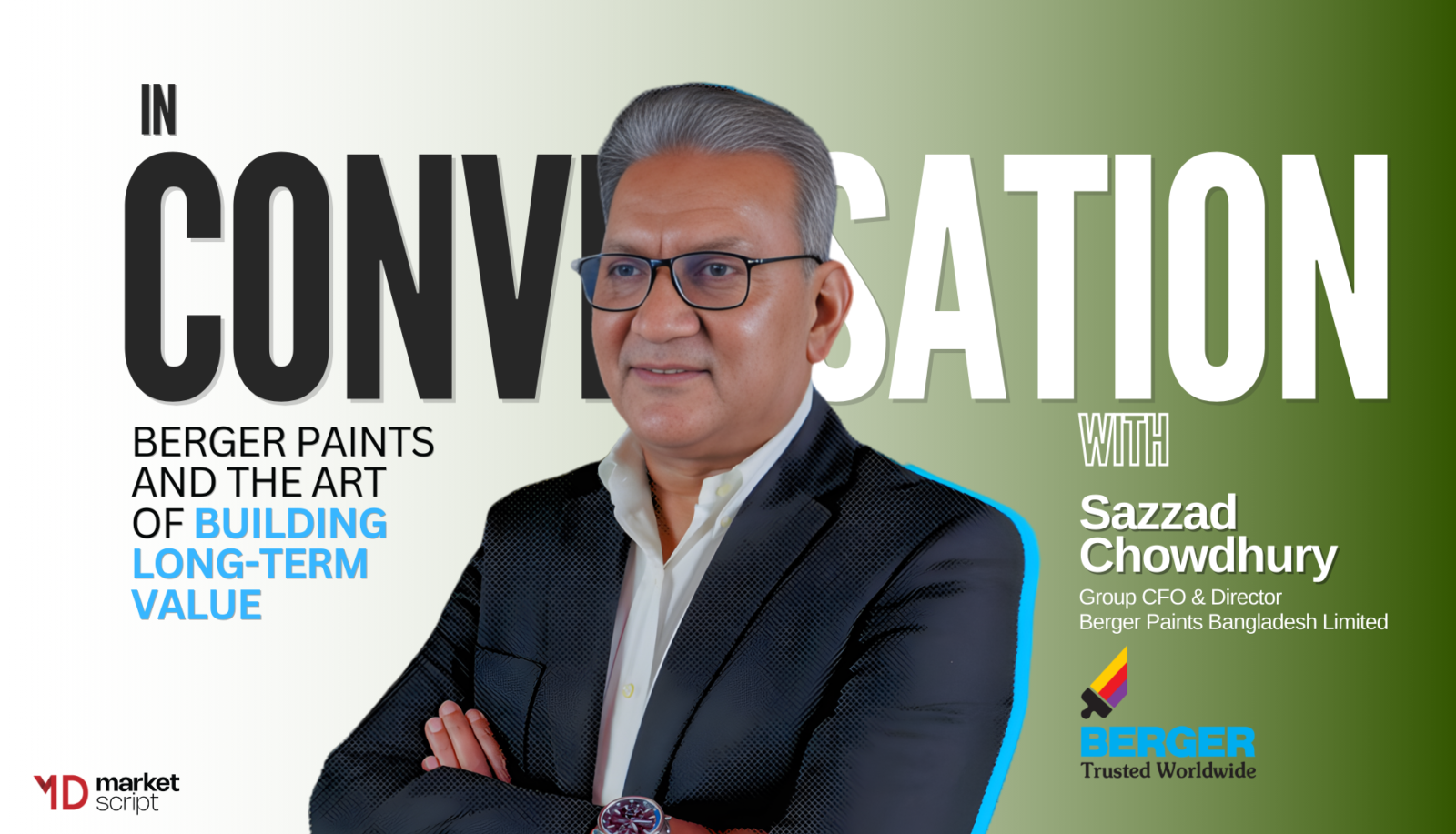
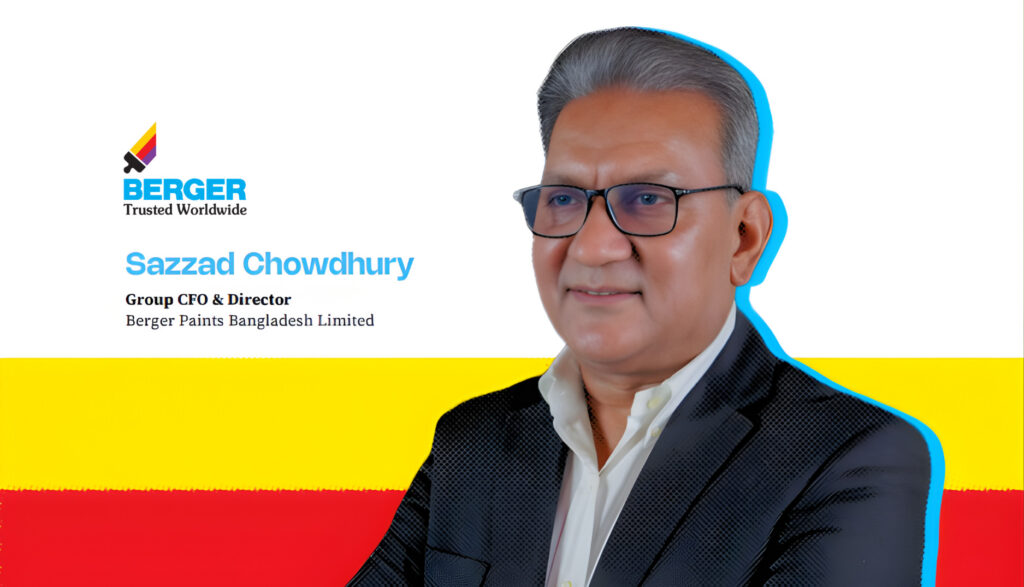
In this exclusive conversation with Market Script, Mr. Sazzad Chowdhury, Group CFO & Director at Berger Paints Bangladesh Limited, offers a clear-eyed perspective on how the country’s leading paints manufacturer has navigated this challenging phase. Drawing on deep financial leadership and industry insight, he discusses how macro-economic shifts have reshaped demand, strained cost structures, and accelerated the need for operational discipline across the sector.
Here’s a refined version of the interview:
Over the past 18 months, Bangladesh’s macro-economic landscape has shifted significantly. How have these developments impacted the paints industry, particularly in terms of demand, cost structure, and overall market stability?
Mr. Sazzad: Over the last 18 months, Bangladesh’s macroeconomic environment has been unusually volatile marked by elevated inflation, currency depreciation, tight liquidity, and pressure on consumer purchasing power. For the paints industry, this has been translated into three immediate impacts.
First, demand became more polarized. While discretionary repainting slowed, essential maintenance, protective coatings, and selected infrastructure-led demand remained resilient. Second, cost structures came under pressure, as industry is heavily dependent on imported raw materials such as titanium dioxide, resins, and Calcium Carbonates, etc. Currency depreciation and global commodity volatility increased input costs and working capital requirements. Third, market stability was tested, particularly for smaller players with weaker balance sheets.
At Berger, we approached this period with discipline and foresight. We focused on protecting affordability for consumers, ensuring uninterrupted supply, and maintaining financial resilience. The industry has shown maturity during this phase, and I believe these pressures are also pushing the sector toward better efficiency, compliance, and long-term competitiveness.
Despite these macro-economic pressures, Berger Paints posted an 8.44% revenue growth in the year ending March 2025. What were the key drivers behind this performance, and how did Berger sustain momentum in such a challenging environment?
Mr. Sazzad: Our 8.44% revenue growth in the year ending March 2025, despite the headwinds, was the outcome of a few deliberate choices.
First, portfolio resilience. Berger operates across decorative, industrial, marine, and protective coatings. This diversification helped offset softness in certain discretionary segments. Second, market execution excellence. Our distribution reach, brand strength, and dealer network allowed us to protect volumes even when consumption patterns shifted. Third, disciplined pricing and mix management. We were careful not to overcorrect price increases, instead focusing on value engineering, and product mix upgrades. Sustaining momentum in a challenging environment is less about bold moves and more about consistent, well-aligned execution and that is where our teams truly delivered.
Since the August Revolution, the currency has undergone notable devaluation. How has this affected Berger’s cost base and profitability, and what financial or operational measures have you implemented to protect margins?
Mr. Sazzad: Currency devaluation has a direct and undeniable impact on our cost base, given the import intensity of the paints business. The pressure comes not only from higher raw material costs but also from increased energy and logistics expenses.
Our response has been multi-pronged. On the financial side, we strengthened forex risk management, optimized import planning, and improved working capital efficiency to reduce exposure duration. On the operational side, we accelerated localization initiatives, enhanced energy and process efficiency across plants.
Margin protection, however, is not achieved through short-term fixes alone. It requires structural resilience, productivity, strong supplier partnerships, and pricing discipline. While profitability has faced pressure, Berger has remained firmly focused on sustainable margins rather than opportunistic gains, ensuring long-term brand and shareholder value.
Berger recently issued rights shares to raise BDT 302 crore for establishing its third factory in the National Special Economic Zone. From your perspective, what emerging growth drivers will shape the expansion of Bangladesh’s paints market over the coming years?
Mr. Sazzad: The establishment of our third factory in the National Special Economic Zone is a strategic milestone, not just a capacity expansion project. It is a platform for the next phase of growth.
Looking ahead, I see several structural growth drivers for the paints market in Bangladesh. Urbanization and rising housing aspirations continue to support decorative paints. Infrastructure, industrialization, and export-oriented manufacturing are driving demand for protective and industrial coatings. Additionally, increasing awareness around quality, durability, and sustainability is shifting consumers toward higher-value products.
Our state-of-the-art third factory is designed with future readiness in mind, focusing on automation, energy efficiency, NextGen technology, and scalability. It will enhance supply security, improve cost competitiveness, and enable faster innovation. In essence, it positions Berger not only to grow with the market but to help shape it.
J&N Investments (Asia) Limited renounced 2,591,691 right shares, of which 408,971 have been offered to Berger’s employees. Could you explain the strategic thinking behind offering employees the opportunity to invest, and how such ownership aligns with the company’s long-term goals?
Mr. Sazzad: Offering Berger employees, the opportunity to invest in the company through right-shares is rooted in a simple but powerful belief: ownership builds alignment.
When employees become shareholders, they see the business through a longer-term lens. Decisions are no longer abstract, they directly connect to value creation, governance, and sustainability. This initiative also reflects Berger’s confidence in its people and its future. We wanted employees to participate in that journey, not just as contributors, but as co-owners.
From a strategic standpoint, this strengthens culture, accountability, and retention. It reinforces the message that Berger’s success is a shared outcome, built collectively over time. For a company with a long legacy, such alignment is invaluable.
Berger has begun diversifying into sectors beyond core paints. What is the strategic rationale behind this diversification, and how do these new ventures complement or strengthen Berger’s long-term business portfolio?
Mr. Sazzad: Berger’s diversification beyond paints is a deliberate extension of our ecosystem rather than a departure from it. Each of these initiatives builds on our existing strengths while addressing emerging needs of the market.
Berger Design Studio represents our move from being a product-centric company to a solutions-led brand. Today’s consumers are not only looking for paint; they are seeking end-to-end interior solutions, design guidance, color consultancy, execution support, and assurance of quality. Berger Design Studio allows us to engage with customers at a much earlier stage of their decision-making journey, deepen trust, and deliver a holistic experience. Strategically, it strengthens brand stickiness, enhances premiumization and provides valuable insights into evolving consumer preferences.
Berger Tech Consulting Ltd. reflects our recognition that technology is no longer a support function, it is a core business enabler. Over the years, Berger has built deep internal capabilities in ERP, analytics, automation, and digital transformation. Berger Tech Consulting institutionalizes this expertise into a standalone entity, enabling us to support not only Berger’s own digital roadmap but also serve external clients. This venture creates a scalable, asset-light growth avenue, diversifies earnings, and reinforces a culture of innovation and process excellence across the Group.
Jenson and Nicholson Packaging Ltd. (JNPL) is a strategic upstream integration aimed at securing supply, improving cost competitiveness, and enabling innovation in packaging. Plastic pails are a critical component of the paints value chain, and in-house capability provides greater control over quality, design, sustainability initiatives, and lead times. We have already been doing this with metal containers over the last three decades, and this time we are extending our backward linkage to a larger segment. As JNPL scales, it also opens opportunities beyond internal consumption, positioning Berger within the broader packaging ecosystem.
Collectively, these diversifications are about building resilience, relevance, and long-term value. They allow Berger to participate across the value chain from design and technology to manufacturing, while remaining tightly aligned with our core purpose of enhancing how people build, protect, and beautify their spaces.
From an industry leadership perspective, what policy adaptations do you believe are essential to strengthening the domestic paints value chain? And what specific recommendations would you put forward to policymakers to support sustainable growth for the sector?
Mr. Sazzad: From an industry leadership perspective, policy coherence and long-term thinking are critical to strengthening the domestic paints value chain. Paints are often perceived as discretionary or luxury items, but in reality, they play a far more essential role by protecting buildings and infrastructure, extending asset life, ensuring hygiene, and supporting safe and sustainable urban development.
A recent example that illustrates the policy challenge is the increase in Supplementary Duty from 5% to 10%. While such measures may offer short-term revenue gains, they directly raise consumer prices in a market already under pressure from inflation and currency depreciation. For the paints industry, higher supplementary duty not only suppresses demand but also discourages formalization and investment, as compliant manufacturers bear a disproportionate burden.
Paint is not merely about aesthetics. In a country like Bangladesh, it is fundamental to asset preservation, public health, and climate resilience from corrosion protection in infrastructure to moisture resistance in homes. Treating paints as essential building materials rather than luxury goods would enable more balanced taxation, encourage compliant manufacturing, and support sustained industry growth.
Beyond taxation, policymakers can strengthen the value chain by encouraging local raw material manufacturing, offering incentives for energy-efficient and green production, and ensuring consistent enforcement of quality and environmental standards. A stable and predictable policy environment would allow manufacturers to invest with confidence, innovate responsibly, and contribute more meaningfully to employment, industrial growth, and national development.
Looking ahead, what is Berger’s long-term ambition—both in terms of market leadership and organizational evolution?
Mr. Sazzad: Berger’s long-term ambition is to remain the undisputed market leader while continuously evolving into a more agile, resilient, and future-ready organization. Leadership, for us, is not measured only by market share, but by the standards we set in quality, governance, innovation, and responsibility. As the industry evolves, our ambition is to grow with purpose balancing performance with long-term value creation for all stakeholders.
A critical pillar of this ambition is our ESG commitment, which is deeply embedded in how we invest and operate. Berger has already placed 4,700+ KWp of solar power capacity in the pipeline and we have a clear roadmap to ensure that 30% of our total power requirement is met through renewable sources by 2030. This transition is not symbolic, it is a strategic response to energy security, cost stability and environmental responsibility.
We have also made significant investments in environmental stewardship across our manufacturing footprint. These include advanced Effluent Treatment Plants (ETP), Zero Liquid Discharge (ZLD) systems, adoption of Synthetic Natural Gas (SNG) to reduce emissions and planned initiatives such as rainwater harvesting to enhance resource efficiency. Together, these initiatives reflect our belief that sustainable manufacturing and competitiveness must go hand in hand.
Organizationally, we are equally focused on building capabilities, developing talent, strengthening digital and data-driven decision-making and fostering a culture of accountability and innovation. Berger’s legacy gives us strength, but it is our commitment to responsible growth and continuous evolution that will define our relevance in the decades ahead.
As a seasoned finance leader with experience across major organizations, what skills or competencies do you believe future finance professionals must develop to succeed in an increasingly complex and technology-driven business environment?
Mr. Sazzad: The role of finance is undergoing a fundamental transformation. Technical competence will always matter, but it is no longer sufficient on its own.
Future finance professionals must develop strong business partnering skills, the ability to translate numbers into insights and influence decisions. Digital data literacy is essential, as automation, analytics, and AI reshape finance processes. Equally important are judgment, ethics, and resilience, particularly in uncertain environments.
Finally, curiosity and learning agility will distinguish successful professionals. Finance leaders of the future will not just safeguard value; they will actively help create it. Those who embrace this broader mandate will find the profession both challenging and deeply rewarding.
This interview was first published in Market Script Issue 3, where we delved deep into the ‘Paint Industry’ of Bangladesh.
For more updates, be with Markedium.








Leave a comment