






























Background
A week before Easter, KitKat had a problem most brands would have quietly buried. Around 12 tonnes of chocolate vanished somewhere between Italy and Poland, taking 413,793 bars of peak Easter stock with it. The obvious move would have been damage control: loop in legal, tighten the messaging, wait for the story to fade. But somewhere in that mess, KitKat noticed something most brands would have missed. The story was already interesting. So instead of asking how to contain it, the question became: what if the crisis became the campaign?
Insight
A supply-chain failure is not usually something people want to follow. A chocolate heist is a different matter entirely. KitKat understood that 12 tonnes of missing chocolate could generate far more curiosity than any corporate statement, but curiosity on its own does not go very far. The real challenge was giving people a reason to do something with it. If someone could check whether their own KitKat was part of the missing shipment, the story stopped being something to read and started being something to take part in.
Idea
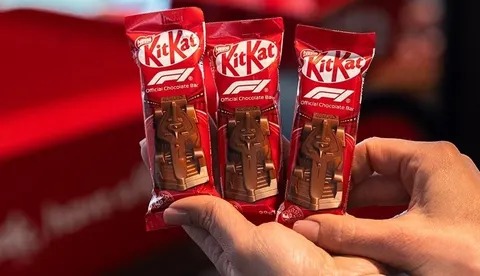
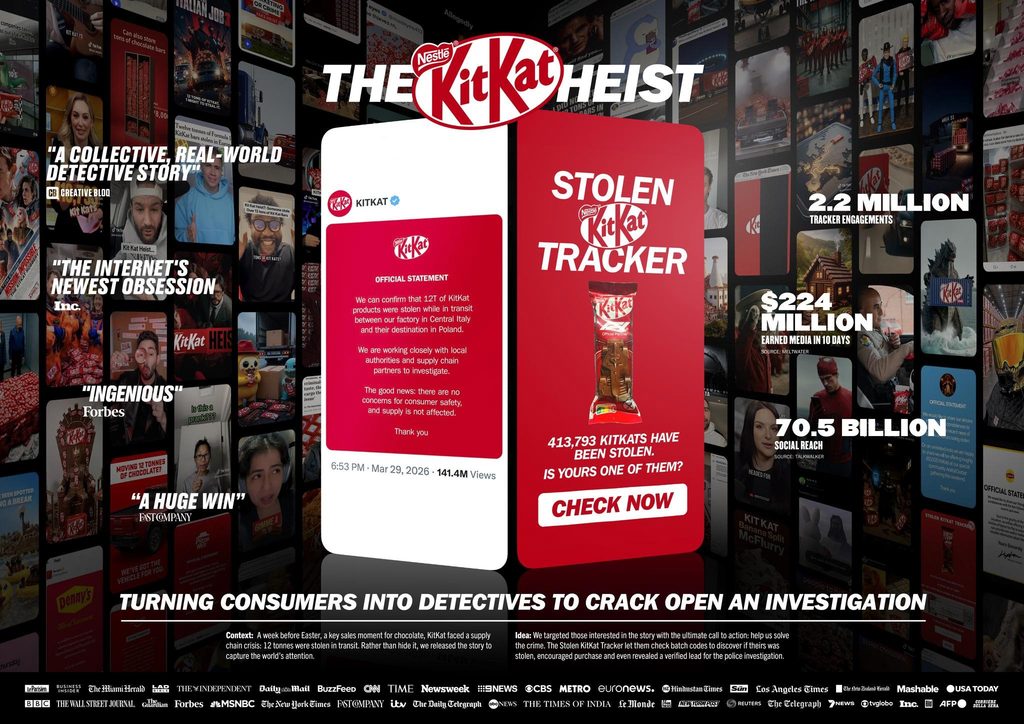
That is exactly what happened. KitKat turned a real theft into a public investigation with the “Stolen KitKat Tracker,” letting people check their bar’s batch code to see if they might be holding stolen chocolate. It started small, with social posts treating the disappearance like a developing story, then opened the door for people to step in and help solve it. Suddenly, an ordinary KitKat came with a question attached. Could this be one of the stolen ones? A supply-chain problem had quietly turned into something people could investigate, share, and talk about.
Result
The idea quickly turned the missing shipment into a much bigger conversation. The Tracker pulled in more than 2.2 million engagements, flagged three suspicious batch codes, and surfaced one confirmed lead that made its way to the police. Conversation around the brand jumped 508%, reaching 10.6 million engagements, while search interest climbed more than 600% week-on-week. Over 115 brands joined in with their own KitKat jokes, and KitKat walked away with $224 million in earned media without spending a cent on ads, capturing 44% of all Meta views during the activation.
Why It Worked
None of this happened because KitKat tried to manufacture attention. It happened because the brand found a real story sitting inside a real problem, and instead of hiding it, handed people a reason to be part of it. The mystery created curiosity. The Tracker created participation. And the fact that it was a genuine investigation, not a scripted one, gave the whole thing an unpredictability no traditional ad campaign could fake. Maybe that is the real lesson here. A crisis is not always something a brand needs to run from. Sometimes, it is the most interesting part of the story.
















Leave a comment