






























Dhaka’s kitchen markets are witnessing an alarming surge in the prices of essential commodities just weeks before Ramadan, leaving ordinary consumers, especially those from low-income backgrounds, increasingly anxious about affording basic necessities.
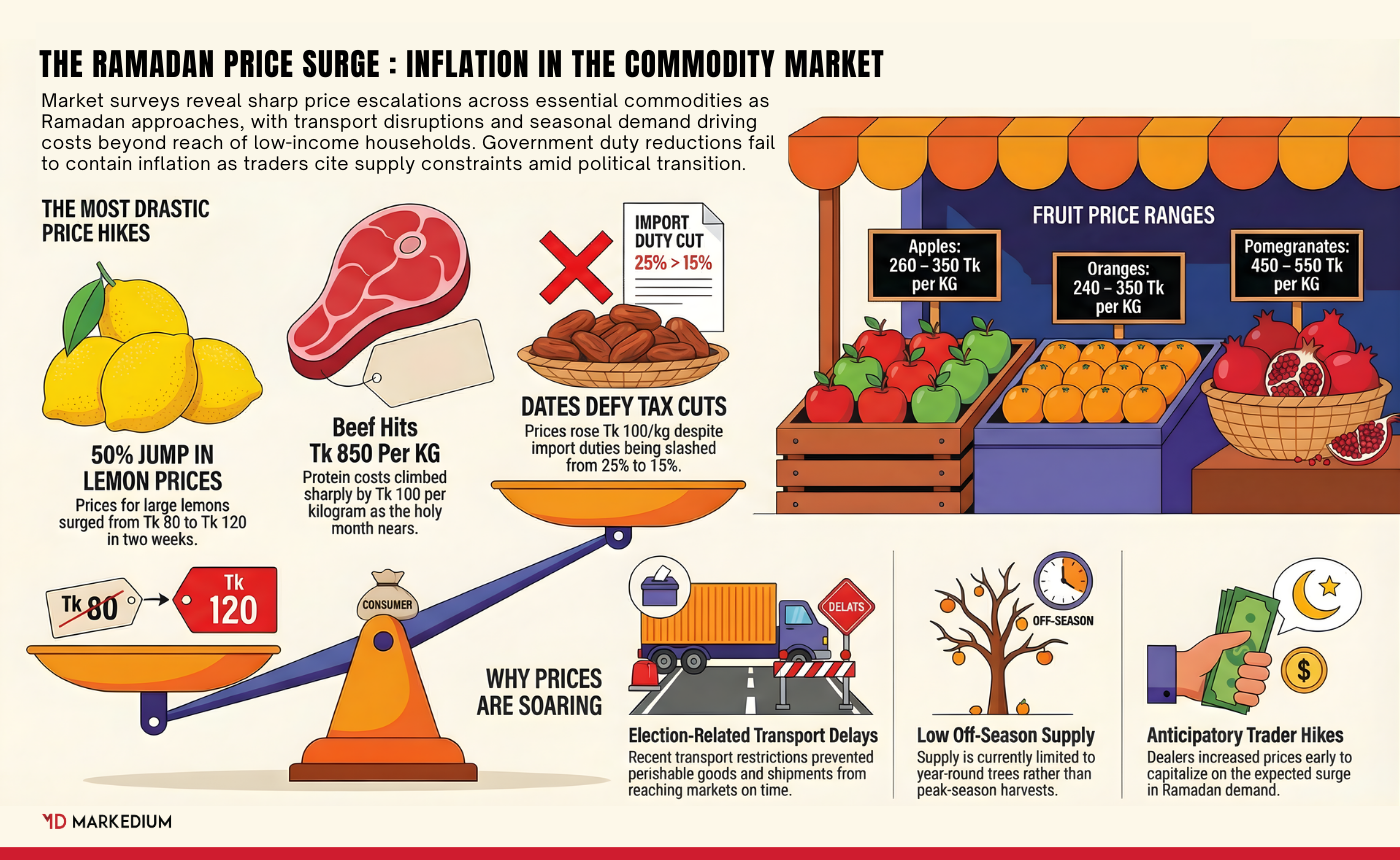
The price spiral is particularly severe for items central to iftar preparations. Lemons have emerged as the poster child of this inflation, with large varieties skyrocketing nearly 50% within a fortnight. What cost Tk70–80 per hali two weeks ago now demands Tk110–120, while medium-sized lemons have climbed from Tk50–60 to Tk80.
Perhaps most surprising is the dates market, where prices have jumped by Tk50–100 per kg despite December’s government intervention, which reduced import duties from 25% to 15%. The policy aimed to stabilize prices has seemingly backfired, with Zahidi dates now at Tk280 per kg and premium Medjool varieties commanding up to Tk1,500.
Protein costs are equally troubling. Beef has breached the Tk850-per-kg mark, up from Tk750, while Sonali chicken has reached Tk350. Several fish varieties have added Tk20–30 to their price tags, further straining household budgets.
The vegetable aisle tells a nuanced story. While bitter gourd (Tk120 to Tk160) and okra (Tk80 to Tk120) have surged, some relief comes from declining prices for bottle gourd and tomatoes. Long eggplants essential for the beguni now cost Tk60, up from Tk50.
Across fruit counters, prices have uniformly risen by Tk20–60 per kg. Black grapes command Tk550–600, while apples range between Tk260–350. Oranges sell at Tk240–350 per kg, while pomegranates fetch Tk450–550 per kg.
Other staples show similar trends. Onions have climbed from Tk50 to Tk60, while local garlic surged to Tk120 from Tk90–100. Khesari lentils reached Tk100 per kg, and pulao rice increased to Tk140 from Tk135. Green chilies now sell at Tk120 per kg, adding to the burden on household budgets.
Vendors cite off-season supply constraints and recent election-related transport disruptions. Lalbagh’s Mamun Mia insists conditions are temporary: “Once the main season begins, prices will stabilize.”
Yet shoppers remain skeptical. “Other countries see price drops during Ramadan. Here, traders exploit every excuse,” remarked homemaker Shahida Begum at New Market.
With the interim government’s transition to BNP leadership coinciding with the start of Ramadan, consumers fear the worst ahead. As New Market trader Arif Majumdar admitted, dealers have already hiked prices anticipating heightened Ramadan demand, a practice that transforms what should be a month of spiritual reflection into a financial ordeal for millions. The confluence of political uncertainty and seasonal demand has created a perfect storm, leaving families questioning how they will manage traditional iftar meals without compromising quality or going into debt.
For more updates, follow Markedium.











Leave a comment