

























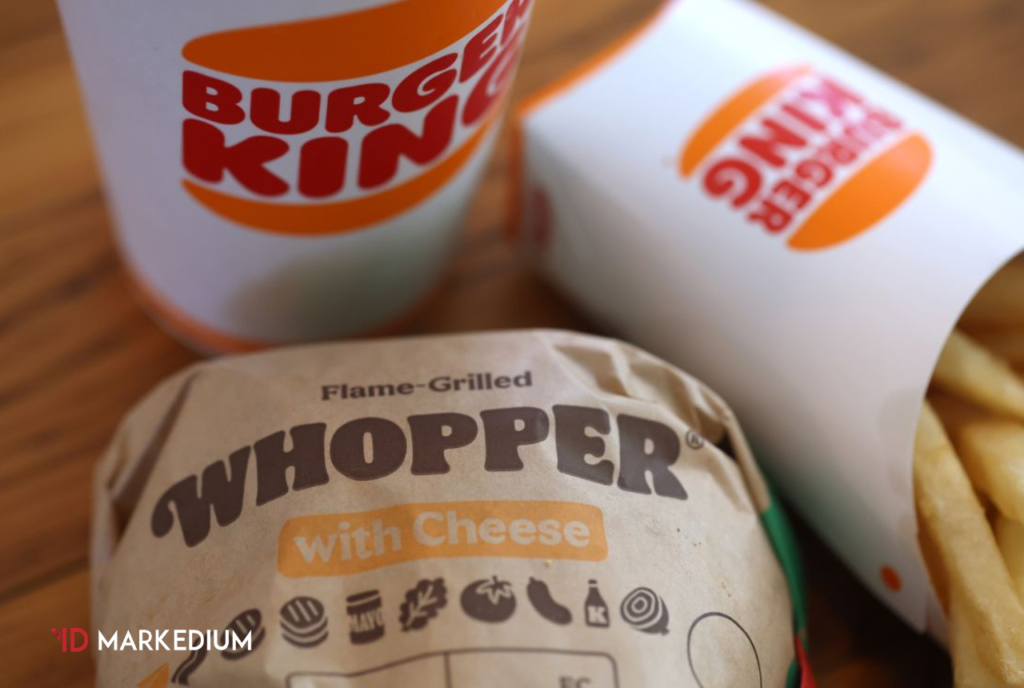
Burger King Whopper changes on February 26, 2026 — the first meaningful update in nearly a decade. New bun. New mayo. New packaging. The beef patty, the flame-grilling, the toppings: all unchanged. Tom Curtis, president of Burger King US and Canada, described the move as
Putting the Whopper in a tuxedo instead of a leisure suit.
That metaphor is the most honest thing a fast food executive has said in years. It tells you exactly what this update is, and exactly what it is not.
What Actually Changed
The Whopper update has three components. Each one targets a specific failure the brand had been accumulating for years:
- The bun — replaced with a taller, lightly glazed premium version designed to prevent the flattened appearance that became the dominant Whopper complaint online
- The mayonnaise — reformulated to be creamier, with a sweeter and citrus-forward profile, driven by franchisee feedback
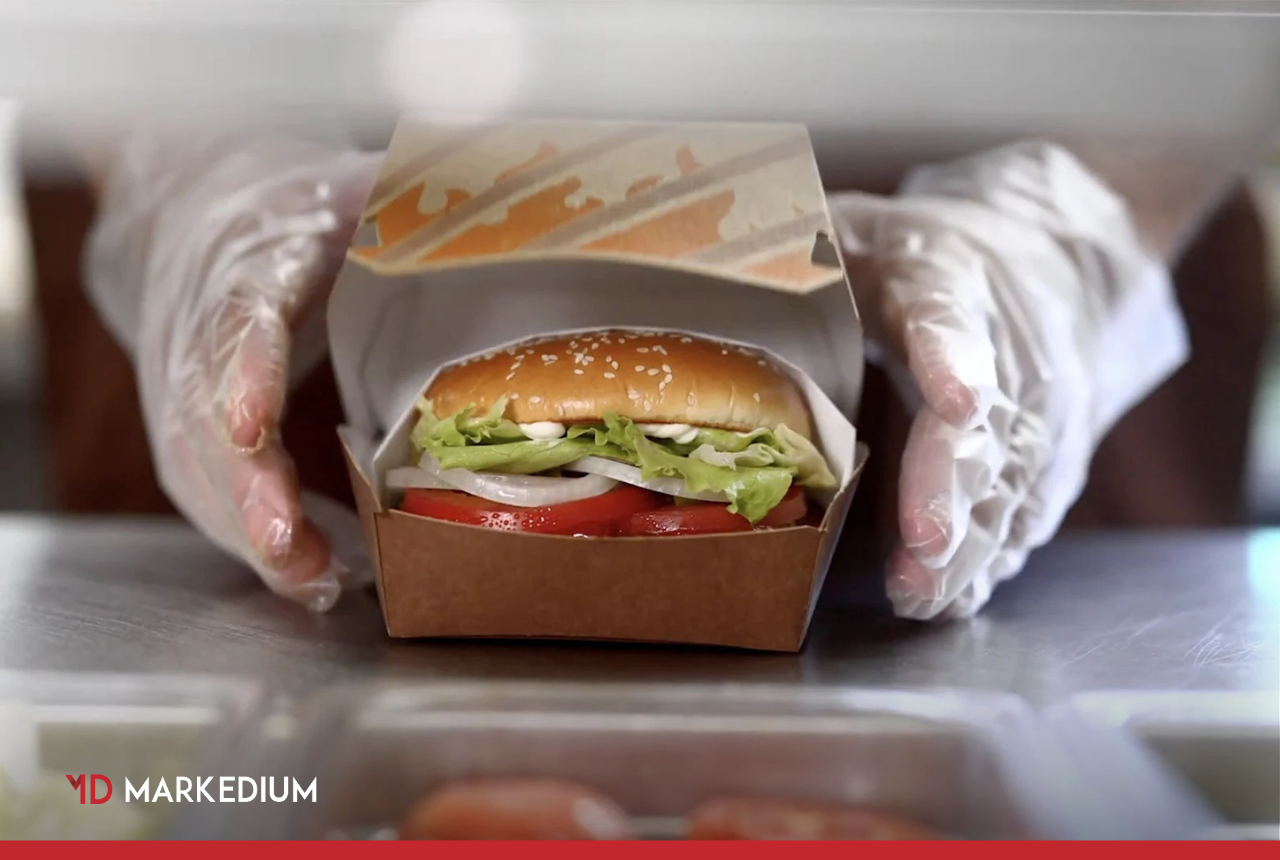
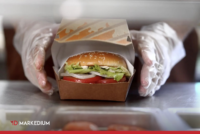
- The packaging — a clamshell box replaces the paper wrapper, designed to protect the burger’s structural integrity between kitchen and hands
Burger King tested these changes for seven months. The kitchen team even experimented with serving the burger upside down — patty first, vegetables underneath — before concluding that structural innovation should not distort product identity. The classic build stayed. The experience around it changed.
The entire update cost each franchisee an additional $4,000 per year. Burger King told operators not to raise menu prices to cover it.

Why This Took 10 Years for Burger King Whopper Changes
The Whopper has been Burger King’s brand anchor since 1957. That longevity is both the brand’s greatest asset and the direct reason the update took this long.
Touching an icon carries reputational risk that touching a secondary product does not. Every brand team at every major QSR (quick service restaurant) knows this. The Big Mac, the Whopper, the Baconator — these products are not just menu items. They are the entity through which the brand communicates its identity, its consistency, and its promise. Changing them risks alienating the loyal base. Not changing them risks slow irrelevance.
Burger King chose slow irrelevance for a decade. The evidence was visible and specific. Reddit threads from 2023 documented customers describing the Whopper as a “slider.” Social media complaints about a “soggy and mushy” burger were consistent enough that Burger King cited them in its own press release. The brand was receiving real-time signals that the product experience had diverged from the brand promise — “flame-grilled” implies a specific quality register that a smushed, paper-wrapped burger does not deliver.
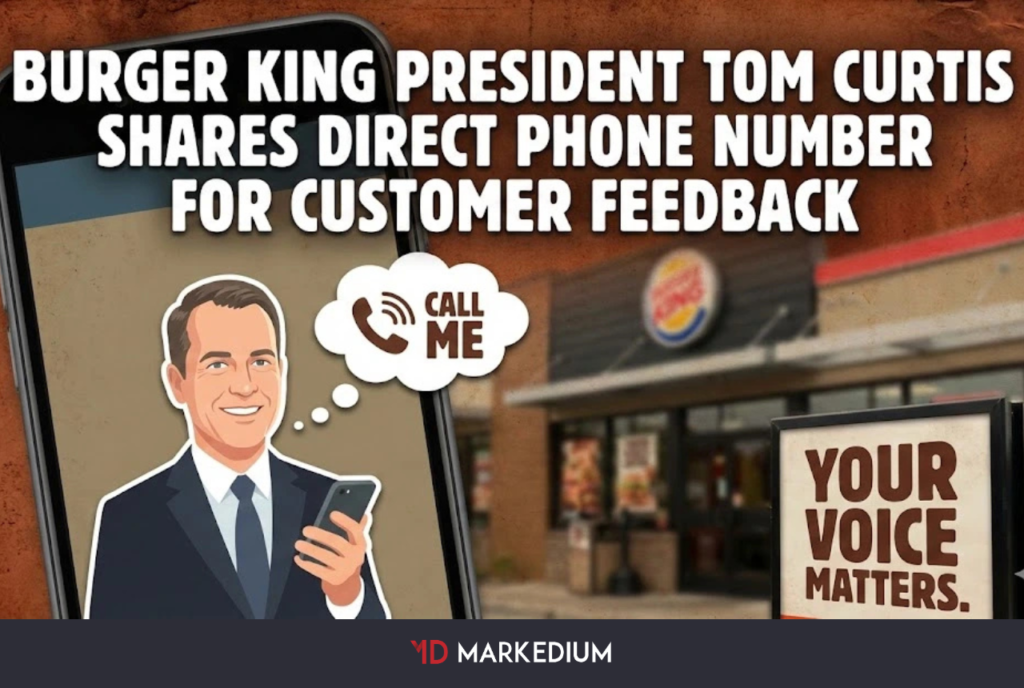
The trigger for action was not a strategic review. It was a campaign: Burger King president Tom Curtis shared his personal phone number and invited customers to call or text him directly. The company received nearly 20,000 voicemails and texts. The Whopper was consistently one of the top topics. That data forced the issue internally in a way that years of social media complaints apparently had not.
The lesson: when the gap between brand promise and product experience is large enough for 20,000 people to tell you about it voluntarily, the brand has been absorbing damage longer than the metrics showed.

The Brand Identity Tension at the Center of This Move
Burger King’s brand identity is built on three pillars: flame-grilling, the Whopper, and the defiant “have it your way” positioning against McDonald’s. All three are interdependent. The Whopper is the proof point for flame-grilling. Flame-grilling is the differentiator that justifies the “have it your way” confidence. Pull on one, and the others shift.
The 2026 update keeps the flame-grilling untouched. The beef patty is the same. The cooking process is the same. What changed is the presentation layer — everything the customer sees, holds, and tastes before they reach the patty.
This creates a specific brand-identity risk: the update is primarily visual and textural rather than substantive. A better bun and a sturdier box are packaging decisions. Premium mayonnaise is a condiment decision. None of these changes what Burger King’s brand actually stands for: the flame-grilled beef. If customers experience the new Whopper as meaningfully better, the brand’s quality signals strengthen. If customers experience it as a presentation upgrade on an unchanged core, the brand’s credibility for premiumization weakens — because it will have signaled premium intent without delivering premium substance.
Curtis addressed this directly: “You don’t want to just tear up the playbook and start all over.” That is the right constraint. Burger King’s brand equity lives inside the Whopper’s familiarity. Reinvention would have destroyed the equity that the update is trying to protect. But refinement without substance poses a different risk: it suggests the brand heard the complaints and responded with a box.
Premiumization as a Brand Signal, Not Just a Product Move
The fast-food industry entered a full-blown value war in 2024. McDonald’s McValue strategy, Taco Bell’s Luxe Cravings boxes, Wendy’s premium sandwich tiers — every major chain spent 18 months competing on price while trying to signal quality simultaneously. Burger King participated in that war. The Whopper upgrade is the first move in a different direction.
Premiumization in fast food is not about charging more. It is about changing the psychological context in which a purchase is made. Burger King’s own research identified what this achieves at a consumer level:
- Control: the clamshell box signals a “properly made” product — the brand cares how it arrives
- Identity: eating an “elevated Whopper” feels less like a budget compromise and more like a deliberate choice
- Permission: a better bun and better mayo provide psychological cover to choose fast food without the guilt of choosing something cheap
These are not product benefits. They are brand positioning moves expressed through product decisions. Burger King is not trying to compete with Five Guys on ingredient quality. It is trying to compete on the feeling the product delivers — and in brand strategy, feeling is often more durable than specification.
The competitive context makes this urgent. Premium fast-casual players like Five Guys and Shake Shack have spent years taking market share from legacy QSRs by owning the “quality fast food” position. Burger King’s update is a direct acknowledgment that the brand cannot continue to cede that territory on presentation grounds alone, when the underlying product — flame-grilled beef — is genuinely differentiated.
The Franchise Tension That Could Undermine the Whole Move
Brand strategy is only as strong as its execution layer. For Burger King, that execution layer is a franchised network of over 7,000 US locations, each operated by independent owners absorbing $4,000 per year in additional costs while being told not to raise prices.
This is the structural pressure point that the brand update does not resolve. Labor costs have risen. Commodity prices remain elevated. Franchisees are now being asked to invest in a premium experience without a pricing mechanism to recover that investment. The expectation is that premium presentation drives volume increases that offset the cost. That is a reasonable hypothesis. It is also unproven at scale.
Inconsistent execution across 7,000+ locations is the single most reliable way to destroy a brand premium signal. If some Whoppers arrive in pristine clamshell boxes and others arrive in paper wrappers because a location ran out of boxes, the premium positioning collapses unevenly across the customer base. The customer who got the box experiences a brand upgrade. The customer who got the wrapper experiences brand contradiction.
Premium brand identity at QSR scale is an operations problem as much as a branding problem. Burger King’s communications team can position this perfectly. The franchise network delivers or disproves it, location by location, every day.
What This Tells Us About Icon Management
The Whopper case is a clean case study of what happens when a brand lets a core product drift below its stated quality promise for an extended period.
The Whopper’s brand promise is “flame-grilled” — a specific, differentiated cooking claim that implies freshness, quality, and a superior product experience. For years, the product delivery did not match that promise. The burger was arriving smushed, soggy, and structurally collapsed. The disconnect between “flame-grilled icon” and “sad flat sandwich in a paper wrapper” was large enough to push customers who self-identified as Whopper fans — people who said “I love a Whopper, I haven’t had one in years” — out of the purchase cycle.
That is the specific damage an unmanaged product experience does to brand identity. It does not immediately kill brand equity. It bleeds it. Customers retain positive feelings about the brand concept while quietly exiting the behavior. They become people who remember liking the Whopper rather than people who currently eat it. Recovering that group requires more than good advertising. It requires a tangible reason to re-engage, which is exactly what the Whopper update is designed to provide.
Curtis said it plainly: “‘I love a Whopper. I haven’t had one in years. I hear that at airports all the time. I’m like, ‘What are you waiting for?’ And now I think we’re giving them a great reason to go back.”
That is the right frame. This update is not primarily about attracting new customers. It is about re-converting lapsed loyalists — people who hold brand affinity but lost the product habit. Re-conversion of lapsed loyalists is cheaper and faster than new customer acquisition, and it has a compounding effect on word-of-mouth, as lapsed loyalists who return tend to share their experiences.
The Risk the Brand Cannot Control
Fan reaction online has been divided from day one. “Don’t mess with an icon” is a legitimate consumer sentiment — and it is also the clearest sign that the brand has equity worth protecting. Customers who are angry that the Whopper changed are customers who care about the Whopper. Brands whose products change without public notice have a different, more serious problem.
The risk Burger King cannot fully control is the perception gap between “elevated” and “tampered with.” The brand is betting that the new Whopper is recognizably better without being recognizably different. That is a narrow target. Seven months of testing in a controlled kitchen environment does not guarantee that the emotional response at scale matches the intended one.
Coca-Cola tested New Coke extensively before launching it in 1985. The tests said customers preferred it. The market said otherwise. The parallel is not perfect — Burger King is refining, not replacing — but the underlying dynamic is the same: consumer attachment to iconic products is not entirely rational, and rational product improvements do not always produce rational consumer responses.
The tuxedo metaphor Curtis used is apt in ways he may not have intended. A tuxedo makes a person look better. It does not make them a different person. Whether the audience responds to the upgrade or responds to the change depends entirely on what they came to see.
Burger King’s updated Whopper is rolling out across more than 7,000 US locations as of February 26, 2026. The brand has not announced pricing changes. The flame-grilled beef patty remains unchanged.
For more updates, be with Markedium.







Leave a comment