



























On April 1, 1976, two college dropouts signed a three-page contract and founded a company that would go on to reshape how billions of people work, communicate and live. What began in a California garage was built not on superior engineering alone, but on a singular conviction: that technology should serve people, not the other way around. Fifty years on, Apple’s market value exceeds $3.5 trillion, a figure that traces directly back to a sequence of product decisions that repeatedly redefined entire industries. No other technology company has moved so consistently from one era to the next while carrying the same core philosophy intact.
The early blueprint
The foundation was the Apple II. Launched in 1977, it was the first personal computer designed to feel like a consumer product rather than an engineer’s experiment: colour graphics, a sculpted plastic casing, a keyboard built for use. It established the template Jobs would return to throughout his career. The 1984 Macintosh went further. By replacing command line inputs with a graphical interface and a mouse, Apple determined how every subsequent generation would interact with computers. The mouse itself had been developed at Xerox’s Palo Alto research centre. Apple saw its commercial potential before Xerox did, and brought it to the mass market.

The near collapse and recovery
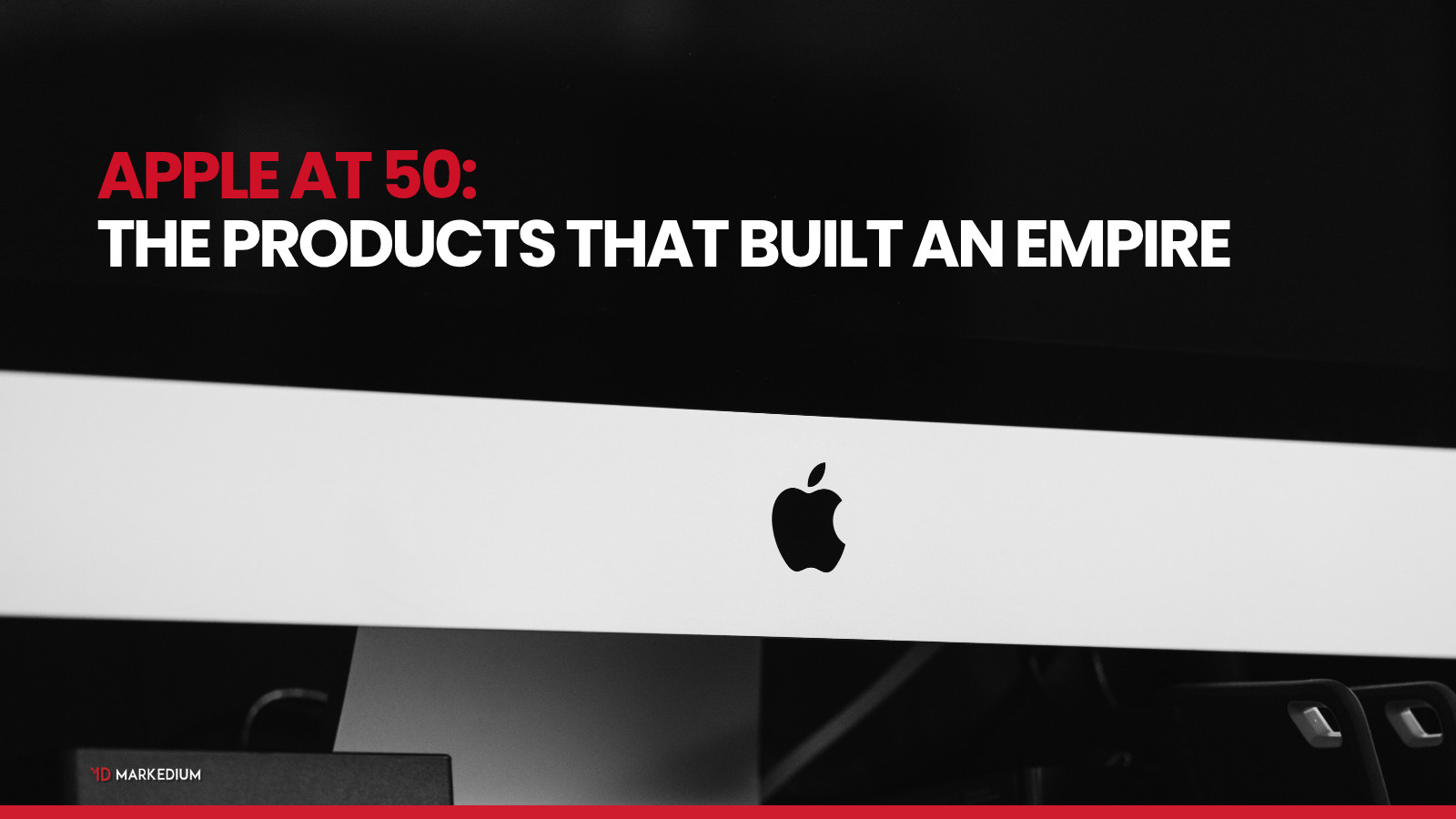
The company’s drift through the mid 1990s is as instructive as its triumphs. Without a coherent product strategy, Apple lost its way for nearly a decade, burning through CEOs and ceding ground to Microsoft. Jobs’s return in 1997 produced an immediate correction: cut failing products, concentrate resources, and design relentlessly around the user. The 1998 iMac was the first result, returning Apple to profitability within a year and signalling that the company’s design instincts remained sharper than anyone else in the industry.
The run that changed everything
What followed was the most consequential product sequence in consumer technology history. The iPod in 2001 collapsed the music industry’s existing distribution model. iTunes built the infrastructure for digital commerce. Then in January 2007, Jobs introduced the iPhone: a device combining phone, music player and internet browser in a single touchscreen handset. Analysts were dismissive. The App Store followed within a year, and with it came the platform on which entirely new industries including ride hailing, food delivery and social media were built.
The lasting lesson
These products did not simply sell in volume. They shifted cultural norms. Each one entered a market that incumbents believed they understood and left it unrecognisable. Patient development, precise timing and the discipline to simplify: that pattern remains Apple’s most replicable lesson and its most rarely replicated one.
For more updates, be with Markedium.













Leave a comment