






























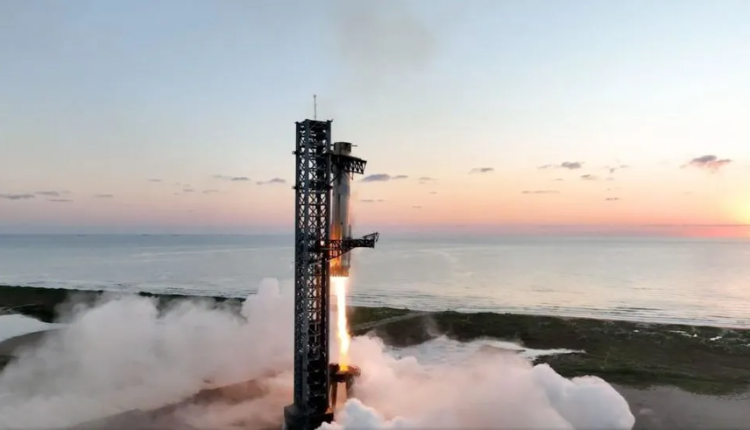
SpaceX achieved a remarkable milestone with the successful midair recovery of the lower half of its Starship launch system, a first in aerospace history. This maneuver, using what SpaceX calls “chopsticks,” is a key part of the company’s vision for creating reusable rockets. But beyond the technical feat, this innovation carries significant implications for space travel and exploration, especially when considering long-term goals like reaching Mars.
Rapid Reusability: Lower Costs, Faster Turnaround
At the core of SpaceX’s rocket-catching system is the drive for rapid reusability, a crucial factor in reducing the cost of space travel. SpaceX already lands its Falcon rocket boosters on both land and sea platforms, but even with these methods, it can take up to three weeks to prepare a Falcon booster for its next flight.
The Starship catch system, however, promises to revolutionize this process by allowing the vehicle to be prepped for reuse directly on the launch tower. This innovation could dramatically reduce the time between flights, leading to greater asset utilization and significantly lower launch costs.
Lower costs are crucial for SpaceX’s business model. The company’s Starlink satellite service, for instance, benefits from reduced launch costs to maintain its space-based internet service for millions of users. The profitability of Starlink depends on SpaceX’s ability to launch thousands of satellites quickly and affordably, a feat made more feasible by innovations like the catch system.
The Challenges of Size and Weight
Another major reason for the rocket-catching system is the sheer size of Starship. The Falcon rocket, SpaceX’s current workhorse, stands around 190 feet tall with a 12-foot diameter, excluding its payload. In contrast, Starship’s lower half alone is roughly 230 feet tall and 30 feet in diameter—nearly eight times the volume of a Falcon booster. This significant increase in size makes landing the vehicle upright much more difficult.
Furthermore, large rockets like Starship require immense amounts of fuel to overcome Earth’s gravity, leading to a problematic loop: more fuel adds weight, which in turn requires even more fuel to launch. By catching the rocket rather than landing it on legs, SpaceX can eliminate the need for additional hardware like landing legs, reducing the overall mass of the vehicle. Every pound saved in the design of the booster increases its efficiency, a critical factor when considering long-term missions, such as trips to Mars.
Preparing for Mars: The Final Frontier
Ultimately, the most ambitious reason for developing the Starship catching system is to solve the challenges of landing on extraterrestrial surfaces like Mars. Elon Musk’s vision for Starship includes enabling human settlement on Mars, and the catch system addresses one of the key logistical hurdles of that goal: the unpredictable terrain of other planets.
Unlike Earth, where flat surfaces for landing can be engineered, celestial bodies like Mars present rugged, uneven landscapes. Building infrastructure on Mars, such as landing pads and preparation facilities, will be far more complex. Catching the booster mid-air avoids the need to find stable landing zones or build extensive ground facilities, making the process more efficient and reliable in such environments.
Musk’s long-term vision includes building launch towers equipped with “chopsticks” on Mars itself, streamlining the reuse of spacecraft for missions within and beyond the Red Planet. This approach not only minimizes the need for heavy and complicated landing gear but also positions SpaceX to lead the way in sustainable, repeatable space travel on other planets.
A Visionary Leap in Aerospace
SpaceX’s ability to solve complex engineering problems, such as catching massive rockets mid-air, is a testament to the company’s innovative spirit. The success of the Starship catching system is not just about cutting costs or improving flight turnaround times. It represents a crucial step toward achieving Elon Musk’s most ambitious goal: establishing a permanent human presence on Mars. As SpaceX continues to refine its technology, its accomplishments will likely set new benchmarks for the entire aerospace industry, shaping the future of space exploration and human settlement in space.















Leave a comment