





























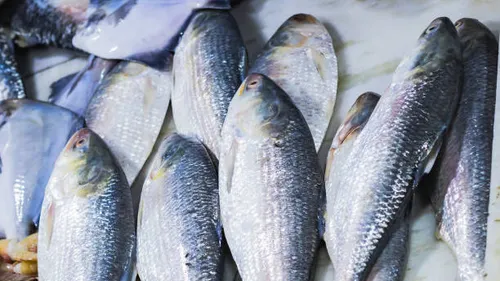
The fisheries ministry has clarified that the interim government has not authorized any individual or organization to farm hilsa using recirculating aquaculture systems (RAS) or other artificial or indoor methods.
The ministry issued the statement yesterday following recent media reports about indoor hilsa farming initiatives. It emphasized that any research, experimental projects, or technological endeavors involving hilsa must comply with existing laws, serve national interests, and secure prior government approval.
Hilsa is a vital Geographical Indication (GI) product of Bangladesh and is closely linked with the country’s rivers and coastal ecosystems, food security, cultural heritage, and the livelihoods of countless fishermen and communities who depend on fisheries, the ministry said. Since hilsa production depends on natural breeding cycles and river-based ecosystems, any initiatives in this area are highly sensitive and require strict policy oversight, it added.
Given that hilsa production relies on natural breeding cycles and river-based ecosystems, any related initiatives require stringent policy oversight, the ministry stated.
The clarification comes after Habiganj Agro Limited, a sister concern of PRAN-RFL Group, recently signed a memorandum of understanding with Denmark’s Assentoft Aqua to establish an indoor, fully controlled intensive fish farming facility in Bangladesh using RAS technology. This technology treats and reuses water through filtration, allowing high-density fish production with minimal environmental impact.













Leave a comment