

















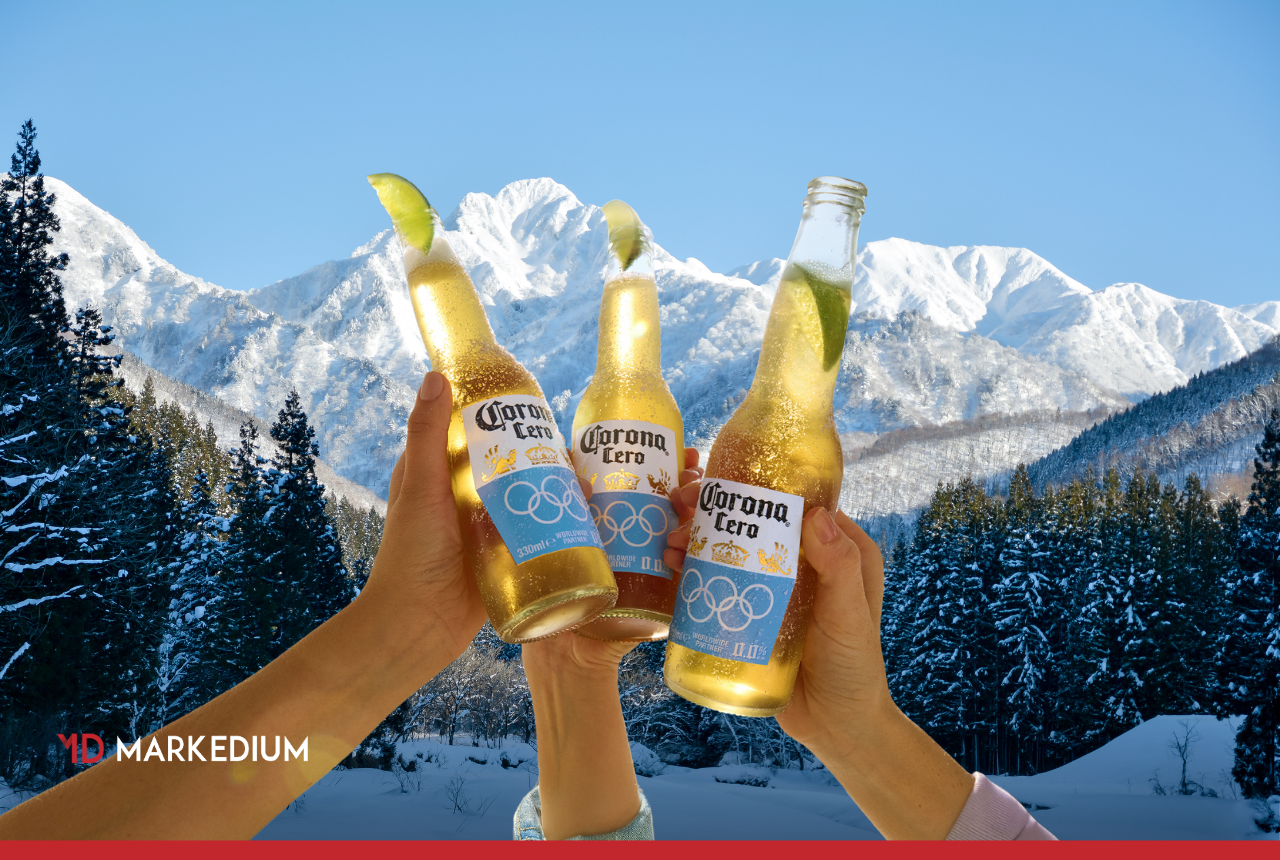
The Olympics banned alcohol sponsors for decades. So how did Corona become the first beer sponsor? By technically not selling alcohol.
Corona Cero—AB InBev’s 0% ABV variant—unlocked the world’s biggest sporting stage while delivering 440% volume growth and cementing itself as the fastest-growing brand in AB InBev’s portfolio. This isn’t just clever regulatory navigation. It’s a masterclass in modern alcohol branding where growth comes from moments you can’t reach with traditional products.
The Alcohol Marketing Restriction Problem
Alcohol brands face a straightforward challenge: the most valuable marketing channels are increasingly off-limits. The Olympics traditionally banned alcohol sponsors entirely. FIFA restricts alcohol advertising during World Cup broadcasts in multiple markets. Social media platforms require age-gating that kills organic reach. Many countries prohibit alcohol advertising during daytime hours or near content targeting young audiences.
Traditional alcohol brands need new channels to maintain relevance with younger consumers who drink 20% less than previous generations. But regulatory walls keep getting higher. The solution isn’t louder advertising—it’s different products that legally access restricted spaces.
How Corona Cero Unlocked Olympic Gold
When Corona Cero became the first beer sponsor of the Olympics in 2024, the brand had only three weeks for creative sign-off. They also needed to avoid familiar Olympic advertising tropes—athletes overcoming adversity, cultures uniting around shared dreams, parents and coaches behind the champions. With every competitor using those narratives, Corona needed differentiation fast.
Working with consultancy Brand Genetics and agency Grey, Corona Cero used AI-powered language analysis to uncover three key consumer motives around the Olympics: esteem, communal achievement, and the deep human need for belonging. The AI tools compared four creative routes against these motives in seconds instead of weeks, identifying the winner: “For Every Golden Moment.”
The resulting 30-second campaign drew parallels between everyday beach moments and historic Olympic moments—intercutting celebrating sprinters with people running into surf, spinning divers with lime wedges dropping into beer bottles. The campaign focused on “that beautiful moment after the win… that shared exhale,” allowing Corona to own a unique space no other sponsor had claimed.
The results validated the strategy: 440% volume growth for Corona Cero, massive behavior change metrics, and 27% net revenue growth for AB InBev’s entire nonalcoholic beer portfolio in Q3 2025. More importantly, Corona Cero accessed the Olympic stage without compromising Corona Extra’s positioning or triggering alcohol advertising restrictions.

The Alcohol Brand Portfolio Strategy
Smart alcohol branding now requires portfolio architecture that serves different occasions and regulatory environments. Corona Extra remains positioned for evening relaxation—the sun-drenched beach beer you crack open after work. Corona Cero targets anytime, anywhere consumption: morning beach runs, lunch meetings, afternoon workouts, urban cafes.
This occasion-based positioning prevents cannibalization. Consumers don’t choose Corona Cero instead of Corona Extra—they choose Corona Cero for moments where alcohol isn’t appropriate or desired. The non-alcoholic extension unlocks new consumption occasions rather than stealing from existing ones.
AB InBev now leads eight of its top 14 nonalcoholic beer markets globally, proving that strategic investment in zero-alcohol variants strengthens overall brand portfolios. The key is treating non-alcoholic extensions with the same creative quality, marketing investment, and strategic priority as alcoholic flagships—not as afterthought products with generic positioning.
What Other Alcohol Brands Are Doing
Heineken 0.0 partnered with Formula 1 under the “Now You Can” platform, emphasizing that zero-alcohol enables social participation without compromise. Budweiser Zero targets performance-minded consumers through NFL partnerships and fitness positioning. Guinness 0.0 maintains the brand’s rich heritage and distinctive stout profile in a non-alcoholic format, proving that zero-alcohol doesn’t mean zero character.
Athletic Brewing took the opposite approach—building a pure-play non-alcoholic craft brewery from scratch rather than extending an alcoholic brand. Their success demonstrates that the non-alcoholic beer category can stand independently, not just serve as a regulatory workaround.
Each strategy addresses the same fundamental shift: younger consumers want brand experiences and social participation without necessarily wanting alcohol in every moment.
The AI + Human Insights Breakthrough
Corona Cero’s three-week timeline seems impossible for alcohol brands navigating strict creative compliance requirements. The breakthrough came from combining AI speed with human strategic thinking.
AI tools analyzed consumer language around Olympic experiences to uncover motivational signals instantly. But as Sebastian Schuliaquer, AB InBev’s global director of premiumization insights and foresight, explained: “Two years ago, there were a lot of AI-generated campaigns, and it was very scary, because there was a beautiful story with no soul. We needed to have that human element.”
Human strategists took the raw AI signals and added culture, context, and language—transforming “achievement” into “communal achievement” and generic desires into specific emotional territories. AI contextualized what people were feeling; humans found the story that made those feelings resonate.
For alcohol brands operating under regulatory constraints with limited testing windows, this hybrid approach solves a critical problem: how to maintain creative excellence and depth of consumer insight while maintaining speed.
Alcohol Branding Lessons for Restrictive Markets
The Corona Cero playbook offers five actionable principles for alcohol branding in increasingly restrictive environments:
Build portfolio flexibility that works across different regulatory landscapes. Create zero-alcohol variants that can access restricted channels while maintaining brand equity.
Invest in non-alcoholic products with the same creative quality as alcoholic flagships. Half-hearted execution signals low confidence and attracts low engagement.
Find cultural fit over category conventions. Corona didn’t try to match Olympic intensity—they brought beach relaxation to post-victory celebrations, owning a unique emotional space.
Use AI for speed in compliance-heavy creative processes, but never sacrifice human storytelling that creates emotional resonance and brand soul.
Think in terms of occasion-based positioning, not just product attributes. Define when and where consumers choose your brand, not just what’s in the bottle.
What This Means for Alcohol Branding’s Future
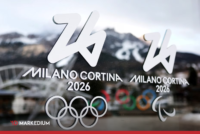
Corona’s Winter Olympics continuation of “For Every Golden Moment” proves this isn’t a one-time workaround—it’s a sustained strategic commitment. As the non-alcoholic category grows and regulations tighten further, expect more brands to launch zero-alcohol variants first, then alcoholic versions later.
The future of alcohol branding isn’t about selling more drinks. It’s about owning more moments—and the brands that understand this will grow while competitors fight over shrinking unrestricted channels.






Leave a comment